

The One Thing Parents Of Preemies Should Check Before Bringing Baby Home
We may receive a commission on purchases made from links.
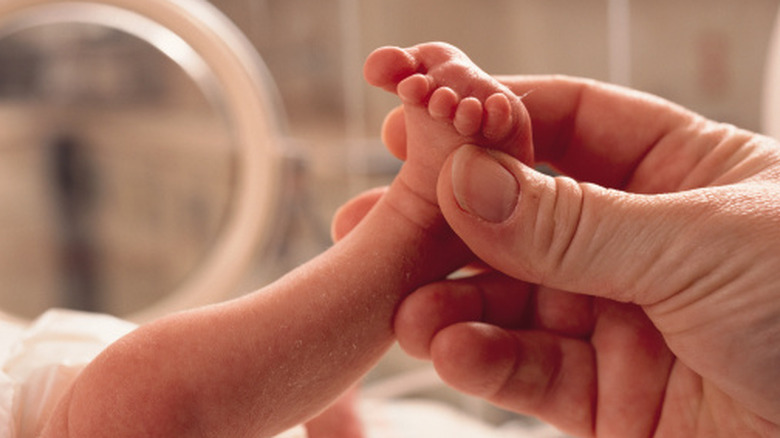
If you're expecting a baby in the coming months, you've likely started nesting — the instinct-driven ritual for parents that involves cleaning, decluttering, and safety hacking the home to prepare for your little one's arrival. But while scrambling to ensure the house is free of potential hazards, many parents overlook one thing that experts say matters immensely for newborns (especially preemies) — indoor air quality.
With a faster pace of breathing and little lungs that are still developing, babies are more sensitive to hidden pollutants that travel through the air indoors. Inhaling these pollutants can increase a baby's risk of asthma and skin irritation, impact their sleep, and even slow down their respiratory growth.
Tim Nelin, instructor of pediatrics at the University of Pennsylvania's Perelman School of Medicine, studied preterm infants and their exposure to microscopic air pollutants known as fine particulate matter (PM2.5) during their first year home from the NICU. In an article for "The Conversation," Nelin wrote, "Their lungs are telling us that small differences in PM2.5 exposure may matter, and that exposure to PM2.5 levels once considered low may have substantial implications for health when infants breathe that air day after day for a long period of time."
Steps to take at home before baby arrives to improve air quality
Before bringing baby home, experts advise parents to set up an indoor air quality monitor (like the Qingping Air Monitor 2, which was scored a 92 via Consumer Reports.) An effective air quality monitor measures particulate matter, volatile organic compounds (VOCs,) carbon monoxide, carbon dioxide, and humidity. If a reading comes back poor, the first step is to identify the source. Pollutants can stem from mold inside the walls, paint, and flooring materials, including older vinyl from prior to the 2010's (see our tips on effectively cleaning vinyl floors.) Scented candles, air fresheners, and cleaning products made with synthetic chemicals can also pollute the air (see our list of non-toxic cleaning substitutes.)
If the source is addressed but the reading is still poor, strengthening the home's ventilation system by operating fans and opening windows (weather permitting) can lower the concentration of pollutants in the air. Ensure that exhaust from air conditioners, bathroom fans, and kitchen fans vents directly outdoors, and that the furnace is regularly maintained. In addition to source control and ventilation, the EPA recommends supplementing with air cleaners, such as portable air purifiers, which can be placed strategically in rooms with high moisture (like basements, which are prone to water intrusion.) Many parents on Reddit say they've also opted to set up a portable air purifier in the nursery and report improved sleep, eczema management, and odor reduction.