

6 Simple And Effective Ways To Clean Vinyl Floors

In a busy, high-traffic household, vinyl flooring can be a great option because it's durable, budget-friendly, and easy to clean. However, with the wrong cleaning supplies, vinyl floors are also easy to mess up, and the list of what not to do can be admittedly intimidating.
One common mistake, for example, is oversaturating your floors, which can cause your vinyl tiles or panels to lift. When spot treating, you should never use steel wool or any material that's abrasive, because these can leave permanent marks and scratches. While powerful cleaning agents like bleach may be your go-to for tough clean-ups, this can lead to a dull, cloudy finish or discoloration. A wax-based polish may also turn your vinyl yellow. And, most importantly, as much as you may love your steam mop, never use it on vinyl floors. This weakens the glue and can cause warping.
At first glance, this list might make it seem like vinyl floors are high-maintenance, but many flooring experts actually consider them the opposite. Once you know some simple, effective, and safe ways to keep your vinyl floors looking great, the process is easy and straightforward.
Use a damp microfiber mop
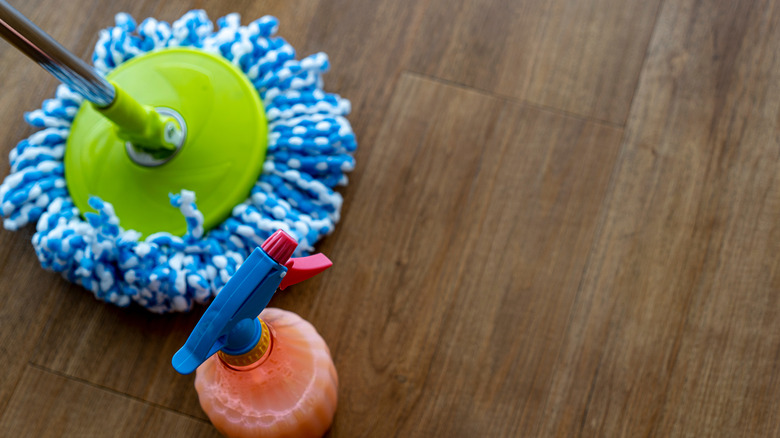
While you can use a soft-bristle broom to sweep up any dry spills, dust, or dirt, cleaning your floors regularly with a damp microfiber mop is the best way to keep them from accumulating grit and grime that can build up enough to damage the finish. Because vinyl is sensitive to too much water, using damp microfiber also helps control moisture levels as you clean your floors.
Opt for a pH-neutral cleaner
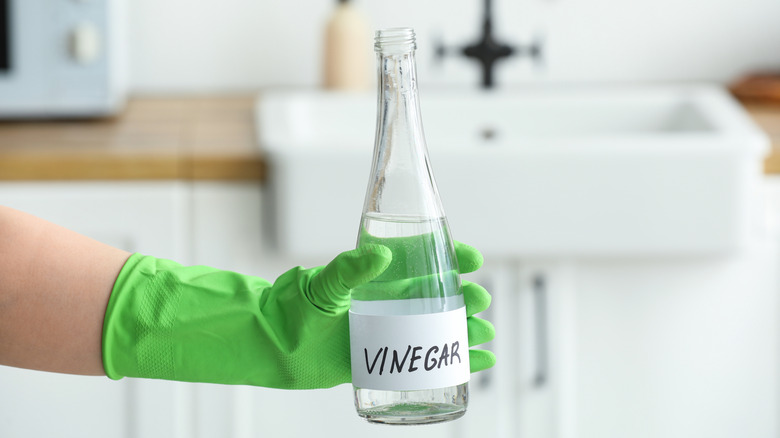
For regular maintenance, you can use your soft-bristle broom or damp microfiber mop, but when your floors need a deeper clean, make sure you use a vinyl-friendly cleaner. For a DIY solution, mix 1 cup of white vinegar with a gallon of water, apply sparingly, and clean in sections. If you opt for a store-bought option, choose cleaners made specifically for vinyl. These are often marked as pH-neutral and should be applied as instructed.
Wipe up spills immediately
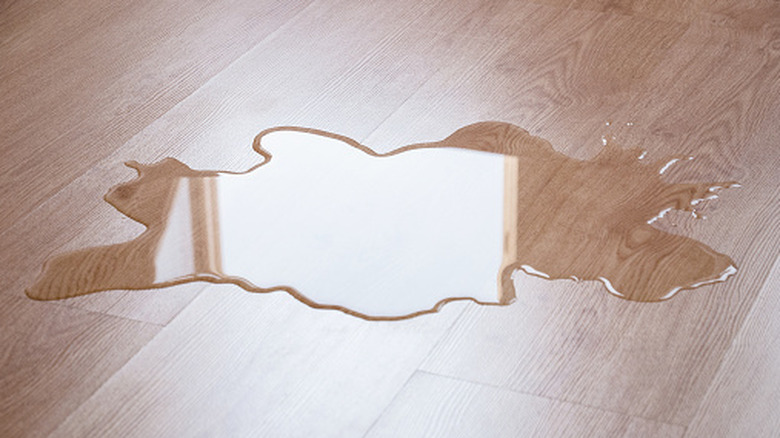
One thing that makes vinyl so family-friendly is how easy it is to wipe up spills without issue, but you still need to do so quickly and efficiently. This is to avoid staining and warping, which can happen if any liquid is left to pool on vinyl for too long. You can use your mop for larger accidents, or a microfiber cloth will do for smaller spills.
Keep a vinyl repair kit on hand
Vinyl can be prone to scratching and tearing, but that doesn't mean you have to keep your little ones from playing on it. While it's a good idea to keep sharp items away from laminate flooring and add protective pads to your floors, you can also pretty easily repair minor, cosmetic scratches with a vinyl repair kit. These often come equipped with color-matched fillers, adhesive glue to help with any tile lifting, and handy application tools.
Quickly and gently tackle crayon marks
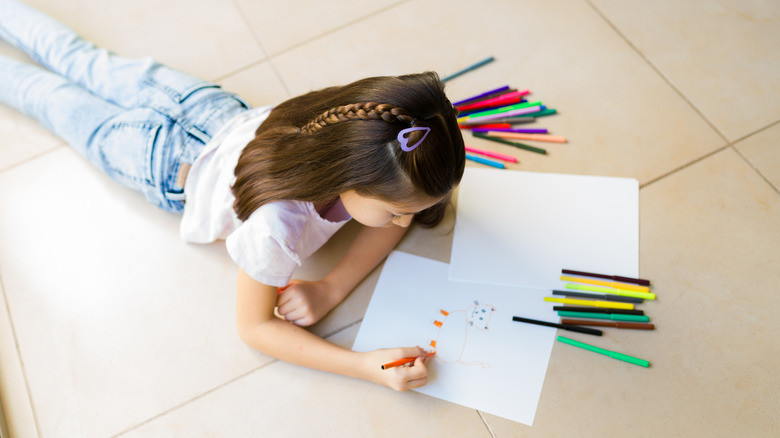
If your kids love coloring and crafting on the floor, you might be wary of color bleeding onto your vinyl flooring. Luckily, because vinyl is non-porous, most ink and crayon stains should lift pretty quickly — as long as you act fast. With crayon marks, first tackle the top layer of wax by scraping it away gently with a thin, flat plastic card, such as a credit card. Then, focus on lifting color stains with warm water, liquid dish soap, and a microfiber cloth.
Keep your mop head clean
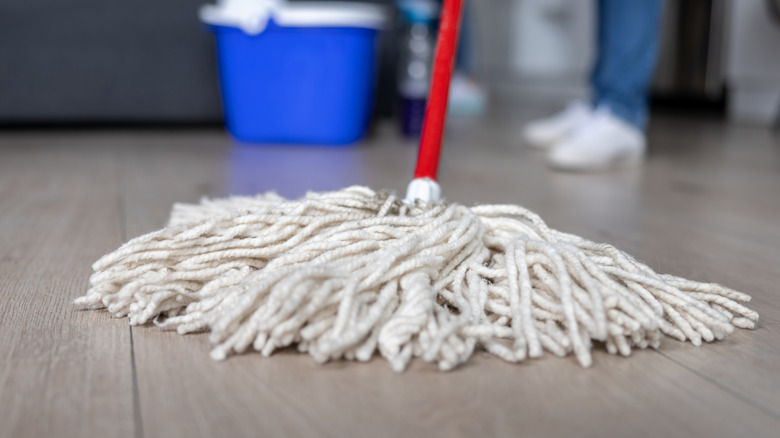
If you've noticed streaks forming on your vinyl floors after cleaning up kid spills, there are a few things you can do. First, it might be time to clean or swap out your mop head. It's also a good idea to rinse your mop as you work, and once you're finished, consider drying the floor with a microfiber cloth rather than letting it air dry. This should help everything dry more evenly and hopefully streak-free.