
The Rigid Protocol Most Royals Have To Follow When Naming Their Kids
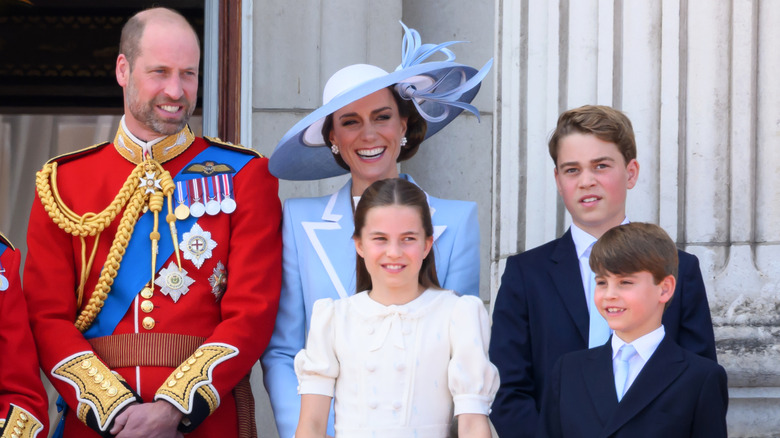
British royalty is nothing if not traditional, and that certainly holds true when it comes time to name a new arrival. While we commoners can give a whimsical weather-themed baby name or a heroic fantasy-inspired name to our heirs, a member of "The Firm" would be frowned upon for doing the same. There aren't any specific laws about what senior royals can call their children, but they're still expected to choose names that pay tribute to past and present relatives. "The further down the line of succession, the more likely you are to have a more unique or untraditional name," explained University of Toronto history professor Carolyn Harris to Australia Vogue.
Using that guideline, William and Catherine, Prince and Princess of Wales, knew the assignment when they named their children George, Charlotte, and Louis. All three names are shared by more than one monarch. In Charlotte's case, she was named not only for the wife of George III, but also for her grandfather, King Charles III. Compare that with names like Savannah, Mia, Isla, and Lucas, three of the king's great-nieces and a grand-nephew. They're all more unusual, but still dignified enough to pass muster with the palace.
While most of us give our children one middle name, royals give their babies two or more to honor a number of relatives. For instance, Princess Beatrice and her husband, Edoardo Mapelli Mozzi, gave both of their daughters Elizabeth as a middle name, a nod to their great-grandmother, the late Queen Elizabeth II. Similarly, Charlotte's full name is Charlotte Elizabeth Diana, after both the queen and Princess Diana, and Louis has two of his grandpa's names, Arthur and Charles.
One royal baby name caused a huge stir across the pond
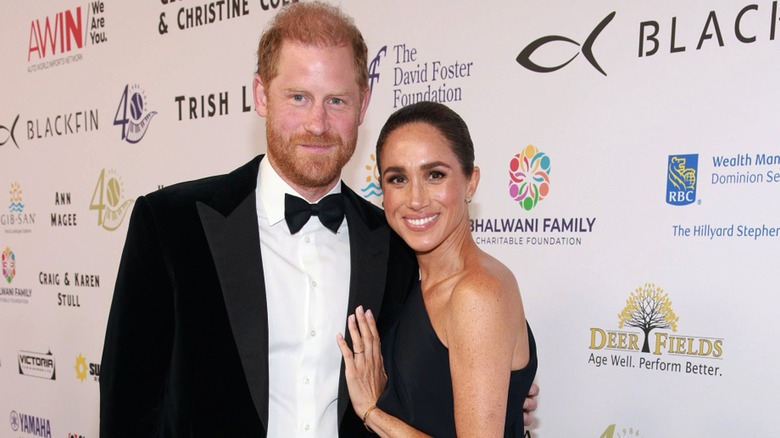
The royal baby-naming rules help avoid controversy for the new parents — most of the time. Prince Harry and Meghan Markle, Duke and Duchess of Sussex, caused a king-sized ruckus in 2021 when they named their daughter Lilibet, after the queen's special childhood nickname. Despite the Sussexes' insistence that they cleared their decision with the monarch beforehand, some sources claimed otherwise. One royal biographer even claimed Her Majesty was furious that the Sussexes had essentially stolen a personal part of her identity.
The newest of the queen's namesakes is also creating a stir. In August 2026, Princess Eugenie revealed her baby's name, Adelaide Elizabeth Annina, a tribute to three royals. Considering her parents, Andrew Mountbatten-Windsor and Sarah Ferguson, are shrouded in scandal, some suspect the princess had an ulterior motive behind the name choice. A source told RadarOnline, "[U]sing the child as a tribute to Elizabeth is seen by some cynics as a way Eugenie can curry favor with [King] Charles."
Speaking of the former Prince Andrew, future royal parents would know better than to name a child after a relative with a less-than-stellar rep. Nor would they dare to pick something too trendy, informal, or way out-there; we're not likely to see a Prince Fiyero, Duke Rocky, or a Queen Stardust Scorpio in our lifetimes. On the other hand, with the monarchy becoming more modernized and relatable to the public, the norms for baby naming may have changed by the time Lilibet, Adelaide, and their siblings are ready to become parents.