

The Reason Your Baby Bump Looks Smaller Sometimes

When you're pregnant, you'll likely expect that your silhouette will gradually expand until you give birth. Surprisingly, you might find that trajectory doesn't always hold true, and that some days, your bump might look smaller than expected. While some of these differences could be an optical illusion caused by the cut and material of your outfit, there are some additional possibilities. For instance, the time of day could be a factor. "I'm 15 ½ weeks with my 5th baby. My bump tends to be smaller in the morning and larger in the evening. And varies in size different days!" one poster on Reddit commented.
This phenomenon could be caused by changes in the tautness of abdominal muscles (which might also push your bump a little higher). Similarly, your bump might look smaller after a night of fasting, since food isn't augmenting its size. In one instance, musician/actor Charo experienced both of these situations. Although she was confident her toned abs would allow her to appear on TV as a non-pregnant character in a bikini, once she took a lunch break, her bump became so noticeable it had to be concealed to preserve the illusion (via Pop Goes the Culture TV).
Body positioning can also play a role, since your baby bump might look smaller when lying down. When combining with sleeping all night, that bump might even look smaller still, due to food being digested. While this experience could feel disconcerting, especially for first-time parents, it's all a product of the uterus shifting slightly due to gravity.
Other variables that impact baby bump size
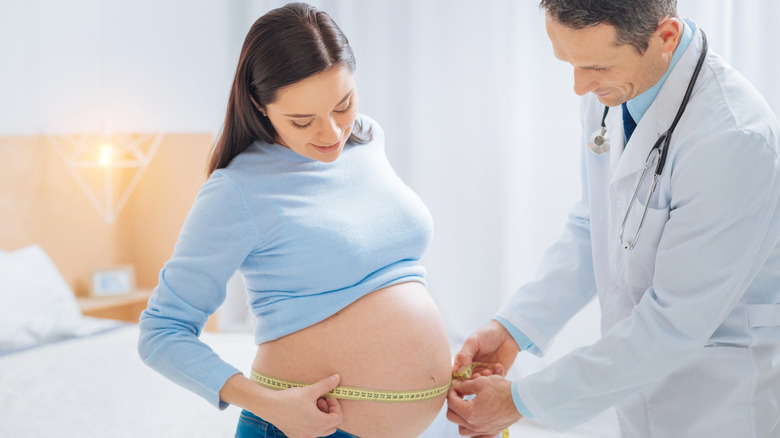
In terms of baby bump size, everyone you encounter may offer their unsolicited opinion, adding to the confusion. Although it's true that a pregnancy bump could be too small due to medical complications, there are a lot of other reasons for variability, and it's a myth that bump shape correlates to the sex of you baby. For instance, your bump might look smaller with a first pregnancy, since your abs haven't had to stretch over the course of nine months of fetal development. In these instances, it could take until a few weeks into the second trimester before you look noticeably pregnant. The mom's height plays a role, since differences in torso size change the amount of space available to accommodate a growing baby. In addition, the position of a woman's uterus and placenta can also impact the way bump size is perceived.
Fortunately, medical professionals can provide clarity and reassurance. Besides measuring the fundal height of your bump starting at 20 weeks, they can also use an ultrasound or other tests to make sure your baby's growth is on target.
Another significant shift can occur towards the end of a pregnancy, when mothers might be startled to see their bump look smaller, even when standing up. In addition, the bump might also measure smaller. In this case, the changing appearance is due to the baby "dropping," aka shifting into a lower position to get ready for birth.