

How Long After A Baby Drops Do You Go Into Labor?
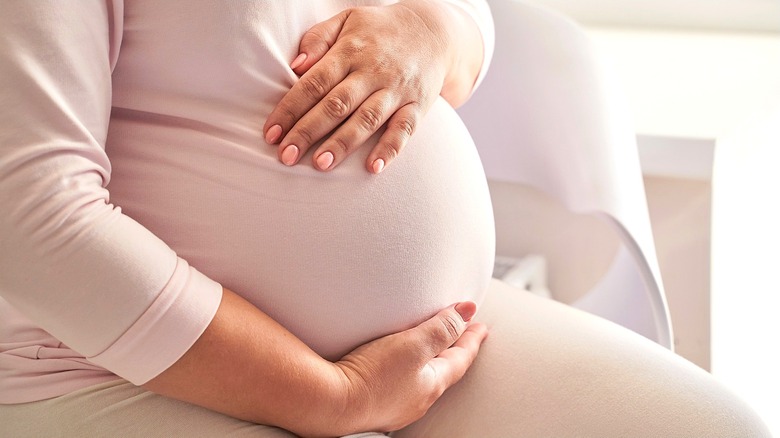
If you're pregnant, you may be eager to understand all the signs and symptoms that could indicate labor is approaching. Aside from ticking closer to your expected due date and experiencing an occasional Braxton Hicks contraction, another common sign that your body is preparing for labor is when you begin to feel your baby dropping lower into your pelvis. If you're a first-time mom, your baby dropping, which is commonly referred to as "lightening," usually happens two to four weeks before you give birth. However, if you've been pregnant before, this can happen later in the pregnancy, sometimes right before labor begins.
Lightening happens in the third trimester when your baby becomes heavier and positions themselves closer to the cervix. This may feel like a dull yet consistent amount of pressure in your pelvis. Or, this repositioning can cause "lightening crotch," which causes sharp pains that sporadically radiate throughout your pelvic region.
However, it's important to note that if your baby drops, it doesn't mean labor is just days or hours away. When and how this process happens is unique to each woman and her own pregnancy. Recognizing the signs of this third-trimester phenomenon, however, can help you feel more prepared for the next steps in your pregnancy journey.
Other signs that your baby has dropped

When your baby drops in the womb and begins to position itself (typically) head down in the pelvis, it also puts pressure on the cervix. This then causes the cervical lining to soften and change shape in preparation for childbirth. Called effacement, these changes happen alongside dilation, or when the cervix begins to open. However, keep in mind that the thinning and opening of your cervix can take weeks to reach completion.
Although you may feel more pressure and discomfort in your pelvis when your baby drops, the good news is that you may simultaneously feel some relief in your chest. Sure enough, when your baby descends lower into your abdomen, you may notice that you have more room to breathe. If heartburn has been a problem during pregnancy — a common ailment experienced by nearly half of all women — you may even experience some relief with this as well.
Once your baby drops, it's important to finalize your preparations for labor and get some rest. The end of your third trimester can also be a bit unpredictable — some moms have reported that their babies changed course and moved back up into their abdomens (before returning down before labor actually began). While paying attention to every pregnancy-related symptom doesn't always predict when your baby will come, they can be a sign that your body is working hard for the arrival.