

5 Disadvantages Of Using A Bottle Warmer
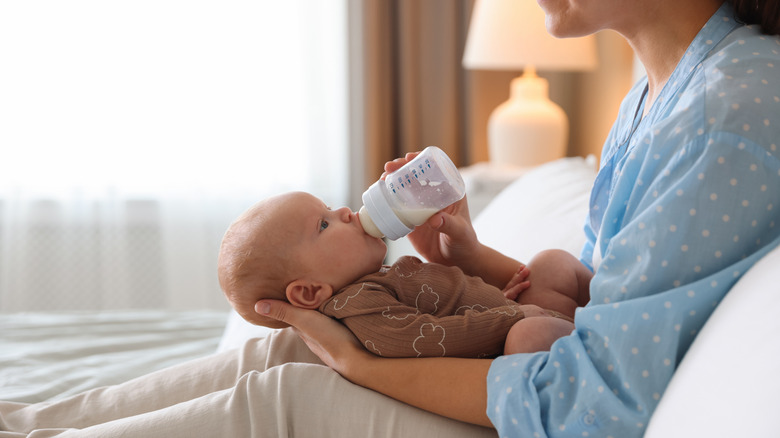
I spent 12 glorious weeks at home after my son was born. Toward the end of maternity leave I took a friend's advice and froze some breast milk ahead of time, knowing pumping options would be limited at the office, so I wouldn't have to worry about altering his feeding schedule. At first, I defrosted each 8-ounce storage bag individually using a bowl of warm water in my sink. It felt a bit tedious. Then, a fellow mom informed me I could use a bottle warmer (I didn't realize they could defrost bags, too) in much less time.
After the bottle warmer cut down my defrosting time by more than half, I started to see why other moms praised them for their convenience. I opted for an electric one and kept it plugged in on my counter, although; others are battery powered, portable, and small enough to fit in your purse — making them even more handy.
But in addition to the benefits there are also cons to bottle warmers — some of which I wish I'd thought of before I bought one. If you're considering adding a bottle warmer to your arsenal of postpartum tools, read on for some additional things to consider, which could help you make a more informed decision.
Bottle warmers can be high priced (and arguably non-essential)
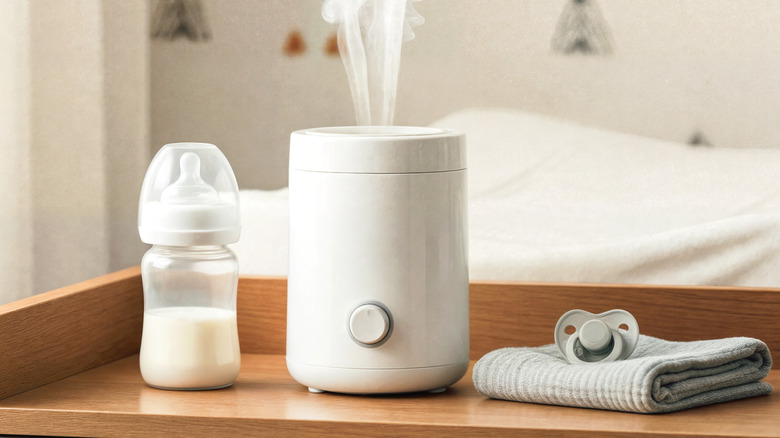
Most bottle warmers fall within the price range of $20 – $110, depending on size and features. Some moms swear by them and say they've purchased multiple. Others say they can't justify the price, and prefer to allocate their funds to more essential items (bassinet, stroller, diaper pail, etc). One Redditor said they purchased a bottle warmer and abandoned it for a simpler routine. "I tossed my bottle warmer and microwave water or use a tea kettle," they said. "10x faster than the $100 bottle warmer I have. Save your money."
Then there's the question of necessity. Looking back on my own situation, I can see how I was so focused on the time-saving perk that I neglected to ask myself, "is this really vital?" I could have easily continued to defrost my frozen milk bags in a warm water bowl. Even some parents who use the tool to warm up full bottles have called it a waste, with many pointing out that their babies eventually grew to prefer drinking cold milk or formula anyway.
A bottle warmer can add extra work to your plate
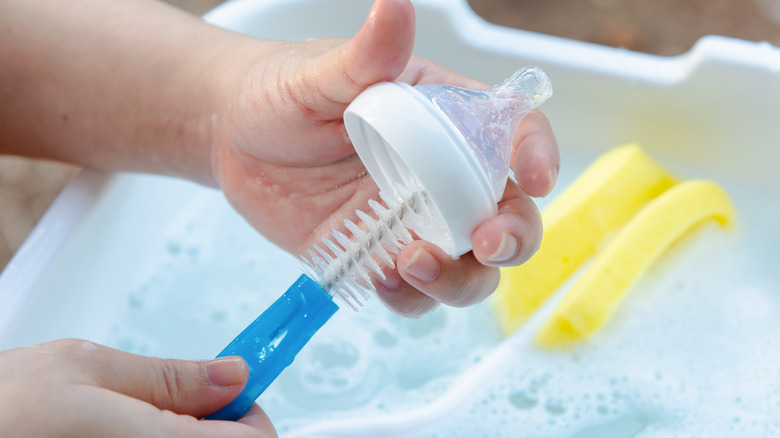
During a time that's intended for recovery and bonding, many postpartum moms are (understandably) hesitant to add new responsibilities to their plate. But a bottle warmer could unwittingly lead to just that — an additional tool that requires disassembling, cleaning, and disinfecting on a regular basis. According to a Munchkin cleaning tutorial on YouTube, it's recommended to wipe down the inside of a bottle warmer with a damp, soapy cloth and about once every 4 days. Any removable parts should be washed individually by hand.
Because warm water stored in the base can lead to a buildup of minerals (like calcium, magnesium, and lime) it should also be "descaled" with either a white vinegar and water solution or citric acid. Some brands recommend allowing the solution to soak for 15-20 minutes, while others suggest running a warming cycle to dissolve the minerals. If a bottle warmer is not properly descaled, the heating performance could be reduced, and any stagnant water could become a breeding ground for hazardous bacteria.
Parents across the internet have expressed frustrations with the cleaning process. A Redditor posted photos of a brown flaky substance in the base of their bottle warmer, which commenters suspected was either hard water buildup or milk residue. And a parent in a What to Expect forum said they were "Not very happy with this" after their bottle warmer turned water yellow after seven usages.
Experts warn overheating milk could diminish its nutritional value
Most bottle warmers work by creating steam, and can heat up to temperatures above the water boiling point (greater than 100 degrees Fahrenheit). Ideally, warmed milk or formula given to a baby should be close to the average body temperature (between 98 and 102 degrees), but some Reddit users have reported their bottle warmers heating either too hot, or too rapidly. "The first time my husband pulled a bottle out of there he flung it across the room it was so hot," one Redditor said.
Studies have found that excessive heat applied to milk or formula can break down the proteins, vitamins, and enzymes that make it beneficial for babies to digest. One examination of heat treatment on cows milk found that whey proteins in milk start to break down between 65 and 100 degrees Fahrenheit. A second study looked at human milk and found that heating caused variations in fat content and other nutritional properties. The study's abstract states, "It seems that the contemporary storage method (upright feeding tool, i.e. bottle) and bottle warming device, are not optimize[d] to preserve the unique properties of human milk."
Overheated milk could pose risks to your baby's health
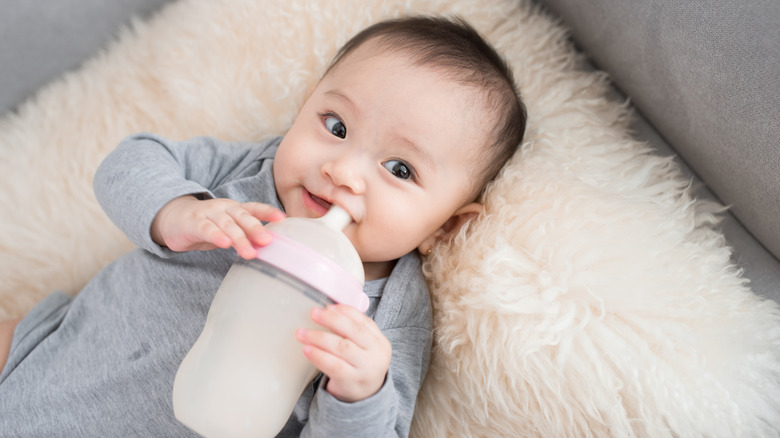
In addition to nutritional degradation, heating milk or formula to a too-hot temperature could lead to potential health complications for babies whose sensitive digestive systems are still developing. It could cause irritation in the stomach lining, which — if severe enough — could lead to gas, colic, or extended distress and crying.
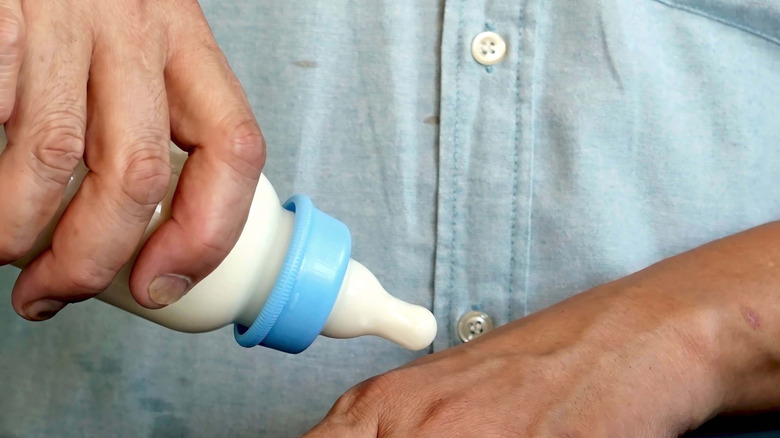
In extreme cases, infants can be potentially burned or scalded. The risk is especially high when using a bottle warmer to heat up water to a boiling point to mix with formula. Experts recommend waiting at least 5 minutes after water is boiled to mix it into the formula. Before feeding, parents should also perform a temperature check by testing a few drops of the milk or formula on the inside of their wrist).
Research also linked hot water to injuries in older children. An article published in the BMJ stated that one hospital's burns unit treated 23 kids between February 1995 and April 1998 who were scalded with hot water that was being used to warm bottles in their homes.
Both baby and mom could potentially become bottle warmer dependent
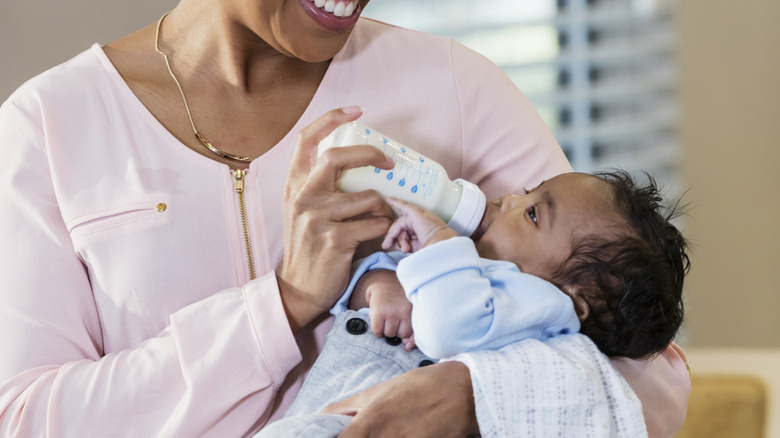
The final thing to consider when purchasing a bottle warmer is the long-term circumstances you could be setting yourself and your family up for. According to the CDC there is no medical necessity for milk or formula to be warmed, but some parents on Reddit say that after being introduced to warmed milk or formula, their babies struggled to accept anything else. One Redditor said they set out to transition to room temperature (and eventually cold) milk to prepare their baby for daycare. "If the milk cools to room temperature, he will make the most displeased face and turn away," they said. "He'll swat the bottle away until its rewarmed and then finish the bottle."
Parents in other threads had similar experiences with weening off warmers. One person in r/breastfeeding wrote, "Honestly, now she is to the point that if she sees the bottle and I put it in the warmer, she fake cries because it's not in her mouth." Other parents comment from the opposite side of the spectrum, saying that they never offered their babies anything but room temperature feeds or bottles straight from the fridge, thus; their babies never missed what they didn't know existed.