

What Does It Mean When A Baby Stares At You?
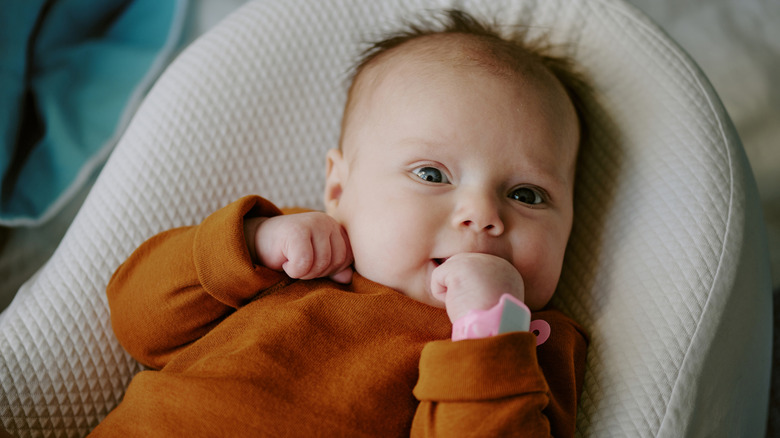
If you've ever been seated at a restaurant near a family with a young baby, you might have experienced the feeling of being watched. Under different circumstances, this could be off-putting, but when it's the wide and curious eyes of a little one peering at you, it's hard not to feel special. But what does it really mean when you capture the gaze of a baby? Could it be that you're attractive in some way? Or that your features are amusing to their developing brain? Perhaps yes (to both). Simply put — when a baby stares at you, it's an indication that their inquisitive mind is taking in and processing something about you. It could be the emotion or expression on your face, the bright colors of your clothing, or the interesting shape and shiny material of your earrings.
During the first year, babies go through a rapid evolution of what they can see. In the first month, their eyes can only take in shades of black, white, and gray, and their vision is limited to 8 to 10 inches in front of their face (which could be why parents instinctively lean in close). By 2 to 3 months old, they can recognize faces and see objects about 18 inches away. At 6 months, they can see a full range of colors and three-dimensional objects. Because vision develops before speech, babies might stare and smile as an early way of communicating – signaling that they recognize someone they know or they're intrigued by a stranger.
When could a baby's stare be cause for concern?
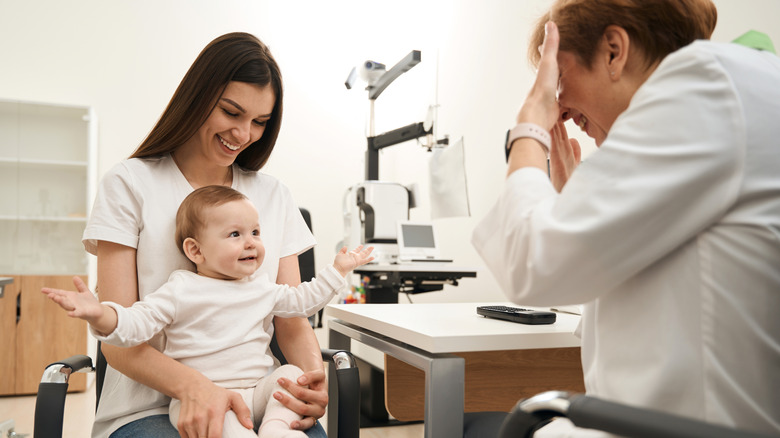
If you've noticed your baby staring at a person (or an object like a toy or fan), you may have questioned whether the fixation is cause for concern, or added it to your list of questions for your pediatrician. In most cases, a baby staring signals normal cognitive development, but there are a few red flags to look out for that could warrant a call to your healthcare provider. If your baby does not begin to follow moving objects with their eyes or maintain eye contact by around 2 to 3 months old, this could be a sign of either vision issues or developmental delays.
Around 4 months, most babies develop binocular vision (their eyes work together to process images). In some cases, their eyes do not work together — this condition is called strabismus. If your 4- to 6-month-old frequently crosses their eyes or turns one eye (inward or outward), it's a good idea to make an appointment with a pediatric ophthalmologist. This expert may treat strabismus through prescription eyeglasses, an eye patch, therapy, or surgery, depending on the severity of the condition and your child's age. Experts note the condition can be corrected, and that early detection is key.