

Here's What It Cost To Deliver A Baby In The '70s Compared To Today
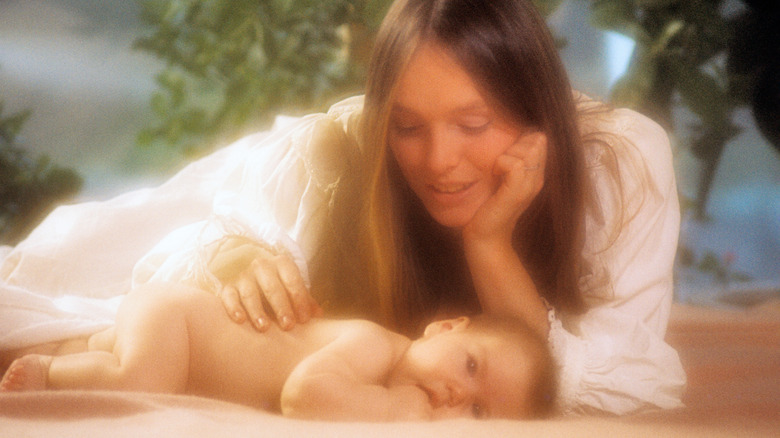
Parenthood includes a lot of unexpected expenses, and that's long before your kid decides they want to play a sport with pricey gear. Childbirth costs can quickly escalate, depending upon your health insurance plan and the circumstances of the birth itself. Although childbirth cost well under $100 in the 1940s, it was a lot more expensive by the 1970s. Records from 1978 show that birth costs ranged from around $900 to $2,500, depending on the city. The lowest costs generally involved using a midwife and staying two days at a hospital in New York City, and the highest were for a four-day hospital stay in Boston. Adjusted for inflation, this equates to around $4,800 to $13,400 in today's money, which is quite a chunk of change.
Unfortunately, health insurance wasn't contributing much to mitigate those fees. In 1976, a Chicago Tribune reporter interviewed a New York-based mom who was billed $2,000, and her insurance only paid $300, or 15% of the costs. A different news article from 1970 noted a weird disparity with pregnancy health coverage, with one source pointing out that insurance companies treat getting sick like an accident, but childbirth as something that shouldn't be insured because it can be prevented.
While those costs were pricy, childbirth costs are even higher today. According to Peterson-KFF Health System Tracker, vaginal births cost an average of about $15,700, and cesarean sections cost $29,000. On the positive side, once insurance is taken into account, these costs are approximately $2,600 to $3,100, so modern health care plans are shouldering more of the costs, compared to the 1970s.
The 1970s were a trade-off between costs and care
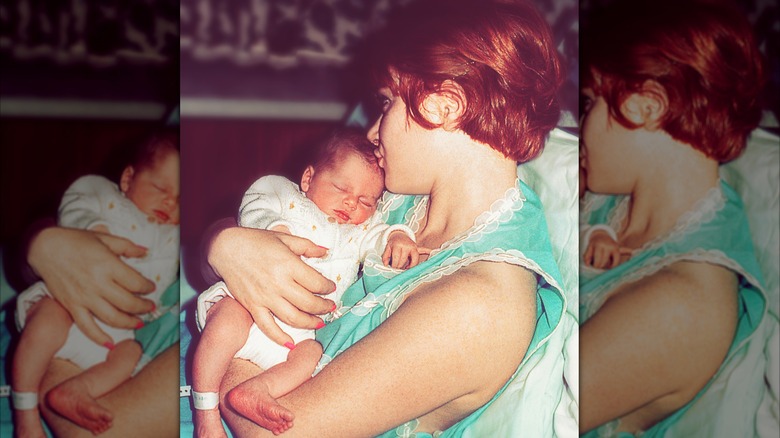
The costs of raising a kid to adulthood in the 1970s are surprisingly comparable to today, although families might spend that money on different things, since fewer people relied on day care centers a half-century ago. However, when it comes to healthcare costs, people in the 1970s and today would have plenty to commiserate about. Between 1970 and 1979, healthcare costs per person increased from around $300 to over $1,000 annually (about $2,700 to $5,000 in today's money). These days, the numbers are even more staggering. In 2023, people spent over $14,500 annually per person on healthcare, according to research by the Peter G. Peterson Foundation.
When healthcare costs were steadily increasing in the 1970s, some individuals advised prospective parents to look for more cost-effective facilities or choose a shorter hospital stay to save money. In 1978, California lawmakers tried to help lower birth costs by promoting legislation to expand midwifery services in the state.
However, these strategies were moot in complicated deliveries. On the plus side, although they were costly, more life-saving innovations were available. In the 1970s, new equipment, like electronic fetal monitoring, helped doctors make informed decisions about C-sections. Between 1970 and 1978, one study discovered that C-section rates increased from 5.5% to 15.2% of U.S. deliveries. Today, that rate has doubled, and C-sections occur during nearly 33% of all births. However, the recovery time is vastly shorter, with a hospital stay of two to four days in modern times, compared to six to eight days in the 1970s.