

Childbirth Cost Under $100 In This Decade — Here's How That Compares To Today
Raising kids can be expensive. Before they arrive, you're purchasing a car seat and other baby gear, like a crib or bassinet. Then there are the healthcare costs to consider, from prenatal care to the birth itself. While overall costs tend to average out when adjusted for inflation, like the cost of raising kids from birth to age 18 in the 1970s versus today, the cost of giving birth has varied pretty widely over time.
Back in 1943, a bill from a Pittsburgh area hospital charged $29.50 – a sum that equates to just over $580 in today's money. However, childbirth fees escalated quickly soon after. By the 1950s, two New York-based hospitals charged an average of $160. Not surprisingly, costs continued an upward trajectory. By 2025, the Peterson-KFF Health System Tracker reported average delivery costs were approximately $15,700 for vaginal births and $29,000 for cesarean sections.
Then again, that 1943 bill was pretty no frills. Two-thirds of the costs covered the delivery room as well as the mother's stay and care. There was no operating room charge, so the birth appears to have been vaginal. C-sections in the 1940s were less common than today, so there are likely fewer records to give us an idea of their costs at the time. For instance, in 1945, the C-section rate for hospitals in Detroit, Michigan, was 1 in 37, compared to 1 in 3 across the United States in 2026.
1940s postpartum experiences were no frills
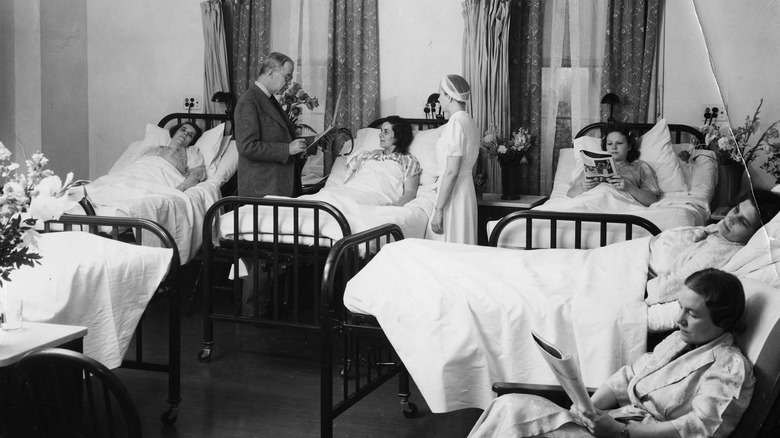
In this photo from a '40s-era hospital, instead of hanging with their newborns, women rested in a communal ward while their babies stayed together in the hospital's nursery. In contrast, facilities today often include a private space that's more like a hotel room, where the baby and parents can relax together. In addition to less plush accommodations, in the early 1940s, women's hospital stays ranged from less than 24 hours to five days. If that particular mom in 1943 from above stayed on the shorter side of this window, her costs may have been less.
In the 1940s, the length of childbirth-related hospital stays decreased due to World War II-specific shortages. As time went on, shorter stays were driven by the realization that it was beneficial to new moms to be out of bed to prevent complications like blood clots. In 2026, new moms usually stay one to two days for a vaginal birth, and twice as long for C-sections.
Besides bigger bills, compared to the 1940s, today's payments are more complicated due to health insurance. Health insurance was pretty rare in the early 1940s, and that 1943 bill was paid in cash. These days, the Peterson-KFF Health System Tracker noted that average costs after insurance premiums are approximately $2,500 for vaginal births and $3,000 for C-sections. While that's still five to six times more than that bill from over 80 years ago, flexible spending accounts can be helpful for building a financial cushion for unexpected birth-related bills, as well as asking the hospital you plan to use for a heads-up on costs.