

Rice-Sized To Pea-Sized: The Age Your Child Can Safely Start Using More Toothpaste
We may receive a commission on purchases made from links.
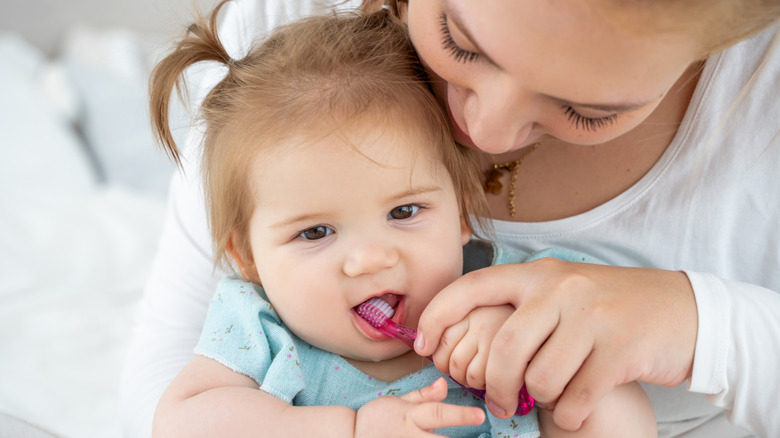
As kids grow, their oral care routines gradually change. From the beginning, parents start by cleaning their babies' gums. Once teeth emerge, a baby toothbrush is needed. Kids younger than 3 can use a tiny, rice-grain-sized amount of fluoride toothpaste twice daily. But once their kids are no longer toddlers, many parents begin to notice significant changes in the toothbrushing routine.
Besides upgrading to a slightly larger manual toothbrush or switching to an electric model, the amount of toothpaste also increases, with many guidelines recommending a pea-sized portion. However, it's not necessarily the number of teeth in a child's mouth that warrants the upgrade, says Dr. Anthony Skrobola, a pediatric dentist at Valley Pediatric Dentistry and Orthodontics outside New York City. "The factors that typically determine how much toothpaste is sufficient are primarily due to a child's ability to reliably spit out fluoride toothpaste and not swallow excessive amounts," he said.
Even small portions of toothpaste can provide excellent cleaning, says Dr. Trudy-Ann Frazer, a dentist with Pediatric Dentistry at Vinings in Smyrna, Georgia. "One mistake I see is parents thinking that because their child has more teeth, they need more toothpaste," she said. "They don't. More toothpaste doesn't mean cleaner teeth. Technique and actually reaching all of those little tooth surfaces matter much more."
When choosing a toothpaste, Frazer recommends a fluoride product with the ADA Seal of Acceptance. Many come in fun flavors, like watermelon or bubble gum, and some have sparkles, changing colors, or favorite characters to make brushing more appealing. However, for some children, less is more. "For kiddos with sensory issues or who may have trouble with the taste or texture, I personally recommend Dr. Bob's unflavored toothpaste," Skrobola says.
Make teeth brushing a collaborative process
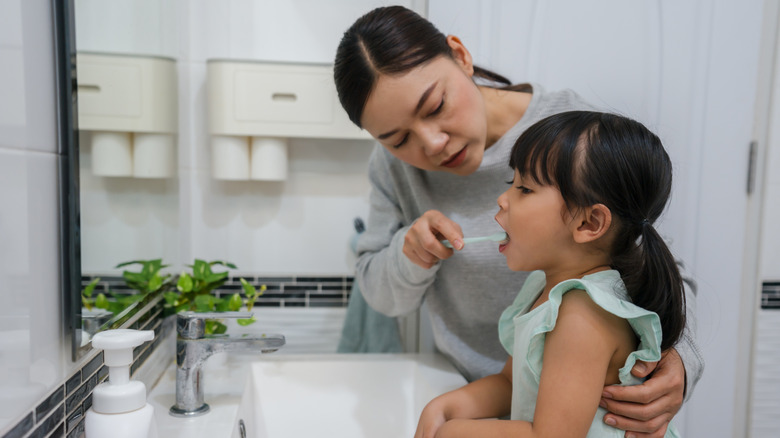
While some 3-year-olds may flex their independence, Dr. Trudy-Ann Frazer advises parents to continue an active role in teeth brushing. "Preschoolers are still developing the dexterity needed to thoroughly clean their teeth, particularly those back teeth," she advised. "I tell parents, 'Let them practice, but you still need to be the finisher.'" As a pediatric dentist and a new mom, Frazer admits that parents sometimes put pressure on themselves to make dental milestones a sign of independence. "A 3-year-old wanting to brush alone is great," she said. "A 3-year-old actually being responsible for getting every tooth clean is a different story."
To make tooth brushing easier, you may want to experiment with different vantage points. While some kids might enjoy watching themselves in the mirror, others might benefit from a more relaxed pose. For example, having your child rest their head in your lap allows a better view for tooth cleaning, Frazer says.
Dr. Anthony Skrobola also advises parents to introduce flossing early to normalize the task. "I can't tell you the number of 3- and 4-year-old patients who already have several cavities between their teeth," he said. Flossing is necessary anytime two teeth have come in next to each other. Fortunately, floss holders can make this job easier, and some, like this one from Cocolab, can be refilled to create less plastic waste.