

When To Start Cleaning Your Baby's Gums – And How Often You Should

We may receive a commission on purchases made from links.
For most babies, teeth start popping up halfway through the first year. In the early weeks, that time feels like a long way off when your baby's going through so many other changes. However, by the time you need to buy a toothbrush, you'll already be a pro at cleaning your kid's mouth, since you should start cleaning your baby's gums at birth.
Newborns have a variety of bacteria in their mouths, and they come into contact with different types of germs when they spend time with caregivers and as they explore their environment, putting toys, hands, and feet into their mouths. Once teeth begin to come in, bacteria in the mouth can interact with breast milk or formula, leading to cavities. Although cavities aren't a day one concern (unless your baby has a rare instance of being born with a tooth), it's still a best practice to clean their gums to remove leftover milk and keep bacteria counts under control.
Just like with teeth brushing, aim to clean your baby's gums twice a day, morning and night. Consistent times of day can make it easier to remember and get your baby in the groove of having their mouth cleaned. A thorough wiping before your baby goes to sleep at night is especially important. Babies have less saliva overall, and that amount shrinks even more when they're snoozing, increasing the chances for bacteria to stick around and run amok.
How to clean your baby's gums
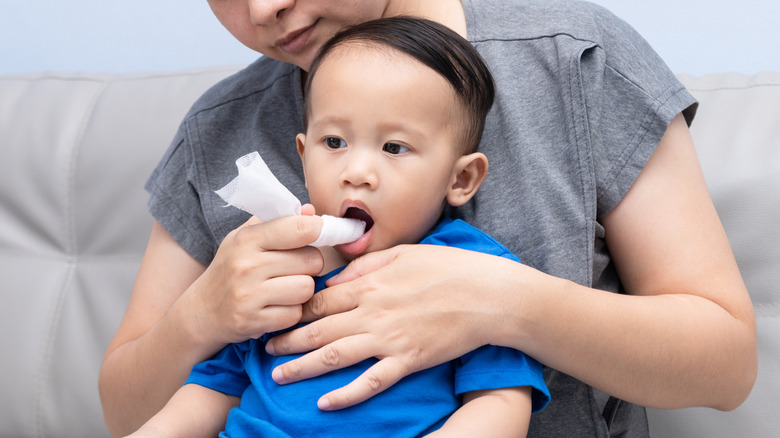
To clean your baby's gums, you can use gauze, cloth, or a finger brush. Silicone finger brushes, like this oogiebear Baby Finger Brush, have the advantage of being reusable, and some can be popped in the dishwasher for cleaning. Some of these brushes extend well past the fingertip, which could be a plus for parents who are concerned about their baby clamping down during cleaning. Alternatively, there are disposable brushes made of gauze. While these don't have that protective extension, they can be tossed after use and are cut in a handy shape to easily slide on a fingertip. They're also convenient when traveling or if you need to do a quick middle-of-the-night gum cleaning.
Whichever your tool of choice, make sure your hands are clean before you start, since bacteria removal is your goal. Just like with teeth brushing, move in little circles as you clean. Although a little bit of water can make it easier to wipe, some cleaning tools, like finger brushes, can be used wet or dry. Water temperature can range from warm to cold, depending on your baby's preference and where they are in the teething process.
Once teeth start appearing, you can continue using a finger brush or switch to a soft-bristled toothbrush. Add a tiny amount of toothpaste, about the size of a lentil. Stick with manual brush options for now — you'll need to wait a few years until your child's ready to switch to electric.