

No, You Don't Need To Protect Your Kids From Family Feuds This Holiday
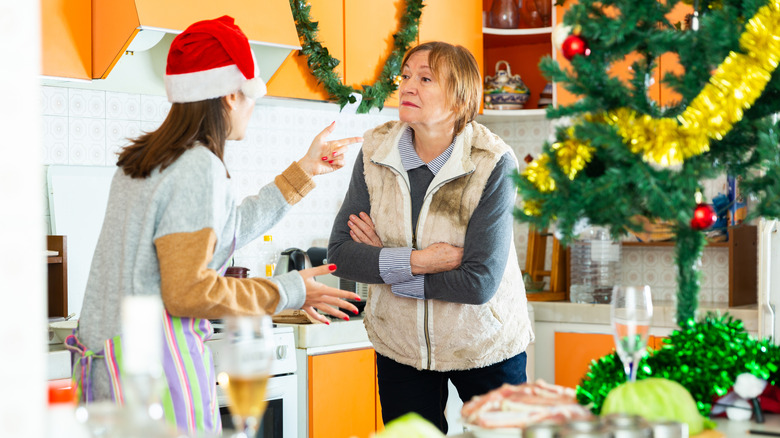
These days, planning for holiday family gatherings can feel a bit like navigating a minefield. Especially on the heels of major elections and global events, togetherness and holiday merriment tend to take a backseat to the hot-button issues of the moment, turning the dinner table into a gauntlet. But disagreements don't have to make the holiday gathering unsuitable for children. In fact, letting your kids observe respectful debate can be a valuable experience.
"When children witness respectful disagreements, they get a front-row view of important skills, including effective communication, reflective listening, empathy, perspective-taking, emotion regulation, and distress tolerance," Ellen Bee, a licensed clinical professional counselor at Chicago Psychotherapy, tells Mom.com. Of course, the keyword here is "respectful."
"Healthy disagreement will focus on the topic [or] issue and result in solutions, compromise, or change in perspective," says Noelle King, a mental health professional at Embark Behavioral Health. When done well, Bee says family feuds can affirm for children that they can have different opinions and still be loved and accepted — and do the same for others.
So, when do these disagreements go from helpful to hurtful for kids? Bee puts it plainly: "The line is crossed when the goal of the conversation shifts from understanding to harm." King also advises watching out for these clues: "Any sort of statement attacking the other person, their worth, character, or belittling, making fun, criticizing, or name-calling are all major red flags." This type of discourse can leave kids feeling confused, scared, and that differences of opinion aren't safe.
What to do when the holiday conversation turns toxic

When the family discussion starts to go south, there is still a lot parents can do to protect children and even glean good lessons out of the holiday drama. First, redirect the conversation if you deem the topic unsuitable for your kids. Ellen Bee suggests saying, "Let's save that conversation for another time," adding, "Saying this calmly and kindly shows children that boundaries are a form of respect, not rejection." If it's too late, Bee advises ending the discussion for the sake of your kids and making the case that everyone can agree to disagree.
And as hard as it can be, model how to handle these moments by owning your own shortcomings (raising your voice or insulting someone) and expressing your continued love for your family members. "This shows children that conflict doesn't have to threaten a relationship, and that relationships can be repaired," Bee says.
Similarly to helping your child when they come home upset about a teacher, follow up with your kids after the family gathering to help them process what they noticed and identify their feelings around it. Noelle King suggests parents practice with their children outside of these moments to help them feel confident in hearing others' opinions and expressing their own, including through role-playing. "Helping them ask questions like 'What is your perspective? What makes you feel that way? Why are you passionate about this topic?' are all ways to welcome a perspective and show openness," she says. Allowing children to process their experiences is key, Bee said. "Parents can also remind children that they're allowed to form their own opinions over time, and that their relationships don't depend on everyone agreeing."