

Bullying Isn't A Kid Problem — It's A Parent Problem
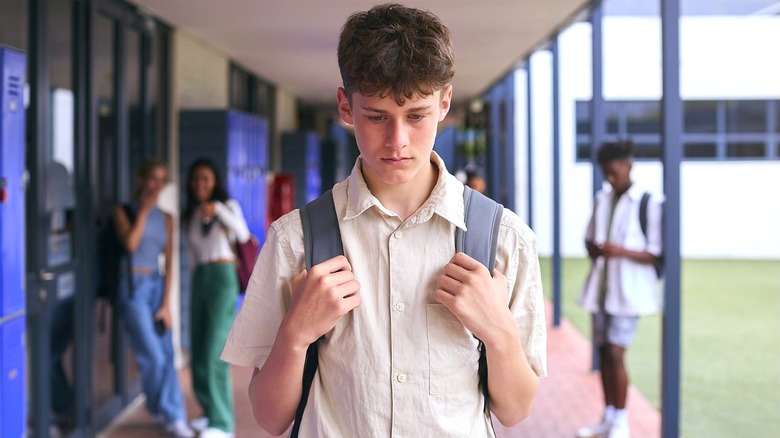
All parents are likely to agree that bullying is something we hope our children never have to experience in their lifetime. I know for me, when my three elementary-aged kids went from homeschooling to public school this past fall, bullying was undeniably my No. 1 fear. Yet, children who tend to bully others are still kids, and sadly, some of them may have tumultuous home environments with controlling or uninvolved parents.
A 2023 meta-analysis found that permissive parents, as well as parents who are uninvolved in their kids' lives, are more likely to have a child who engages in bullying behaviors. In contrast, having warm yet authoritative parents who set clear expectations and limits around boundaries and communication drastically reduces a child's likelihood of developing bullying behaviors.
It's true that since this school year started, most of the incidents my kids tell me about involve classmates whose parents I've never seen — not even at important school events. These supposed bullies also tend to be the children who cause the most classroom disturbances. While walking our dog, my family often sees one of these kids riding his bike after dark with no parent in sight. When parents are absent from their kids' lives, they miss critical opportunities to model positive behaviors and talk through incidents that happen in their daily lives. These moments are ultimately essential for teaching kids better self-control, empathy, and respect for others.
More variables that contribute to bullying behaviors in children
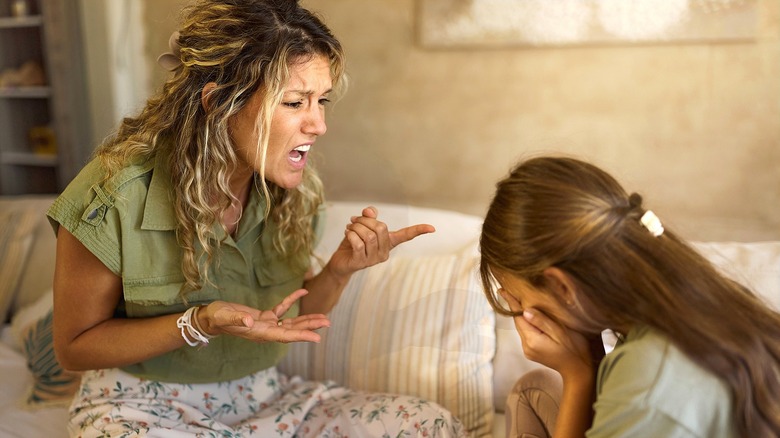
While uninvolved parents may be a primary factor in bullying behaviors, overly-rigid, hyper-controlling parents can also ignite these unwanted characteristics. At the start of the school year, my 9-year-old daughter was continually being picked on by a boy in her class. While her teacher and the principal quickly resolved the problem, I recently observed this boy and his dad at a neighborhood event. His dad yelled quite loudly at him in front of everyone for accidentally spilling his drink. I didn't see this man speak to any other adult, and his disposition was rather irritable.
While this may have been a one-off incident, a 2024 systematic review and meta-analysis published in The Journal of Youth and Adolescents found that harsh, authoritarian parenting significantly increases the risk of bullying behaviors in children. However, parenting styles aside, there are other factors that also play a part in the development of bullying behaviors. For instance, one 2023 study showcased how negative or violent media can normalize bullying behaviors. While you may be hurting yourself and your children with a rigid no-screen time policy, knowing the type of media your kids are consuming makes a difference.
Even though my kids have only been in public school for three months, I've discovered that bullying is way more nuanced than some parents realize. Some kids struggle with certain conditions like autism or ADHD, or simply lack empathy or self-control, which can make avoiding bullying behaviors more challenging. That's why I constantly tell my kids to speak up if there is ever an incident they need help navigating.