

Why Your Child Melts Down After School And How To Make Afternoons Easier
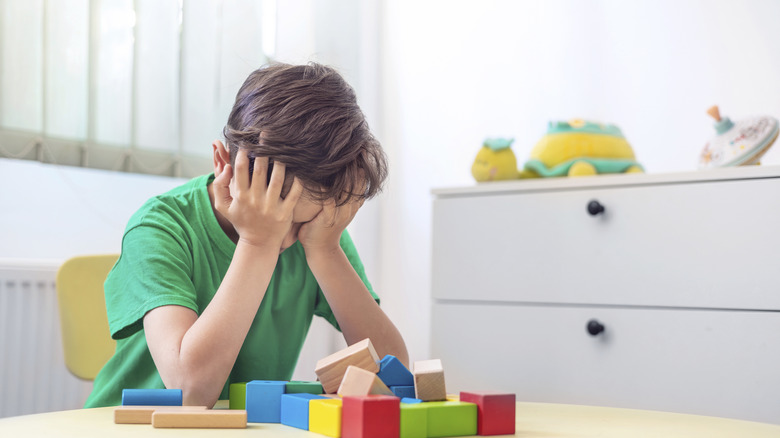
I used to think I was the only mom whose child would become unexplainably emotional after school — some days the second we set foot in the door, other days before we even reached home. It felt even more frustrating when we'd have a difficult morning before school, we'd come home in the afternoon, and the meltdowns seemed to pick up right where they left off. If you're experiencing this, you're not alone. After school terror is real and shared among many parents — so much so that there's an official term for it — restraint collapse.
Restraint collapse occurs after children hold it together throughout the entire day (asking permission to speak or use the bathroom, managing relationships with peers, and taking in the sensory overload of the classrooms, cafeteria, and schoolyard). By the time they get home, their repressed reactions bubble up to the surface. As Dr. Bethany Stafford, pediatrician at Parkway Pediatrics explained on Instagram, "Their emotional battery is empty, and you're their safe place where they can let their guard down and release all that pent up stress."
Personally, when I learned my son's meltdowns happened in front of me because he felt safe, it helped put the whole phenomenon into perspective. I didn't want to react to his emotions with stronger ones of my own. Instead, I researched ways to make the transition from school to home easier. As Stafford suggested, "We need to provide some space for a soft landing. Snacks, quiet, music, movement, whatever helps your child reset."
The formula for a smoother afternoon: connection first, questions later
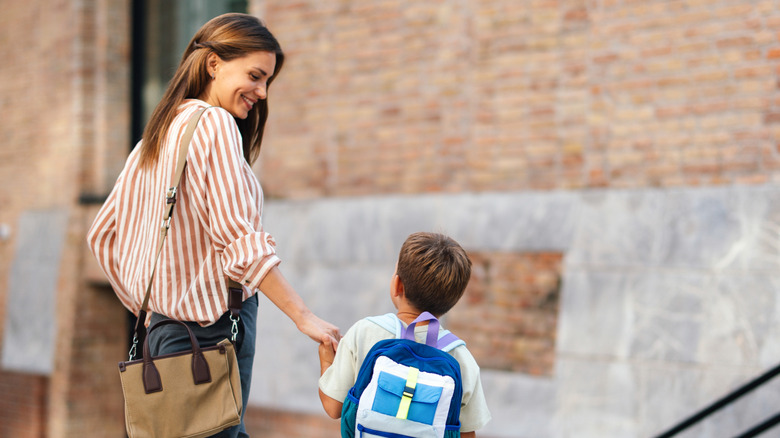
Whenever weather permits, my son and I walk home after school. I find that the 20-minute walk sets him up for a softer transition, giving him time to decompress as we weave our route together. Sometimes we stop at library stairs when there's something he wants to talk to me about, or there's something in his folder he can't wait to show me. The key to this strategy is letting him lead — he decides what he shares and when, rather than me initiating questions.
On days when I sense he's struggling, I go through a quick checklist with him. If he's hungry, I'll offer him a snack from my purse (something fairly healthy like a cereal bar) which can help to regulate his blood sugar and, in some cases, improve his mood. If there's something that's bothering him from his day, I'll offer him listening without responding with feedback or solutions until he's finished sharing. And if he seems to mentally overstimulated, I'll offer him a physical challenge to shake up his energy (my go-to is, "race you to the end of the block?").
If walking home isn't practical for you, the same strategies can be adapted for the car ride. The goal is to identify any emotional or physical needs your child might have as early as possible so that once you reach home, you can both relax. There will be plenty of time for questions (and homework) later.