

Your Relationship After Kids Will Never Be The Same But Here's How It Can Survive

Deciding to bring a new life into the world (and into your home) undoubtedly changes the interpersonal dynamic between you and your partner. In my case, my partner and I had our first baby after dating exclusively for two years. We had our third and final baby just four years after that. After the birth of our third child, I never thought too hard about the impact having three kids in four years would have on our romantic relationship. Yet, three additional humans to care for meant my partner and I had less time to prioritize our connection. We were inundated with new obligations, and our attention shifted from finding new ways to connect as partners to fulfilling our new roles as parents to three young children.
The worst part? My husband and I began to feel more dissatisfied with our relationship and we struggled with bouts of loneliness. However, temporary downward shifts or roadblocks in romantic relationships are quite common when couples become parents. According to one 2025 study, both men and women experience a mild to moderate decline in their romantic relationships after having their first child. Unfortunately, this decline tends to increase through the first eight years of a child's life.
To stay fully connected to your partner through parenthood, both individuals need to prioritize open communication, intentionality, strong social support, and an unwavering commitment to one another through trying times. What's more, these means of survival and connection should be addressed and reevaluated with each passing year.
How to maintain a healthy romantic relationship
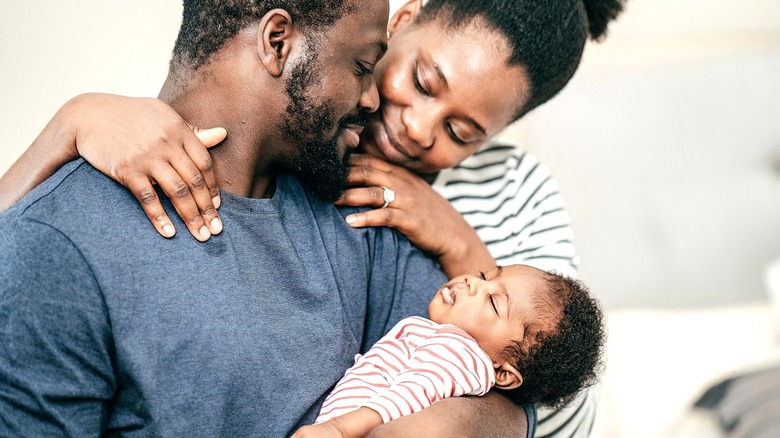
The years of transitioning into parenthood are tiresome, busy, and involve growing accustomed to your new identity as both a caretaker and role model. For women, this has a more direct impact on our physicality and day-to-day workload, yet the emotional weight of parenthood can be equally overwhelming for both men and women. When my partner and I had our first baby in 2015, we were both incredibly exhausted by the lack of sleep, constant feedings, and diaper changes. We were simply surviving.
Most of our communication within the first few years of parenting solely had to do with how to divide and conquer smaller tasks like making dinner and walking the dog, so life could run as smoothly as possible. Only when we began to actively show our appreciation for one another did we feel more connected as a couple. Daily check-ins and text messages also make a difference. Sure enough, a longitudinal panel study published in 2026 that focused on relationship dissatisfaction after parenthood showed most grievances stem from a lack of positive interactions between partners.
Dividing labor equally, showing gratitude for one another, being attuned to each other's feelings, and performing small acts of kindness go a long way. It's also important to use effective communication when you need help before you hit a breaking point. If you're struggling, be direct and use "I" statements like, "I feel overwhelmed waking up with the baby every night." Honest conversations minimize your knee-jerk reaction to place blame and build internal resentment — especially when you're stressed and tired.
Preserving your relationship as your parenting role evolves

Now that my kids are 11, 9, and 8, they no longer need our immediate attention at every part of the day. Therefore, my husband and I are experiencing a new phase of our connection — one that puts the focus more on our interpersonal relationship. This has led to many conversations about what we want and how to make appropriate time for one another as our children grow.
Once the hectic, moment-to-moment years of babyhood and preschool pass, you may need to invest some time getting to know your partner again. Besides being intentional about scheduling time alone and having micro dates on the couch once the kids go to sleep, show your care through attunement. Strive to have more regular one-on-one conversations with one another about the highs and lows of your day and what you need more of to feel loved or cared for in the relationship. While you may be glad your kids are no longer in diapers, raising tweens and teens is emotionally challenging and requires effective, ongoing communication with your spouse.
Especially during the middle school years, parents whose primary roles are "mother" and "father" may begin to question their identity as their children strive for more autonomy. Just as important as connecting with your partner regularly, it's essential to spend time discovering yourself again. When my husband and I set aside time to partake in activities we personally enjoy, we feel more positive about who we are and are able to connect more fully as a couple.