

What Does Green Baby Poop Mean?
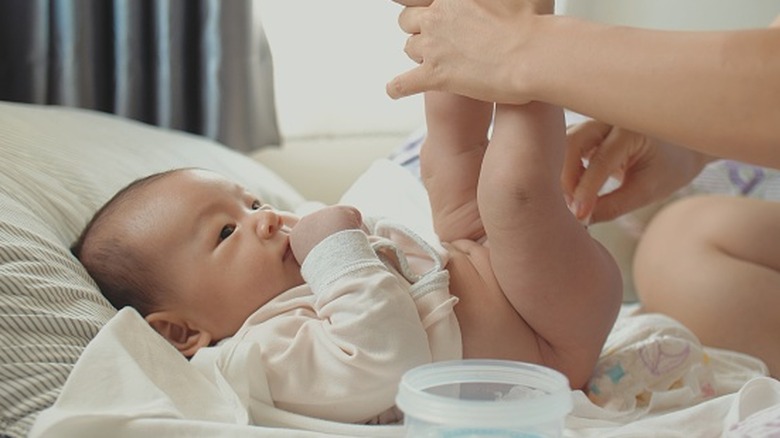
Along with all the delightful sweetness of hugging and cuddling your new baby, there's also a messy side, especially in the beginning. During the first six weeks, especially, you'll perform frequent diaper changes, since babies typically poop multiple times a day. During this time, you might notice the color of your baby's poop is greener than you expected. Fortunately, green poop is typically normal.
During the first couple of days of life, babies poop meconium, which is comprised of waste products from before birth. Meconium tends to be dark green, almost black. After the meconium is eliminated, a baby's poop color shifts to a yellow, brown, or green hue. However, if a baby is being treated for jaundice, their poop could also be green, since the phototherapy process helps them eliminate bilirubin, the yellow, recognizable pigment that comes with the condition.
In other cases, baby poop might be green due to faster digestion, since the gut bacteria that would change it to a brown color don't have time to complete this transformation. Alternatively, it could be connected to a baby drinking iron-fortified formula or taking an iron supplement. For breastfed babies, green poop is sometimes related to changes in the milk composition, like if a mom has eaten green foods, or if she's taking an iron supplement. Once your baby is old enough to start exploring solids, shifts in poop color can often be traced back to the new foods they're sampling, especially if their diet contains lots of green veggies.
Pay attention to these specific situations involving green poop
While green poop is often normal, it can also be a clue that something else is going on with your baby's health. For instance, if a breastfed baby has green, looser-than-usual stools (often described as frothy), it could be an indication of undigested lactose. This situation can happen when there is an oversupply of milk. Fortunately, breastmilk supply is adjustable. To help the body recalibrate milk production, mothers can try starting with the same breast during a six-hour period every time the baby wants to feed, expressing milk on the other side as needed to avoid engorgement.
Another time to pay attention is if your baby's green poop also contains mucus. On one hand, it could be connected to teething. Then again, if it occurs in conjunction with other signs that your baby's not feeling well, it could be an indication of an infection or food allergy. In these situations, the green poop might also have small amounts of blood in it, too.
While a call to the pediatrician is helpful anytime you need expert advice, in some cases, a change in poop color requires a medical assessment. If poop is white, red, or black (beyond the early meconium days), it could be related to an internal problem with the liver or bleeding in the digestive system. In addition, if green poop is related to an illness, a pediatrician can advise parents on how to ensure their baby stays hydrated.