

What Is The 3-Day Rule For Baby Food?
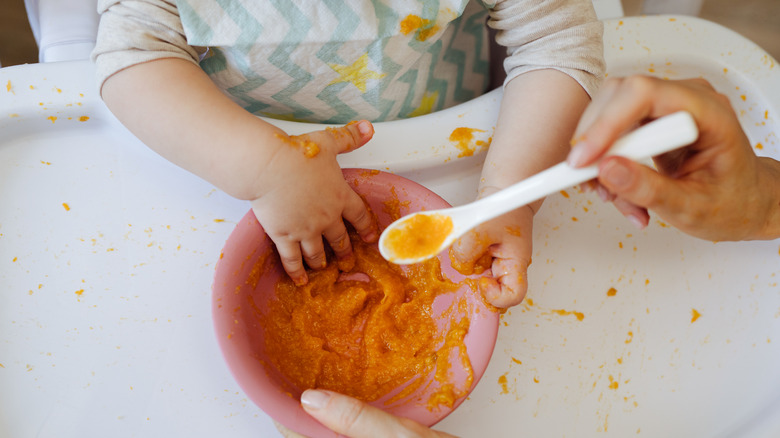
Introducing your baby to solids is an exciting step, but it can be nerve-wracking. It's not just about which foods to feed your baby — it's about how you introduce each one. Some suggest using the three-day rule, which encourages parents and carers to wait three days after introducing a new food before adding in another. The idea is that if there is an allergic reaction, the three-day rule makes it easier to trace the source. However, while this approach is valid, it doesn't apply to all solids.
Essentially, if you're introducing your baby to a food that's a known allergen, use the three-day rule. Dairy and egg allergies are both common, for example, and you should also be cautious with peanuts and tree nuts, as well as all types of fish, including shellfish. Soy, wheat, and sesame are other potential allergenic foods. On the other hand, most fruits and vegetables should be safe, as well as meats and other proteins. In the earliest days, experts suggest starting with oatmeal, introducing a vegetable, and then adding in a fruit. This method encourages a diverse palate, and the three-day rule isn't usually necessary for these foods.
The exception, however, is if anyone in your baby's immediate family has a specific food allergy, because genetic history is a risk factor. Eczema in early infancy is another indicator your baby may be prone to food allergies, so it's especially important to keep an eye out for any signs of a reaction.
What to look for when introducing allergenic foods

If you're worried about food allergies, it's natural to feel hesitant about introducing solids. But general guidance is that it's best to introduce them in the first six to 12 months of your baby's life, as early exposure during this time has been shown to reduce the risk of developing a food allergy later. You just need to know what to look for.
From the moment you introduce your baby to solids, keep an eye out for potential reactions. Mild symptoms include hives and some itching around the skin, nose, or throat, as well as mild nausea or one-off vomiting. More severe reactions include a widespread rash, swelling of the face, lips, or tongue, and repeated vomiting or diarrhea. Look out, too, for pale or mottled skin, changes in behavior, or sudden limpness. In the case of a severe reaction or multiple signs of a mild reaction, consult a medical professional immediately.
It's also important to keep in mind that being allergic to one food does not mean your baby is automatically allergic to anything else. While it might increase their risk of additional allergens, you should continue to introduce other foods and keep using the three-day rule. And once a potential allergen has been introduced, if your baby hasn't had a reaction, keep the food in rotation. Regular exposure to common food allergy culprits has also been shown to minimize the risk of developing future reactions.