

Here's When Your Baby May Finally Sleep Through The Night
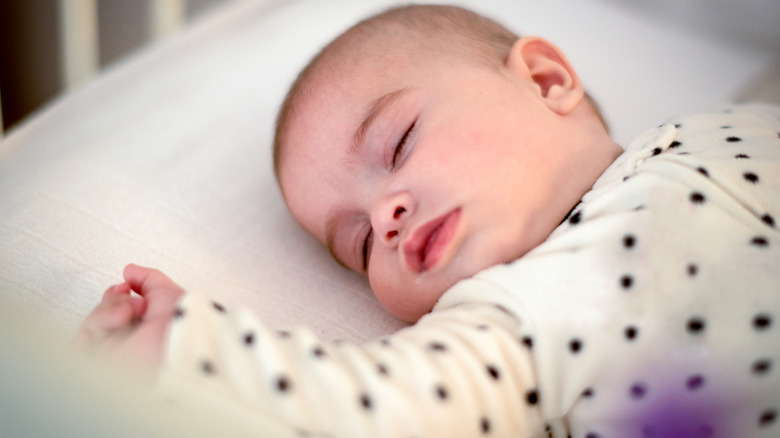
The sentence "I slept like a baby" takes on a completely different meaning for new parents. Rather than hours of continuous snoozing, infants are actually waking up as often as every two hours, at least during the first few months. It's normal: babies need to feed frequently, so waking up helps promote growth and weight gain. Also, babies are still getting acclimated to life outside their mother's womb. It's new and different, so they're looking for human contact for reassurance (and maybe a clean diaper, too). During those early weeks, it can seem like you're never going to sleep through the night again. But hang in there, this stage doesn't last forever.
While a full night of sleep for adults is seven to nine hours, around six hours or more is considered a full night for infants. When will your baby achieve this milestone? Although it's more likely to happen sometime between 3 to 6 months, there's still some variability here. On one hand, some babies might even sleep closer to eight hours at a stretch at this age. On the other hand, your baby might not be developmentally ready to sleep this long. According to a 2018 study in Pediatrics, at least 28% of 6- and 12-month-olds still hadn't achieved this milestone. That's okay, they'll get there eventually.
Even after your baby is sleeping six or more hours at a stretch, you might need to adjust your bedtime. If a baby starts that block of sleep several hours ahead of you, they'll wake up long before you're done sleeping.
Factors that influence nighttime sleeping and waking

Child development can sometimes be two steps forward, one step back, and this can be true with sleep. Kids who were sleeping through the night might start waking up again. These sleep regressions often happen at 4 months old, as well as later during the first year. Some of the reasons for waking are connected to separation anxiety, physiological development, or achievements like crawling.
Differences in sleep patterns can also be connected to whether your baby is drinking formula or breast milk. Since breastmilk is digested faster, breastfed babies are more likely to wake up frequently than formula-fed babies. Sometimes babies breastfeed more at night, especially if they are apart from their moms during the day. However, breastmilk has sleep-promoting components for babies and mothers as well, so other factors like taking too long naps during the day or sensory triggers like room temperature may be a larger influence.
Regardless of feeding method or age of your baby, do what you can to maximize your own sleep. For instance, during the early months, a bassinet near your bed may make it easier to feed or comfort your baby and get back to sleep faster. If possible, you could try going to bed earlier than usual, or take turns with a partner to meet your baby's nighttime needs. If you're home with your baby during the day, and your schedule allows, you may want to nap or rest when your baby sleeps.