

Bassinet Vs Crib: What's The Difference?
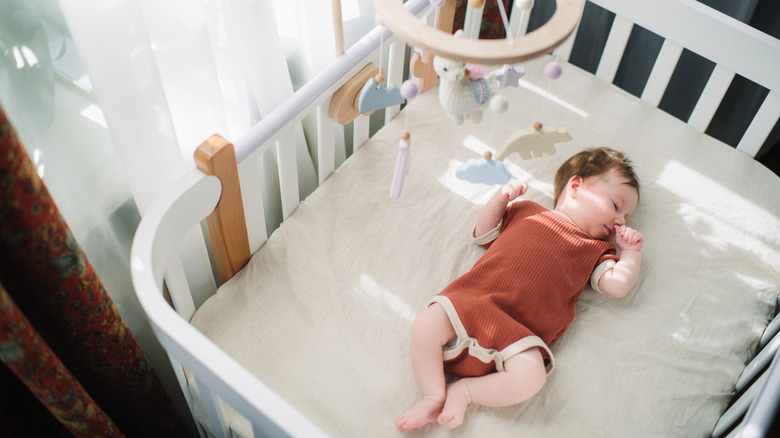
When you're expecting, especially for the first time, it can feel like the world of pregnancy and newborn care requires learning a completely new language. There are so many terms you might not have ever noticed or even heard before that you now see, hear, and even use daily. It can be especially confusing when it seems like people use terms interchangeably, like crib and bassinet. Are they the same thing? If not, what's the difference? Do you need both? Which is better?
Whew, take a breath, mama, we've got you. Cribs and bassinets are two different things, but both are recommended by the American Academy of Pediatrics as good, safe sleeping options for your baby. Bassinets are smaller beds designed for babies from birth to around 4 to 6 months old, before they become more mobile. They tend to be much more portable than cribs and can accommodate a variety of spaces and mobility needs. Cribs, on the other hand, can be used from birth until your little one is ready to move to a big kid bed. Because of this, cribs are much bigger than bassinets and are usually intended to stay put in one place. Some parents start with a bassinet and transition their infant to a crib as they become more active. Others opt to use a crib from the start.
Ask any parent, and you'll find that just as many babies loved their cribs as hated them. Or, they'll tell you that their firstborn took to the bassinet while the second preferred the crib from the start (and the third never slept at all!) So the best way to decide between a crib or bassinet is to consider what your needs and preferences will be, rather than trying to predict which your baby will prefer.
Crib or bassinet (or both): Which is right for you?
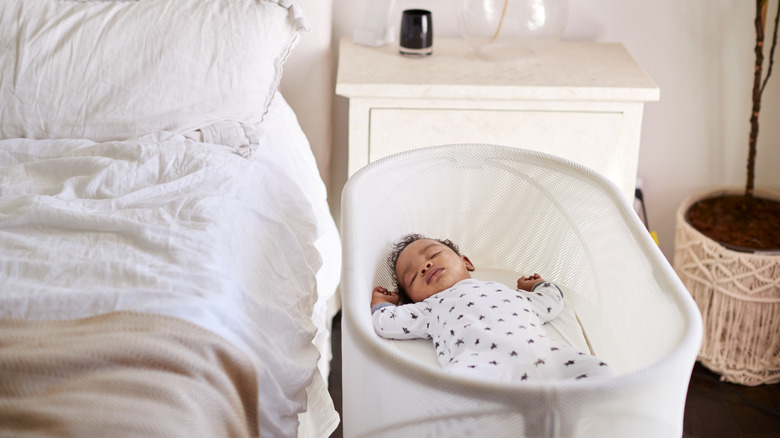
As with many aspects of parenthood, the choice between a crib and a bassinet comes down to what will work best for you and your growing family. First, where will your baby sleep? If you plan to keep your newborn in your room, a bedside bassinet might be ideal to keep your baby close without taking up too much space. Some moms find that a bassinet that is height-adjustable and can swivel with a lowering wall or side flap is especially helpful following a cesarean to keep baby in arm's reach without having to bend down or strain. If you plan to travel with your baby a lot in the early days, a travel bassinet will let them have their familiar sleeping space wherever you are. Bassinets also tend to have more bells and whistles than cribs, such as soothing, vibrating features or smart monitoring technologies.
However, starting with a bassinet requires transitioning to another sleeping arrangement after a few months. If you would rather stick to one bed, a crib is the way to go. If space is an issue, a mini crib might work better for you, which is around 38-by-24 inches, compared to a standard crib size of 52-by-28 inches. Many cribs are adjustable and convertible, meaning the mattress can be raised high for newborns and incrementally lowered as the baby grows before converting into a toddler bed. Standard crib sizes also simplify shopping for mattresses and fitted sheets. While all infant sleeping products in the United States are regulated for safety, investing in a new crib or bassinet ensures you are getting a product that follows the most up-to-date safety standards. When considering second-hand, use the U.S. Consumer Product Safety Commission's Recalls and Safety Warnings database first to check for any issues with the item.