

The School Lunch Mistakes That Make Independent Eating Harder
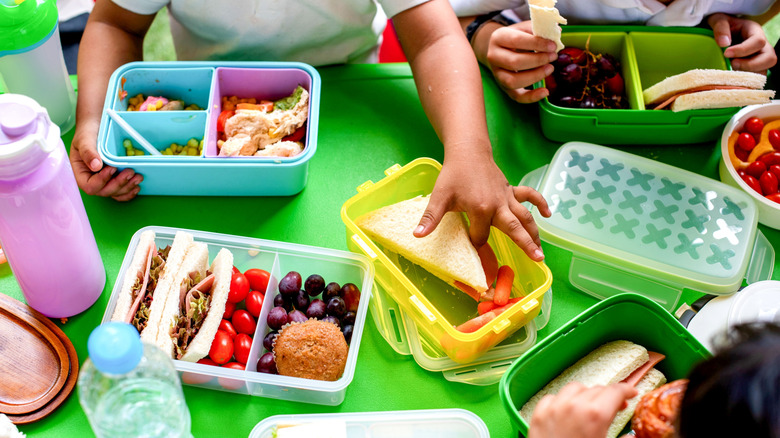
I homeschooled my son through his preschool years, placing a heavy focus on nutrition and time spent together in the kitchen (I'd guess that was close to 80% of his curriculum). So when we shipped him off to kindergarten, I expected him to have little to no trouble adjusting to the experience of cafeteria lunches. You can imagine my surprise during the first week of school when he came home with portions of his lunch left untouched (items I knew he loved like carrot sticks, cucumber slices, and pretzel rods).
I later learned it's common for kindergarteners to temporarily eat less as they adjust to their surroundings. Dr. Savas Raju Kakarlapudi, consulting pediatrician at Children's Rainbow Hospital, explained in a YouTube video that the first few weeks of the school year can shake up a child's routine and make it more challenging to eat independently. "Some [children] may be excited in school. They may be distracted during lunch period. Others may feel shy to eat in front of classmates," he said. Independent eating means listening to those hunger cues, but emotional triggers, stress, or simply envy can cause kids to turn away from foods they'd normally eat at home. When packing their lunch the night before, Kakarlapudi advises to include colorful — but enticing — options.
That, in hindsight, was my first mistake. I'd assumed he'd love the green vegetables he enjoyed at home, but when he discovered other kids' snacks were more brightly colored (and fun-shaped), he was jealous (I should have grabbed the Rainbow's End trail mix from our Trader Joe's snack list). There were more mistakes that followed, which eventually became lessons learned.
How to encourage independent eating at school
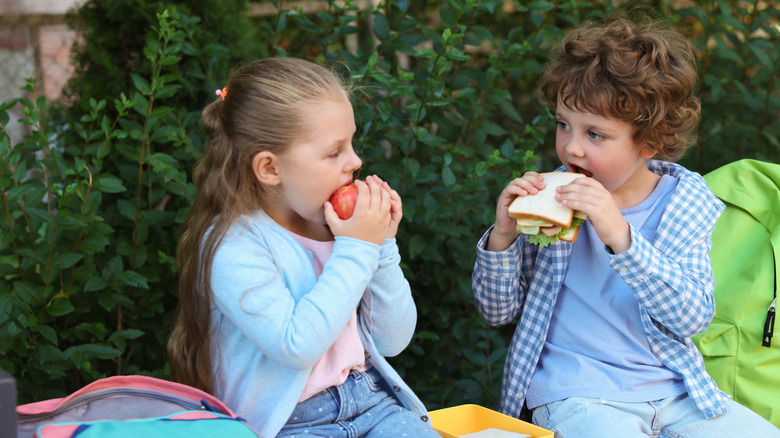
Next, I learned to minimize my son's portion sizes. I'd pack the sandwich he typically ate at home, and he'd return with half of it. When questioned, he said it wasn't that he wasn't hungry — he simply had less time to eat at school. According to a study summary by the School Nutrition Association, elementary and middle school students spent an average of 20 minutes per day in the cafeteria, but spent half that amount actually eating.
Compounding the issue of the timeframe, many parents (myself included) also misjudge their young child's appetite. As Theresa Hennig, a registered dietitian and educator, pointed out in a YouTube video, "Keep in mind, children's energy needs and appetites vary greatly, and so, they probably don't need nearly the amount of food that we are trying to give them." Experts warn that too much food can overwhelm a child, which can cause them to eat less than they normally would or reject the meal altogether.
Finally, I noticed drinks with straws that were tricky to insert and difficult-to-open Tupperware containers were a deterrent to my son, especially during kindergarten. Because school-aged children are still developing their motor skills, experts advise selecting plastic containers designed specifically with children in mind, and to practice exercises at home that strengthen their hands (squeezing, pinching, etc).