

5 Disadvantages Of Using A Breast Pump

Whether they're used exclusively or occasionally, breast pumps are a crucial tool for supporting breastfeeding. During the early days and weeks, pumping is often necessary for babies who are in the neonatal intensive care unit (NICU). Pumping can also be crucial for babies with latching difficulties, including tongue-tie or lip-tie.
Although some breastfeeding parents have work arrangements that enable them to breastfeed their babies during the workday, others rely on breast pumps to maintain milk supply and prevent their breasts from feeling uncomfortably full. Expressed breast milk can also provide families with flexibility, allowing partners to take turns feeding the baby.
Like any feeding mechanism, including breastfeeding, pumping can have its challenges, too, and it's a good idea to understand these potential difficulties before getting started so you know what to expect. Fortunately, just like breastfeeding challenges can be overcome, these pumping-related difficulties can often be navigated and managed as well.
Pumping can hurt

While it's expected that a breast pump feels different than feeding a baby at your breast, in some cases, pumping can be painful. Your nipples might feel tender or even show signs of damage. Electric breast pumps typically have adjustable settings so that users can control the amount of suction. Although it might be tempting to use a higher setting, especially if you feel like you're not pumping as much as you expected, this extra suction could cause discomfort.
In addition, nipple chafing or cracking might also be due to flanges that don't fit properly. Breast pumps often come with multiple flange sizes, and inserts are also available for even more sizing options. However, this versatility can also make it overwhelming and confusing to know how to find the correct size.
Fortunately, these issues are surmountable. With the suction setting, some health professionals suggest using the highest setting that is within your comfort zone. Some pumps also have multiple modes that vary the suction even further. For example, once you notice your letdown reflex has begun, you can switch to a gentler mode to make pumping more comfortable. As for flanges, it may take some trial and error. After measuring your nipple, you may find a slightly larger size is more comfortable for you than the exact measurement. Some pump users might also prefer a lubricating spray to lessen friction between nipples and flanges.
Pumping might produce less milk
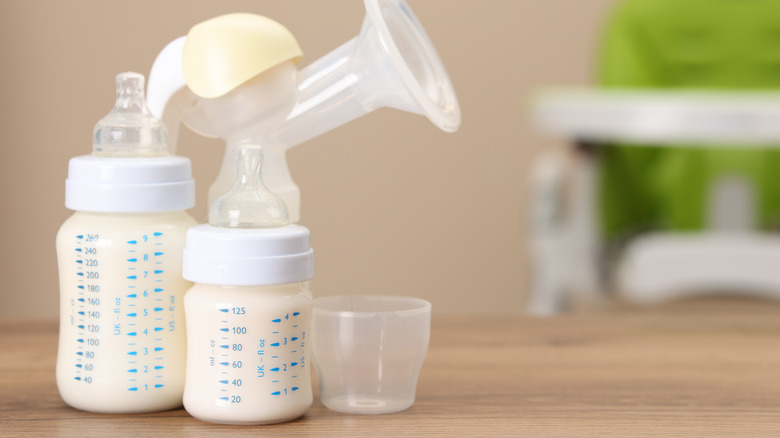
When you're feeding your baby at your breast, you measure supply with metrics like diaper output and weight gain. With the pump, ounces of milk are the main focus, and smaller-than-expected numbers could be a source of stress. Some pump users find it's a constant struggle to pump enough milk, while others might be distressed to find that the amount they pump starts decreasing over time.
To overcome this difficulty, start by troubleshooting your pump. Some parts, like pump valves, last anywhere between a couple of weeks to a couple of months, depending on the amount of pumping. If valves are stretched or ripped, they could impact a pump's effectiveness.
As an alternative, you might find the best course of action is to supplement with a different pumping method. Some mothers prefer a hands-free, wearable electric breast pump. These models are great for multitasking, allowing users to fit in pumping sessions alongside other chores. Some users may find they get more milk with this option. They might feel more relaxed and less laser-focused on pumping, since they can't see how much milk is being expressed while their attention is elsewhere. As another option, you could try adding an extra session with a manual pump or hand expressing. In other instances, people have found it helpful to end an electric pumping session with hand expression.
Pumping can be labor intensive
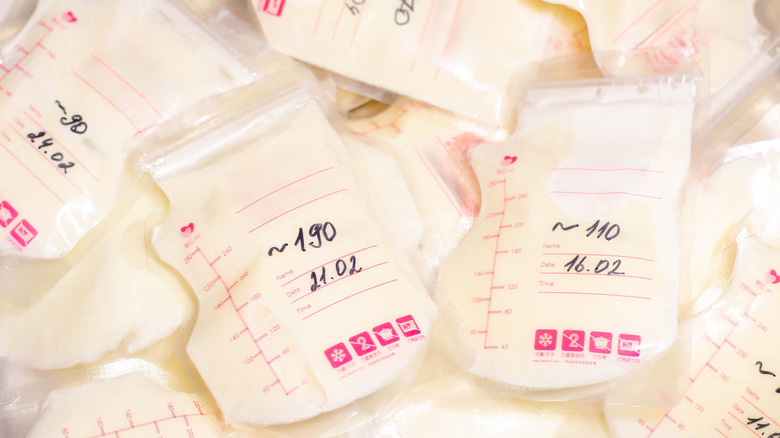
Life with an infant can be hectic, and using a breast pump just adds one more set of tasks on top of all the millions of other things you need to do daily. Besides making sure the parts are all in working order, breast pumps need to be cleaned properly to protect babies from germs. While you can save time at work by bringing extra pump parts, the trade-off is that you'll have even more components to wash at the end of the day.
Although you can ask a partner to take on this job or outsource it to your dishwasher, there's still the task of packing up the parts daily and remembering not to forget any pieces as you get yourself and your baby ready to head out the door.
To decrease the mental load, you could stow extra pump parts in your car or desk drawer at work. However, if you're regularly using two sets of parts already and don't wish to acquire even more, you could also keep a manual pump as your backup. Another option is to keep storage bags or bottles on hand and hand express. Even if hand expression isn't your preferred method, this technique can be a useful alternative in the event of a missing piece or unexpected pump problems.
Pumping can be pricey

Electric breast pumps vary widely in price, and you could spend anywhere between $100 and$300 or more, depending on the features and included accessories. Beyond the initial expense, you'll have the upkeep costs of replacing parts (like valves), and buying storage bags and bottles, as well as bottles and nipples for feeding.
Fortunately, these costs can often be mitigated by using health insurance benefits. However, since care plans vary so widely, you'll need to contact your insurer to see what types of pumps are covered and what the procedure is for acquiring one. In some cases, you might need a prescription for purchase or rental. For instance, if your baby has specific medical needs, you might need to rent a hospital-grade pump. Besides being considerably more expensive if purchased outright, these pumps are intended for multiple users, so that's why renting makes sense. Although some other models are touted as "hospital strength," these single-user models don't have the complex features available with a hospital-grade model, such as backflow prevention.
Beyond the potential difficulties of navigating the insurance system, there's also the downside that you might discover you're not happy with the brand or model you picked. With consumer-grade pumps, there's no option to try before you buy, and you might later decide a different brand is a better fit. In that case, you may still have to shoulder the expense if you decide to get a second pump.
Pumping is a completely different experience

Breastfeeding is a unique bonding experience that can't be replicated with an electric breast pump. In addition to the external communication that happens as a mother holds her child and the baby latches on, there's also internal communication. The mother's body releases hormones like oxytocin in response to the baby's suckling. At the same time, if the baby has been exposed to any germs, the mother's immune system is picking up info from the baby's saliva to ramp up antibody production in the milk. In contrast, frozen breastmilk that was pumped days or weeks earlier won't have these up-to-the-minute additions. And listening to the mechanical rhythm of an electric pump motor can be disheartening, especially if you miss being with your baby.
When you're pumping, you also have to remember to schedule your sessions at specific time intervals, both to keep your breasts from feeling uncomfortably full and to maintain your milk supply. This could be difficult to carve out these times during a particularly busy workday or if colleagues are scheduling meetings that conflict with those times. In contrast, breastfeeding is often more baby-led, so feedings could happen more frequently or at different times, depending on the baby's particular needs that day.
To avoid any scheduling stress, some find it helpful to make pumping sessions a repeated event on their work calendar. To put yourself in a positive headspace, there are lots of options. Some mothers use the time to play games online, enjoy a tasty snack, or look at videos of their baby.