

Why Your Toddler Could Be Getting Acne (And What To Do About It)
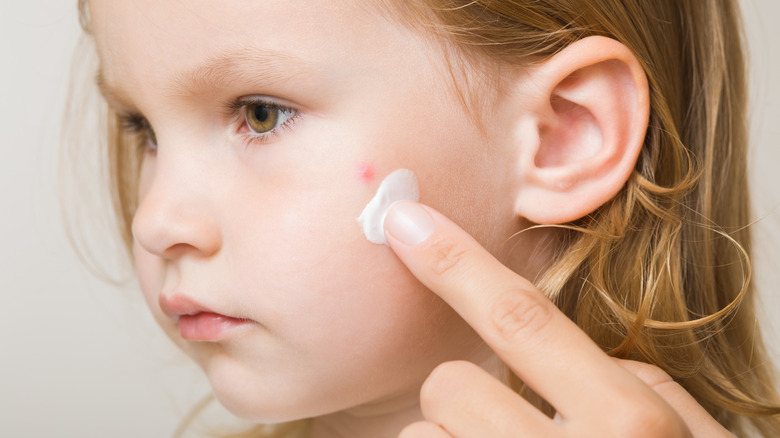
Bumps on a toddler's body can trigger alarm bells for parents, and some might even question whether their little one is experiencing acne. While legitimate acne is uncommon among kids in their toddler years, it's important to keep an eye on any developing skin blemishes since other health conditions may be causing the breakout.
True acne means there are comedones present in areas of the body where oil glands exist, explains Dr. Lycia Thornburg, a board-certified dermatologist and founder of Lycia Thornburg, M.D. Dermatology and Captured Beauty Aesthetics. Comedones are bumps that appear on a person's skin when a pore or hair follicle gets blocked, usually by oil or dead skin. They can appear white or dark, with the latter commonly referred to as blackheads. "Acne can be common in newborns and infants, but between the ages of 1 and 7 is actually quite rare because hormones are naturally low during this stage of development that stimulate oil glands," Thornburg said.
If an infant's acne does not go away during the first year, there may be other health issues at play, such as a hormonal imbalance (like too much testosterone) or endocrine abnormalities. "This should signal a red flag and be an early cue something else is happening in the body if acne is present," Thornburg said. "Other signs could be body odor, early pubic or underarm hair, or fast growth." Experts say parents should contact their healthcare provider if they spot acne on their toddlers to rule out other health issues.
Other causes of acne-like bumps in toddlers
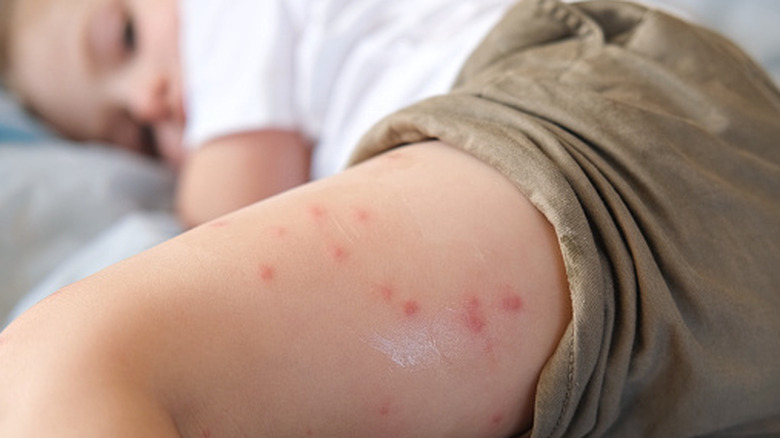
If a child experiences acne or other symptoms of early development during their toddler and early childhood years, a healthcare provider may suggest hormonal screenings and blood tests. However, if a toddler or young child develops bumps and irritation, there may be other causes to blame. "There are many conditions that can mimic acne but lack comedones, like keratosis pilaris (rough bumps on cheeks, outer arms, thighs), perioral dermatitis (small red clusters around mouth, nose, eyes), or milia (tiny firm white cysts)," explained Dr. Lycia Thornburg. "It's always important to see a board-certified dermatologist for diagnosis and treatment."
Food allergies frequently manifest during the toddler years as well, as foods like dairy, eggs, and tree nuts are introduced. Young children also begin to react to environmental stimuli around this time. Allergies can cause hives, which parents may mistake for acne. Hives can also appear at the sites of bug bites.
Thornburg advises scheduling an appointment with a provider who can prescribe the correct treatment course. She also recommends avoiding harsh scrubs and exfoliants or combining over-the-counter treatments, which can worsen the irritation. However, a gentle cleanser followed by applying a ceramide cream may help manage mild skin irritations, she said.