

When Can Babies Sleep With A Blanket? Here's What Pediatricians Say
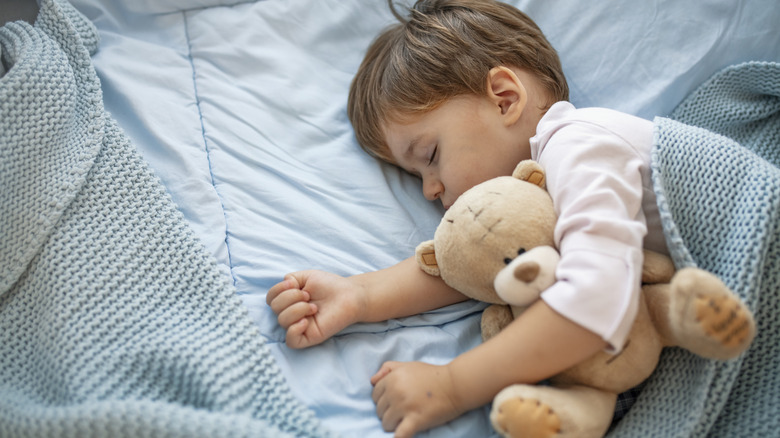
When our family was expecting, a friend gifted us the most beautiful hand-embroidered set of sheets, blankets, bumpers, and throws — all featuring bears to fit our nursery's theme. I set them up in the crib not 24 hours after the shower, but shortly thereafter, my bubble was burst when I learned that babies can't actually sleep with blankets — at least not until they reach 12 months old, with a few specific growth markers checked off.
"More important than age, infants must possess certain developmental milestones in order to get themselves out of a compromised situation with a blanket," explained Dr. Karen Klawitter, a pediatrician at Community Health Northwest Florida and JustAnswer contributor. "Infants and toddlers must be able to roll over both ways easily, push up to their knees, and get to a sitting position on their own."
Introducing a blanket before the baby is developmentally prepared could potentially lead to sudden unexpected infant death (SUID). The most commonly reported form of SUID is sudden infant death syndrome, or SIDS — the No. 1 cause of death in babies nationwide. Dr. Angela Cabarcas, a pediatrician with Bluebird Kids Health, explained: "Blankets pose a risk of suffocation and strangulation in infants. To prevent sudden infant death syndrome or accidental deaths from suffocation or strangulation, the American Academy of Pediatrics recommends that all infants sleep in their own sleep space on a firm, flat mattress without any soft materials present in the crib (i.e. no blankets, stuffed toys, pillows, bumpers)."
Alternatives to keep your baby warm and comfortable at night
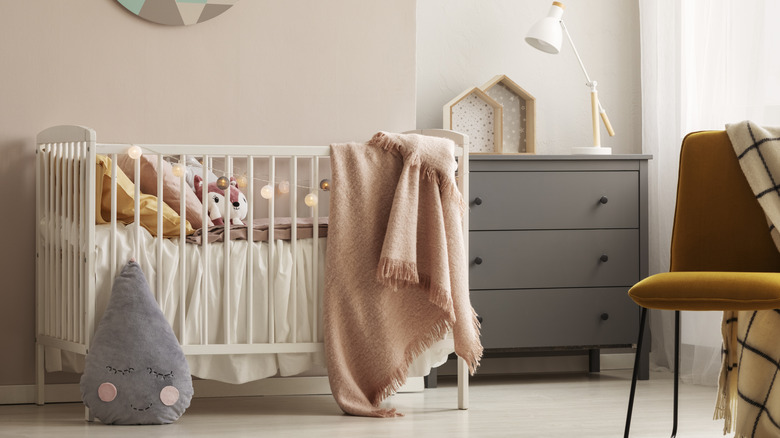
While your child's comfort level is likely on your list of worries, Dr. Karen Klawitter says a household temperature between 68 and 72 degrees Fahrenheit is sufficient. "The most common misconception from parents about blankets and safe sleep is that babies get cold at night and need blankets to stay warm," she said, noting that infants are usually safe and comfortable with one additional layer to what an adult would need. "Blankets can also cause overheating in infants, which is often associated with SIDS in infants," Klawitter added.
If your baby is too young for blankets, or your 1-year-old doesn't take to them, Dr. Angela Cabarcas recommends opting for a sleep sack. Similar to a sleeping bag, a sleep sack envelops a baby's body, legs, and feet, though they typically feature cut-out sleeves for the arms. "They zip up to keep the baby warm all night without having to worry that a blanket may accidentally come loose," Cabarcas explained. Some sleep sacks even come in toddler sizes until your little one is ready for a blanket, which should be constructed with breathable material like cotton, she says.
And if your baby is adequately layered but still struggling to fall asleep, it could be due to something else entirely — like an abrupt transfer from your arms to the crib or overstimulation. If this is the case, the 5-8-5 rule can help with soothing: 5 minutes with the baby in your arms while you walk around slowly; 8 minutes sitting down and holding the baby in a still position; transferring the baby and waiting 5 minutes to ensure they fall asleep.