

Don't Fret About The 'Average Age' For Potty Training Boys: Here's How To Know He's Ready
We may receive a commission on purchases made from links.
Along with first words and first steps, one of the milestones every parent eagerly looks forward to is the day their child is ready to give up diapers for good. But when will that happy day be? There's no easy answer to that question, especially for parents of boys. Conventional wisdom has it that boys train later than girls, but for every mom who frets that her boy is still having accidents at age 4, there's another who brags that her son was fully trained by his second birthday. So what's the real story, and how can you tell when your boy is ready to give potty training a go?
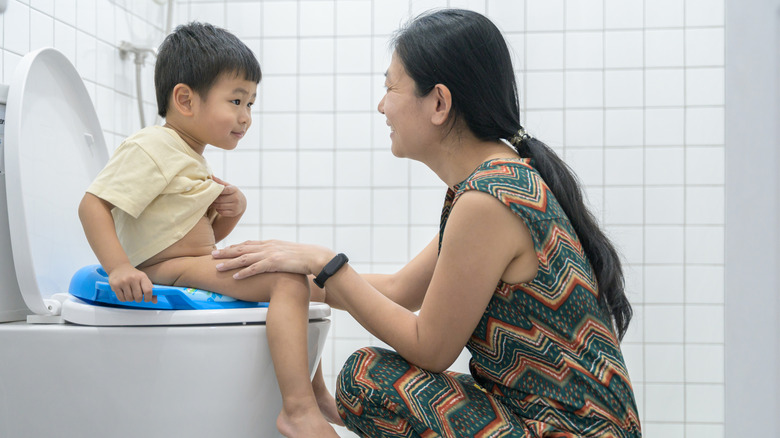
First things first: Take a deep breath. Many pediatric experts believe that there is no one "perfect age" for toilet learning, though it's best not to start too early. Children under 2 years typically don't have enough physical control over their bladder and bowels to use the potty consistently, and urging them to try before they're ready can be frustrating for both parent and child. A better approach is to watch for signs of readiness such as regularly staying dry for two or more hours, asking to have a dirty diaper changed, or the ability to pull their pants on and off. If your child actually asks to use the toilet or watch you doing it, so much the better.
It's true that girls generally potty train faster than boys, but usually only about two to three months earlier — not an enormous difference in the grand scheme of things. The child's personality plays a big role, too: Some boys are very active and don't want to interrupt their play to use the bathroom, while other boys seek out the praise and sense of accomplishment they get when they use the toilet successfully.
Your boy will be toilet trained on his own schedule
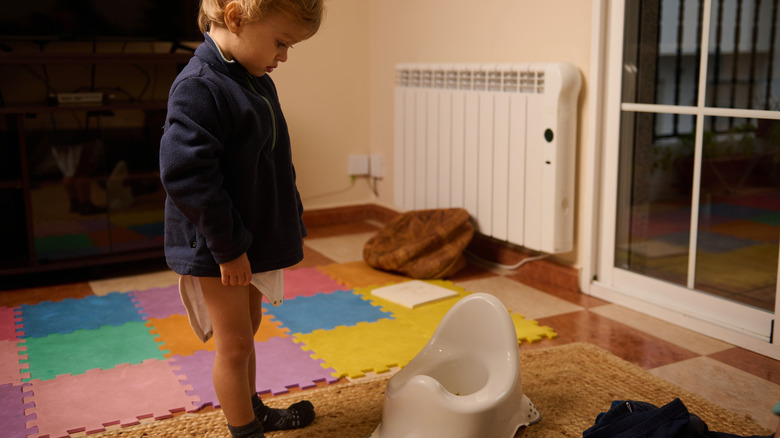
Around the time of your boy's second birthday, you can start looking for signs of toilet readiness, such as discomfort with a wet diaper or being able to follow simple directions. Some experts recommend starting with a potty chair, which is easier for a toddler to use. Read your child simple books such as Diapers Are Not Forever and Potty Superhero: Get Ready for Big Boy Pants!, and then let him sit on the chair with his diaper on for a couple of days before trying it without. Many experts think that boys should sit to pee when they're training at first.
From there, you can start taking your boy to the potty at the times he's most likely to need it, such as after waking up or before bedtime. Make the visits short — around a couple of minutes only — and it's usually good to praise him whether or not he goes. Once the routine becomes consistent, you can consider using underwear during the day and saving the pull-ups for nighttime.
The keys to toilet training success are calm and patience. Scolding or shaming a child for soiling will make the situation worse. If your boy resists using the toilet, don't fight it; let him go back to pull-ups until he feels ready. Some children balk at peeing and pooping in the toilet out of fear; allowing them to flush the toilet or watch an older sibling can help ease the anxiety. Even after your boy gets the hang of it, he may regress, especially if there are new situations or stresses in his life (starting preschool, a move to a new house). Stay consistent and reassuring, and before you know it, the diaper days will be gone for good.