

Why Some Babies Are Born With A Lot Of Hair — And Some Aren't
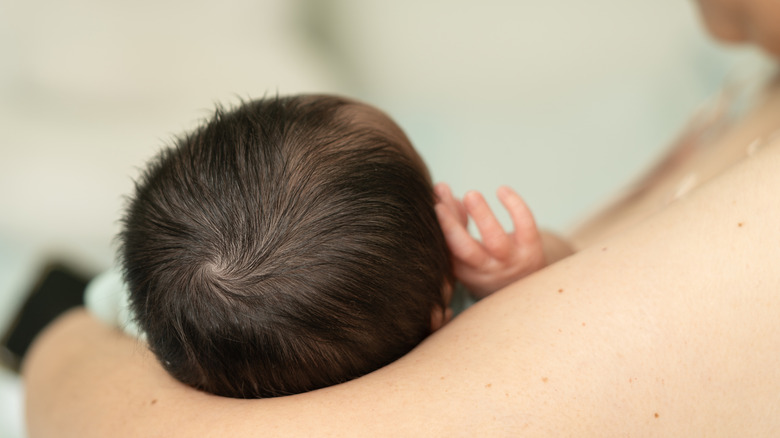
When my son arrived, relatives joked that he was inarguably mine based on one strong indicator: his full, luscious hair. Each of us was born with dark brown locks covering our entire head; and thus, photo evidence led me to surmise that a newborn's hair is pre-determined by genetics. While it's true that some ethnicities are predisposed to thicker hair, I later learned genetics may be only part of the story.
Hormones may also influence how much hair a baby has at birth. A study published in the journal Birth set out to test the "old wives' tale" connecting pregnant women who experience severe heartburn to babies born with a vast amount of hair. Researchers found that there may be a link — more than 75% of the participants reported heartburn during their pregnancies. Of those who experienced heavier levels, more than 80% gave birth to babies with average or noteworthy amounts of hair. Those who didn't report experiencing heartburn? Almost all had babies with little to no hair. In the study, researchers theorized that the same pregnancy hormone that stimulates fetal hair growth might simultaneously trigger the relaxation of the mother's esophagus muscles (hence the heartburn).
Some experts disagree with the hormones-heartburn-hair growth hypothesis, citing other studies that found little to no correlation. Instead, they point to the timing of the fetal hair growth cycle. Every baby is distinct, and the timing of when babies grow their locks in the womb is no different. Babies also develop thin, soft hair that covers their bodies (referred to as lanugo) by about the 20th week of pregnancy. Languno typically falls out during the third trimester, so if your baby is born early, they may be a little hairier than expected.
How can I stimulate my baby's hair to grow?
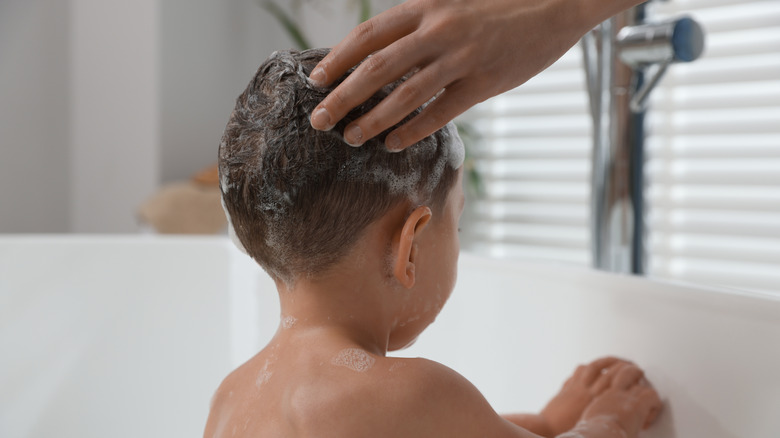
Every baby is born with the follicles they'll have for the rest of their lives. Most grow into their full, permanent hair by age 2 or 3. Although changes in hair are inevitable, parents can give their babies and toddlers a leg up by feeding them foods that support hair strength. Foods rich in protein and iron (scrambled eggs, beans, fortified cereals) and vitamins A, B, and D (pumpkin, carrots, mango, potatoes) are good choices for babies or mothers who are breastfeeding. Gently washing and combing a baby's hair and massaging the scalp with a small amount of oil can help circulate blood flow to the hair follicles and stimulate growth. These methods also release the dry skin that often accumulates on a baby's scalp (referred to as cradle cap).
Across the internet, parents embrace the unpredictable adventures in baby and toddler hair growth and encourage one another to do the same. One Redditor mused, "Mine had a full head when he came out and within the first month or so started to lose it (only on top) so that in the end he looked like a little Friar Tuck." While some babies lose the hair on top, others retain it while losing the hair on the sides of their heads, prompting parents to style it in a mohawk. Other parents proudly share photos of their hairless baby girls sporting barrettes and headbands to social media, embracing the viral "bald with a bow" trend.