

Can You Eat Sushi While Pregnant?
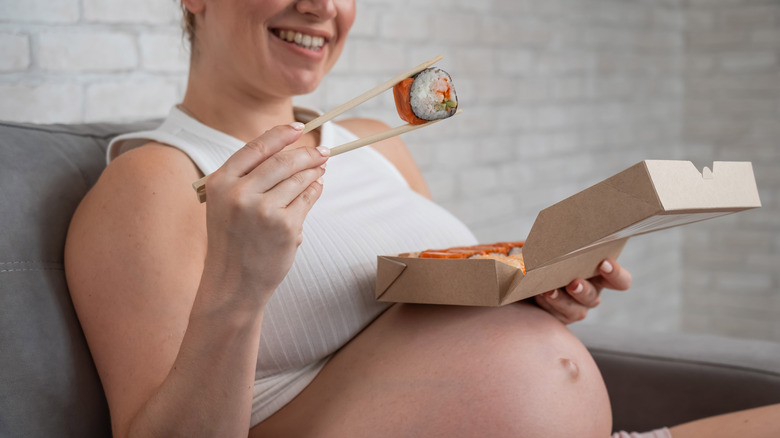
The sacrifices mothers make for their children begin from the minute the positive result appears on the pregnancy test. So much for that double espresso, the happy hour with your friends, and the ability to tie your shoelaces. There's also the realization that "eating for two" means giving up some of the foods you love for the duration. Sometimes, it's a matter of tolerance — spicy or strong-smelling fare may trigger heartburn or nausea — and other foods are a no-no because they pose a health risk to the baby. So where does sushi fall on the list?
Once considered too exotic for American tastes, sushi has become a staple in small towns and big cities alike. The fish- and rice-based dish (some varieties have vegetables, seaweed, and other ingredients) is generally considered both delicious and healthy. Not all sushi is created equal, however. Healthcare providers caution against overindulging in fattier choices such as "dragon rolls," which contain fried eel and a mayonnaise sauce. For pregnant women, the line is even narrower. The American College of Obstetricians and Gynecologists advises avoiding any sushi containing raw fish. That includes maki rolls, nigiri (raw fish on top of rice), and sashimi (plain slices of fish).
Even the sushi varieties with just a small portion of raw fish may contain harmful parasites that can cause stomach cramps, vomiting, and other digestive woes. Like cold cuts and soft cheeses — two other pregnancy no-nos — raw fish can also contain the bacteria that may lead to a listeriosis infection. Expectant moms are more susceptible to the illness, which increases the chances of miscarriage, stillbirth, or preterm birth.
There are safe sushi alternatives
For your baby's sake, it's best to steer clear of all raw fish throughout your pregnancy — and, sorry to say, you'll have to add some cooked fish to that list as well. Pregnant women should avoid eating fish that contain higher levels of mercury — cooked or not. That includes certain types that may be found in sushi, such as albacore tuna and swordfish, as well as other types like king mackerel and shark. The toxic metal can harm a baby's developing nervous system. Other types of cooked seafood — salmon, sardines, trout, tilapia, cod, canned light tuna — are not only safe, but highly recommended.
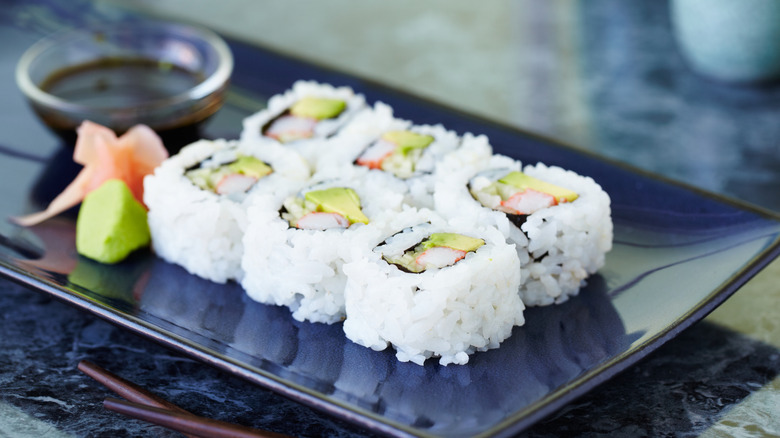
So what do you do when the office heads to the Japanese restaurant for lunch? If your heart is set on sushi, go for veggie-only selections like avocado and cucumber, sweet potato, tofu, carrots, or firmly cooked tamago, an egg sushi. The popular California roll also gets the green light; the "crab" inside is actually a processed paste of cooked pollock mixed with potato starch and other ingredients. Don't forget, Japanese cuisine also includes plenty of other pregnancy-friendly options, including miso soup, edamame, gyoza dumplings, noodles, and teriyaki or hibachi entrees.
Suppose you had that spicy tuna maki and you found out you were pregnant a week later? Relax; if you're feeling fine, chances are everything is normal. But if you experience symptoms such as fever, nausea, cramps, or diarrhea shortly after eating raw fish, contact your healthcare provider right away. The good news: Once your little one arrives, you can go back to eating low-mercury fish — including sushi! — even if you're breastfeeding.