

Yes, Some Women Actually Crave Dirt When Pregnant. Here's Why
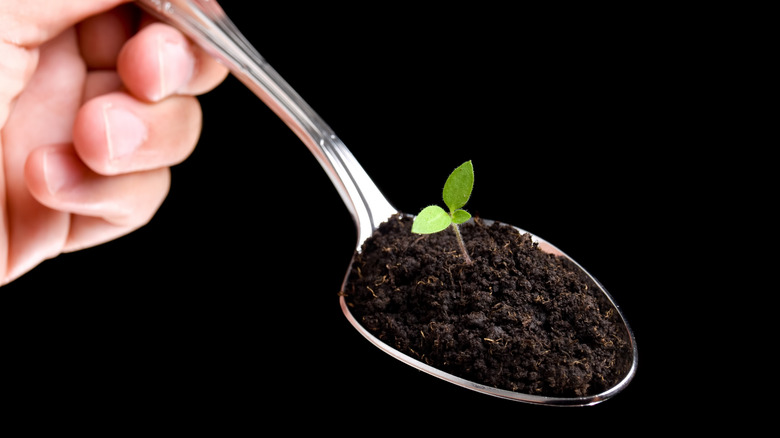
If you cringed during season 2 of "The Great," watching Catherine the Great (played by Elle Fanning) scarf down fistfuls of dirt while pregnant, you're not alone. Throughout the show, Fanning attributes her character's behaviors to cravings brought on by pregnancy. While some might chalk those scenes up to dramatic cinema, eating dirt while pregnant is actually linked to a real phenomenon with a real name: pica.
Pica is considered an eating disorder in which a person has a persistent urge to consume non-food items with no nutritional value. It can impact anyone, but the three most common groups include children 6 and younger, people with certain mental health conditions, and pregnant women. Yet this condition is much more common than many realize. A study published in the International Journal of Women's Health and Reproductive Sciences found that up to 46% of U.S. women experience pica during pregnancy. Dirt, sand, and clay are among the most common cravings. Others have reported craving rocks, burnt matches, and even soap.
The reasons for pica onset during pregnancy are not concrete, though some studies link the condition to deficiencies in nutrients, including iron and zinc, so those with gestational anemia could be at greater risk. In fact, a review of 70 studies found that anemic women had a 1.6 times greater likelihood of developing pica. Others at risk include women who have limited access to nutrient-rich foods. One woman documented her experience with pica during pregnancy on Reddit: "The urge to eat sand and dirt are consuming me and I don't even want real food. I feel like an addict going through withdrawal (mentally not physically) because it's all I can think about!"
What to do if you crave dirt or other non-food items during pregnancy
While craving non-food items during pregnancy is fairly common and not always dangerous, there are some potential risks for both mother and baby. Consuming something not intended as food can interfere with nutrient absorption — leading to a deficiency. Other health risks include poisoning from lead found in soil, tooth decay from eating abrasive dirt and sand particles, and cardiac issues, since soil can contain potassium that interferes with the heart's rhythm. If you experience pica, it's recommended to contact your healthcare provider. If not treated, the condition can lead to more serious issues like heavy metal toxicity, bowel obstruction, gastrointestinal irritation, and more.
Pica occurs most often in the first trimester when vomiting and nausea are the worst, and can also spike again in the third trimester, when pregnancy places the greatest demands on the body's nutrient stores. A doctor treating pica might order a blood test to check for abnormal nutrient levels and recommend supplements. Sometimes the craving can be smell- or texture-related, and consuming gum or mints can help to satisfy the urge. If you experience strong cravings for non-food items, the American Pregnancy Association also recommends informing a friend or family member in addition to your doctor, so that person can help you avoid temptations at home.