

Beautiful And Strong: 10 Girl Names Inspired By Legendary Women

I don't have a daughter, but if I did, I'd be extremely intentional when selecting her name. Every woman I know raising a daughter is similar — each one seeks to imbue her with courage, resilience, and a little bit of audacity — a process that carries through the entire journey of parenting, but it begins with the name. Selecting a trending name like Phoebe, Aurelia, or Isla might solidify her camaraderie with other girls in her class, but what about the parents whose wish is for their daughter to stand out? Classical names, like those carried forward by historical and mythical figures, offer uniqueness in modern-day circles along with timeless associations of strength, wisdom, and other enduring qualities.
We've compiled a list of 10 names inspired by legendary women, examining the features and feats linked to each one. Some names peaked in history and never circled back to the spotlight. Others are poised to make a comeback in the next several years. Each of the distinguished names has the potential to set our daughters on a path so that they, too, might someday become legendary.
Diana
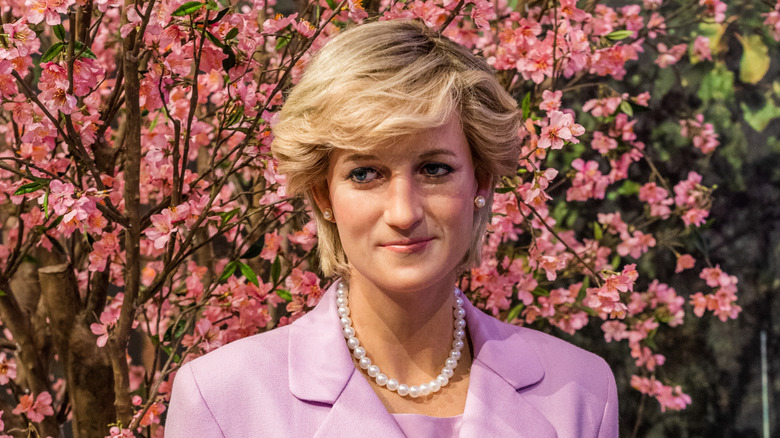
A name with Latin origin meaning "divine," Diana harkens images of both the Roman goddess of fertility and the more recent figure, Lady Diana Spencer. Known around the world as "The People's Princess," Spencer married into the British royal family in 1981and became known as a symbol of compassion, humility, and hope. Diana hit its popularity peak in the United States in the 1940s and '50s, but now makes up less than .1% of the female population (via Behind The Name). Thus, parents who select this name might find themselves with the only Diana in their child's classroom.
Joan
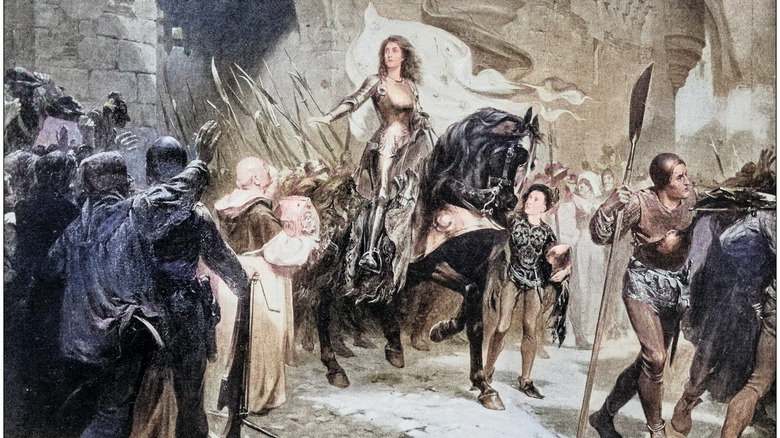
For parents looking to instill bravery and conviction, the name Joan pulls these qualities from the legendary figure Joan of Arc, who commanded an army in France at just 17 years old. Joan of Arc helped turn the tide of the Hundred Years' War between France and England and was later named a Catholic saint. Bonus — the name Joan reached its popularity peak in the United States in 1932, which means it's right on schedule to make a cultural comeback in the coming years, according to the 100-Year Rule.
Stevie
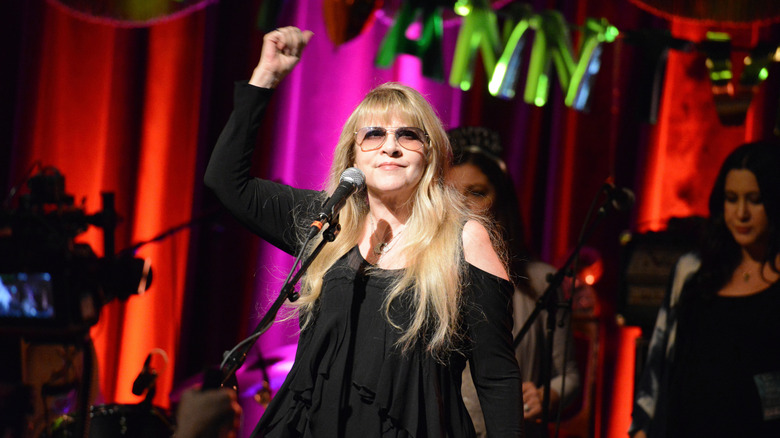
Though she may still be with us, Stevie Nicks is nothing short of a living legend. The eight-time Grammy-winning, Fleetwood Mac frontrunner and solo artist seemingly inspired parents with her graceful whimsy, helping to popularize Stevie as a nickname not only for boys (short for Stephen) but also for girls (short for Stephanie). Stevie eventually became a first name of its own and has climbed significantly in the past decade in female popularity. It follows a wider trend of short, unisex names for girls (alongside Charlie, Billie, and Scottie).
Maya
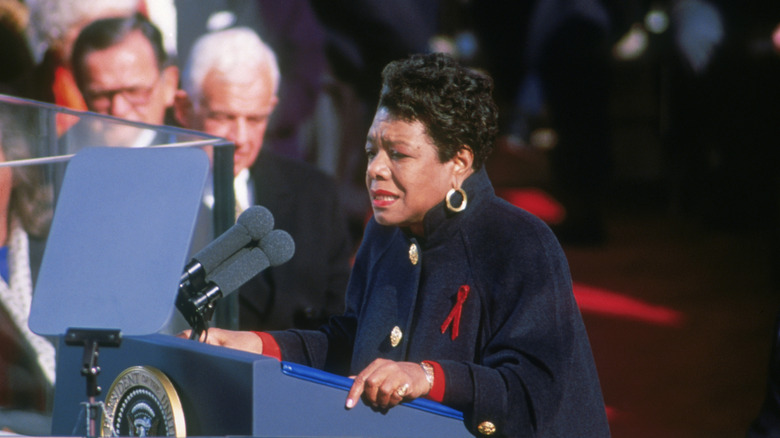
A name with many translations, including "magic," "mother," and "water," Maya stands out as a name choice for parents of little girls with a mystical side. Perhaps the most well-known Maya in recent history is poet and activist Maya Angelou — who penned the now-famous words "I Know Why The Caged Bird Sings" — though her birth name was Marguerite. Maya skyrocketed in popularity in the United States in the 1990s — the same decade actors Ethan Hawke and Uma Thurman welcomed their daughter Maya Hawke, who would later go on to co-star in "Stranger Things."
Catherine
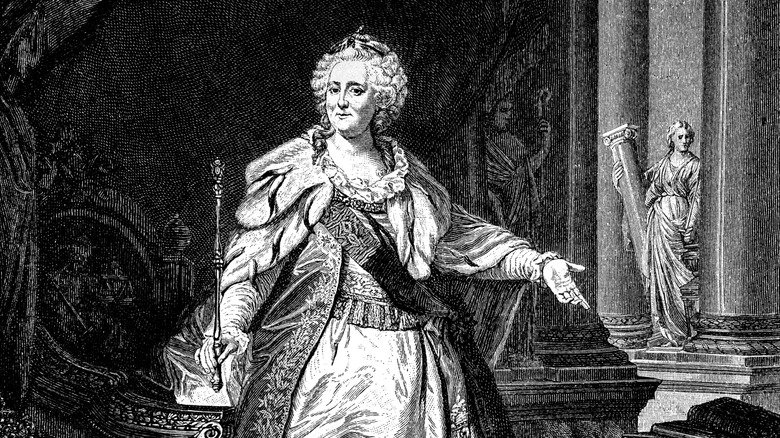
Parents who wish for their little girl to one day inherit the world might select Catherine, after Catherine II of Russia. "Catherine the Great" ruled the Russian Empire for decades beginning in the 1760s, expanding its territory and leading cultural innovation. The name seems to carry genius with it, as centuries later, Katherine Johnson helped to pioneer space travel while working at NASA (inspiring the 2016 movie "Hidden Figures"). A rare gem today — Catherine never quite circled back around after its heyday in the United States in 1914.
Elizabeth
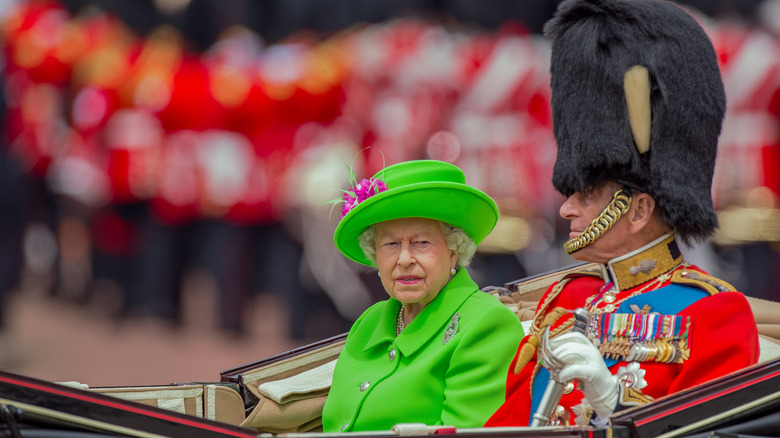
Royalty is synonymous with Elizabeth — the name carried by not one, but two former reigning queens of England. It's also one of the all-time most popular girls' names, and perhaps the best part might be the plethora of adorable nicknames (Betty, Libby, Lizzie, Betsy, Bess, and more). While there are many other notable Elizabeths (like Elizabeth Taylor and the "Pride and Prejudice" protagonist, Elizabeth Bennet), parents note that it's not overly saturated. As one Redditor said, "It reaches across time periods, socioeconomic status, and many cultures. ... Everyone knows the name but I don't encounter it often."
Jane
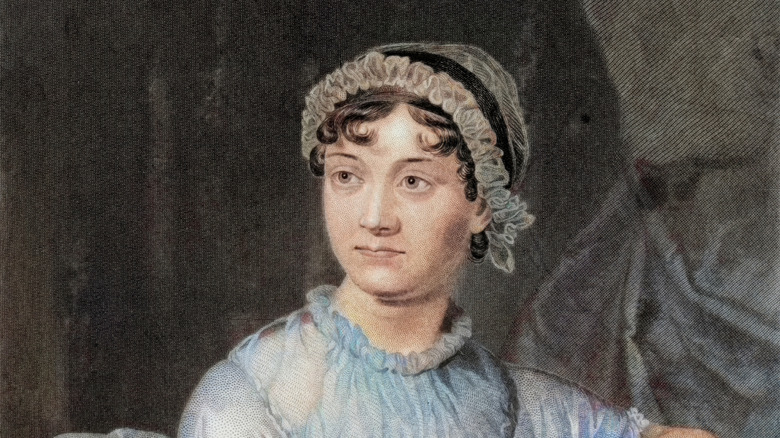
For parents seeking short and sweet, or those who want to skip the nickname and go straight to one syllable, there's the classic: Jane. The name has a deep literary significance, invoking both Jane Austen (author of "Pride and Prejudice," "Mansfield Park," and more) and Jane Eyre (protagonist of the classic novel "Jane Eyre" by Charlotte Brontë). Jane's moment in the spotlight in the United States came in 1945. Today, it's fairly uncommon as a first name choice, though in early 2025, it was reported as the fifth most popular girls' middle name.
Amelia

Amelia — a girl's name of German origin that means "work" — strangely fits perfectly for both Amelia Earhart (the determined aviator and first woman to fly solo across the Atlantic Ocean by plane) and Amelia Bedelia (the housekeeper and jack-of-all-trades who lands herself in fun trouble throughout the beloved book series). The name has steadily gained traction in the United States over the past quarter-century, peaking at .727% of the female population in 2021 (via Behind the Name). It's also a favorite for parents in Australia, New Zealand, Ireland, Scotland, and Poland.
Rosa

Just like a rose bush that is sweet-smelling and visually inviting, but also carries sharp thorns with which to protect itself, the name Rosa seems to say, "I might appear delicate, but don't test me." Rosa Parks embodies the name well, as one of the most influential leaders of the Civil Rights Movement in the United States, who refused to adhere to rules she believed were unjust. Rosa is a widely chosen female name in Spanish, Portuguese, and Italian cultures. It's less common in the modern U.S.; however, it was popular in the late 1800s and early 1900s.
Cleo
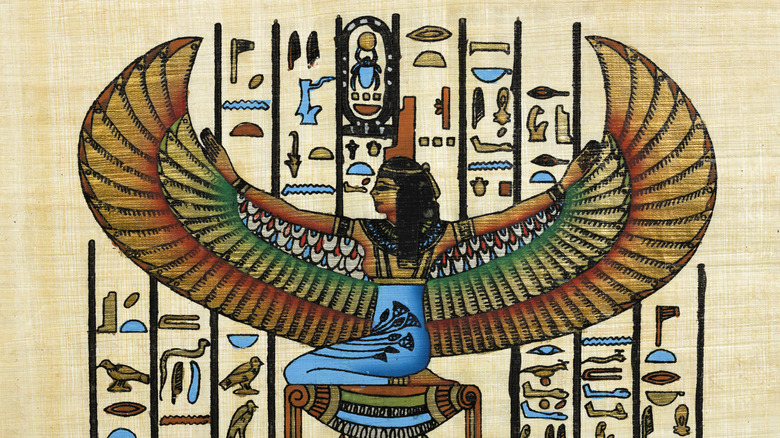
The name Cleo means "glory" in the English language. It's most often associated with Cleopatra, the historical and legendary queen of Egypt, who was indeed glorious. She ruled alongside two of her brothers and, later, her son, and modern tourists can still see depictions of her through hieroglyphics carved and painted on ancient sites. Cleo recently gained slight traction as a girl's name in the United States. It was historically used for both boys and girls. For parents who are expecting twins, there's a solid opportunity for sweet rhyming pairs (think Leo and Cleo, or Cleo and Theo).