

When Do Babies Start Holding Their Own Bottle? Here's What To Expect
We may receive a commission on purchases made from links.
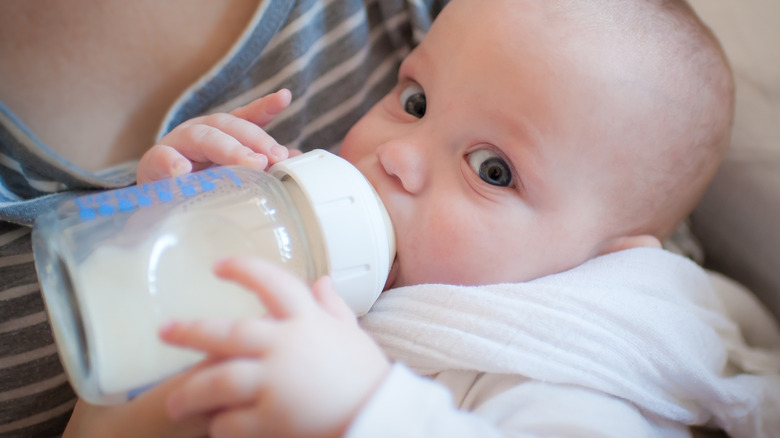
While bottle-feeding your baby can be a wonderful bonding experience, it's also normal to want the use of your hands back to get tasks done. So don't feel guilty if you're wondering when you can expect your baby to hold their own bottle. It may happen sooner than you think, as self-feeding is an important part of development.
Most babies start holding their own bottle around 6 to 8 months old. However, there are some milestones babies usually need to reach before they can typically hold their own bottles. One important sign your baby may be ready is if they're holding their head steady without support and sitting up on their own.
They should also be able to grasp objects like toys with both hands. As they master these milestones, babies may begin to show interest in holding their own bottle by patting the bottle or bringing their hands to it. Keep in mind that learning to hold a bottle takes time and coordination, and every baby has their own timeline for these developmental steps. If you're concerned that your child hasn't met this milestone, reach out to your healthcare provider, who can perform an evaluation to determine whether there is a delay.
Tips for helping your baby hold their bottle
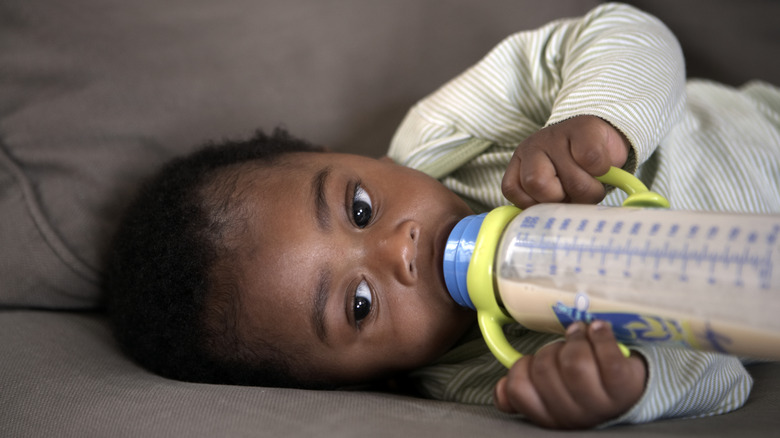
Once babies start reaching for their bottle, you can help them get closer to holding it by working on their grasp and strength. Hold your hands over theirs on the bottle, or encourage grasping by giving them teething toys. Add in lots of tummy time, which can help them develop those muscles needed to sit upright. You can even buy special bottle holders, like mushie Silicone Baby Bottle Handles, which help your baby grasp the bottle easier. Just make sure to read the directions for age and development readiness. When your baby is ready for solid food, allowing them to feed themselves can also help them develop grasping skills.
If your baby isn't able to hold the bottle on their own, never prop it up — this can increase the risk of choking or ear infections. Even once they can hold the bottle on their own, there are some precautions you should take. It's not a good idea to leave your baby alone with their bottle, like at bedtime or nap time. Sure, it may be an easy way for them to self-soothe, but leaving a bottle in their mouth can lead to tooth decay as the milk coats their teeth. Ultimately, don't rush the process, because before you know it, you'll have use of both hands again.