

The Absolutely Harmful Effects Of Your Elementary Schooler Having A Phone
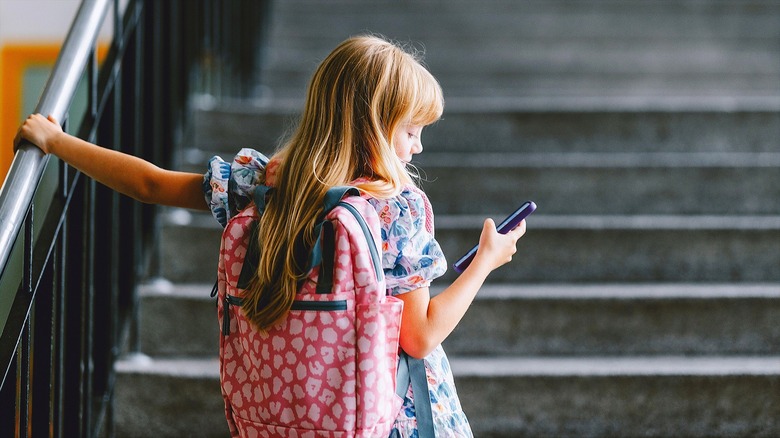
I have three kids, ages 8, 9, and 11, who have been exposed to a modest amount of screens. While their daily screen time has primarily revolved around family movies, weekend video games, approved TV shows, and school Chromebooks, navigating their growing interest in handheld devices like cell phones has been challenging. However, my partner and I feel committed to not allowing smartphones until the age of 14. Even though a study published in Pediatrics in 2026 placed the average age that kids acquire a smartphone closer to 10 to 12, significant research proves that elementary schoolers who use cell phones experience harmful side effects.
Based on the latest findings from the School Pulse Panel (SPP) via the Institute of Education Sciences, 86% of elementary schools in the United States prohibit cell phone use in classrooms, citing low academic performance and distractibility as reasons. In fact, researchers at the University of California noted in a 2026 study that elementary-aged students who own cell phones have lower long-term reading comprehension skills. Researchers in Canada discovered the same destructive impact, describing in a 2025 study their findings that showed kids between third and sixth grades who were exposed to excess screen time had lower standardized test scores in reading and math. Then came the final blow: For every extra hour kids watched their screens, they had a 10% lower chance of scoring high in a third-grade reading assessment.
Although phones aren't allowed in my kids' classrooms during school hours, my son (who's in fifth grade) often tells me he sees kids trying to sneak glances during class time, and thus, they have trouble staying focused. And poor academic achievement is just the tip of the iceberg.
The physical, mental, and emotional cost of early cell phone use
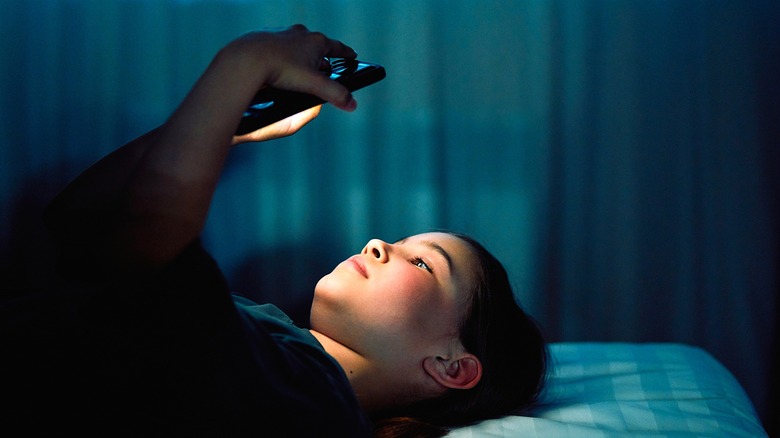
If adults struggle to put their phones down, imagine how much harder it can be for younger people. Part of the reason I don't want my kids to have cell phones until they're in high school is that I don't want them to develop an unhealthy reliance on electronic devices. It's a challenge for my husband and me to manage our smartphone use, and our kids are sure to experience the same or more significant hurdles.
But there are more serious considerations we as parents need to keep in mind. A 2025 study on smartphone ownership found that children who own and use a cell phone regularly by age 12 are more likely to experience depression, obesity, and sleep deprivation than children who delay smartphone use. Another study published on JAMA Network Open also tied eating disorders to increased smartphone use in young people. And another published in the Journal of Adolescent Health revealed that tweens who had access to their cell phones at bedtime get less quality sleep than kids who turn them off. The proof is there — cell phones' negative impact on learning, comprehension, and mental health in youth are all solid reasons to delay devices as long as possible — and why my family took the pledge to wait until eighth grade to give our kids cell phones.