

The Halloween Candy Most Likely To Send Your Kid Straight To The Dentist
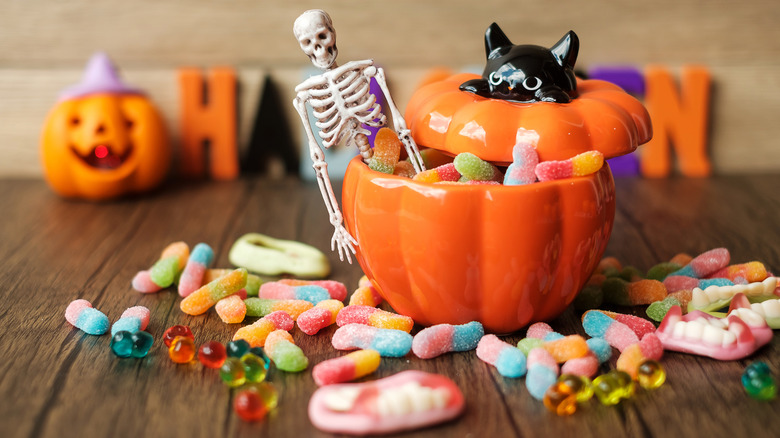
With Halloween around the corner, your house is about to experience a full-on sugar attack — and your kids' teeth may be in for a rough ride. A U.S. Centers for Disease Control and Prevention report revealed that 11.1% of children ages 2 to 5 have untreated tooth decay. But according to Dr. Lucienne Pino, pediatric dentist and clinical director at Kids Smiles, there are a few things you can do to keep the decay at bay while still enjoying spooky festivities. This starts with assessing which sweet treats do the most damage.
"When we eat sugar, bacteria in plaque use that sugar to create acids that can pull important minerals out of the enamel," Pino explains. "Every sugary snack resets the acid attack on teeth, which can last about 20 minutes." While you don't need to ban candy completely, Pino says anything gummy, sticky, or chewy has the most harmful effects. Similarly, the acid in sour candy is the toughest on enamel. Hard candy is a risk because it can chip teeth, not to mention how slowly it dissolves, leaving the sugar in contact with pearly whites for far too long, Pino says. If your child has fillings or crowns, the sugar content may not be the main issue. Kids should avoid anything too chewy, like taffy, to avoid dislodging that expensive dental work.
While dentists generally suggest limiting sugar as much as possible, Pino notes that when you have a sweet treat from the trick-or-treat bag also matters. "Encourage your child to eat their candy with a meal instead of nibbling on it all day long," she advises. "Eating produces saliva, which can help the mouth naturally clear sugar and acid."
Making thoughtful candy choices can help
While Dr. Lucienne Pino is careful to warn that all candy comes with some level of sugar risk for your teeth, there are a few options that aren't quite as bad as anything gummy, sticky, or highly concentrated. These include dark chocolate, which has less sugar than milk chocolate, and sugar-free gum with xylitol. "Sugar-free hard candies or mints are also good choices that don't feed decay the same way sugared counterparts do," explains Pino. However, she recommends avoiding sugar-free sour candies, which can still damage tooth enamel, thanks to their acidic ingredients.
While teeth are naturally strong, it's important to remind kids to avoid crunching down on hard candy, even sugar-free, to avoid fracturing their teeth. Because some kids may not enjoy dark chocolate, milk chocolate is a safe alternative since it doesn't cling to teeth like chewy candies. If kids can't brush their teeth immediately after eating candy, give them a glass of water to help wash away sugar, Pino says.
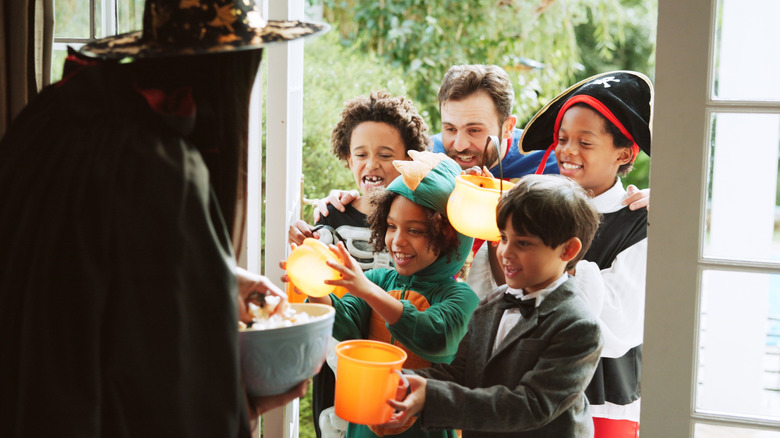
Of course, once your kids return home from trick-or-treating with their haul, it's not easy to take candy from your babies. It's a good idea to start early with open conversations about your concerns, and how you approach this probably depends on the child. Consider introducing them to the idea of minimizing how much candy they eat after trick-or-treating — with dental health in mind — and come up with a plan. Rather than threatening to throw away their spoils, you can also look into less wasteful alternatives together. Programs like Treats for Troops allow you to donate unwanted and leftover candy, while some dentist offices offer buyback programs that allow kids to swap candy for money and other prizes.