

The Worst Part About Having Kids Is Dealing With The Other Parents At School
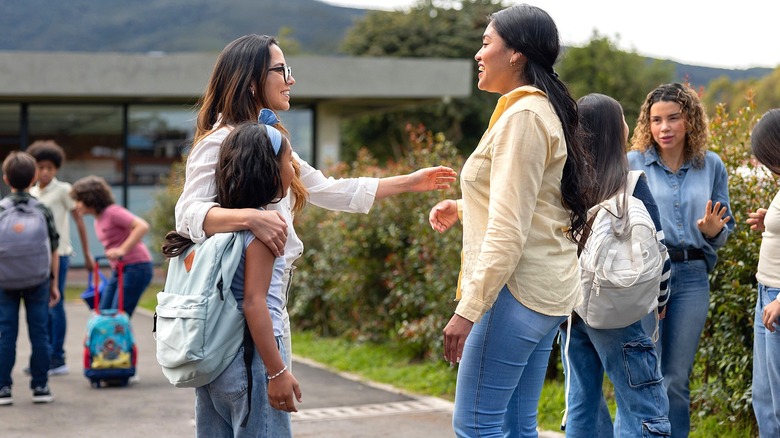
Whether you consider yourself to be highly social or extremely introverted, chatting with other parents at school drop-off and other school-related functions is an unpredictable venture. I homeschooled all three of my kids for years until this fall, when they began attending the elementary school a few blocks from our home. I went from not engaging with many parents in our neighborhood to talking to a range of moms, dads, grandparents, and siblings every morning and afternoon, Monday through Friday. The hardest roadblock for me (and my kids) to overcome has been the preconceived judgments and assumptions people made about our family.
While homeschooling is just one example, there are many reasons you may feel judged by other parents at your child's school. Maybe you have an introverted kid who struggles to make friends, or maybe you can't volunteer as much as you'd like to because you need to hold down a job during school hours. While everyone is entitled to have their own opinions, dealing with strangers prying into your "whys" at 7:30 in the morning (or after a long work day) is hard to navigate.
For me personally, I've had to work hard to uphold my own boundaries while maintaining a kind and respectful disposition toward nosier parents. Additionally, I don't feel the need to over-explain my family's history to strangers when I focus on building relationships and a broader community with parents who have similar values. That being said, navigating interactions with the parents of my kids' friends can still be a bit challenging.
How to handle different parenting styles among friends
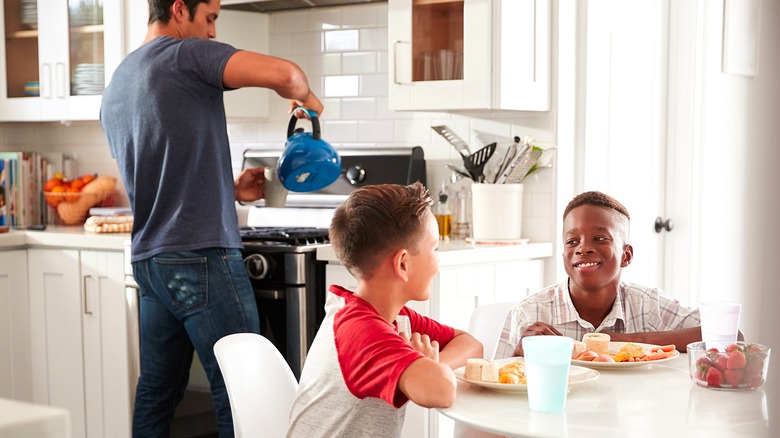
The one aspect of my kids being in public school that I haven't quite figured out yet is how to deal with parents who have very different expectations around limits and communication. For example, my 11-year-old son is still not allowed to watch R-rated movies. He also has no access to social media and doesn't own an iPhone. Yet many of his friends have zero limitations or rules around screen use, which makes after-school hang-outs harder to manage. If you notice your child becoming friendly with another kid from school, it's important to have their parent's number, especially if they want to get together outside school hours, so you can communicate any concerns.
If a parent doesn't engage with me, I try to encourage my kids to choose friends who have more responsive parents. If one of my kids has a friend with uninvolved parents who they enjoy spending time with, I'll offer playdates in my home versus my kid going to their house. Or, I'll suggest they meet in a more supervised setting like our neighborhood park.
As my kids grow older, having them witness how I deal with other parents is an excellent learning opportunity. Instead of talking negatively about other adults to my kids, I can express my concerns in a healthy way and hone in on my primary goal, which is to keep them safe. After all, you don't have to be best friends with your kids' friends' parents. You simply have to know where your boundaries are.