

How Often To Clean Baby Items That Go In Their Mouth
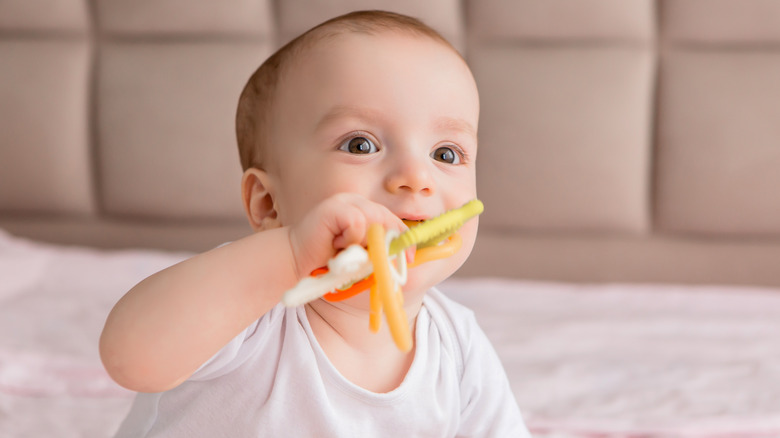
From teethers to bottles and toys, it can feel overwhelming to keep up with everything that ends up in your baby's mouth. Between germs and food residue, ensuring these everyday items stay clean and sanitized is a constant task. However, how frequently you need to clean each item may surprise you, since how it's used and your baby's age play a role.
Pacifiers are often the first object parents wonder about. Before a baby ever puts a pacifier in their mouth, you should boil it or clean it in the dishwasher. Through the baby's first six months, experts recommend using this method to sanitize the pacifier about once a week. In between sanitizing and after the baby reaches 6 months old, you can frequently wash the pacifier with soap and water. You also don't want to sterilize a pacifier too often, as it may cause the rubber to wear down faster.
Once a teether or toy is dirty, it should be washed, but you don't necessarily have to use a disinfectant. Soap and water are sufficient most of the time, especially since chemicals can damage some toys (and you don't want your baby ingesting any cleaner left behind). Ultimately, your best bet is to check the cleaning instructions for the specific object or reach out to your healthcare provider.
How often you should clean feeding gear
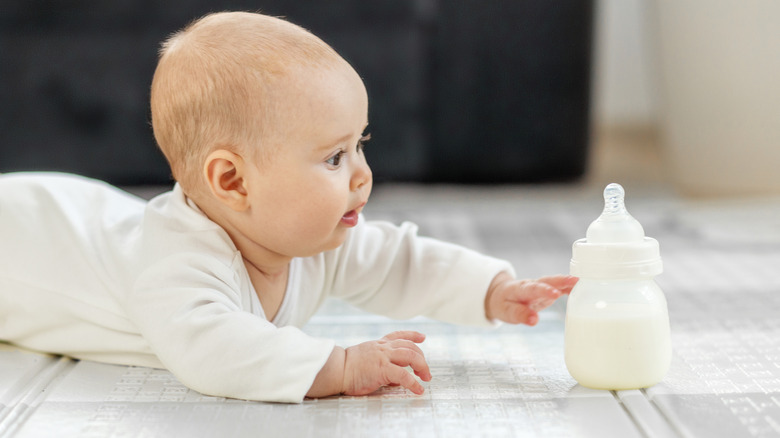
Of everything babies come in contact with, bottles and their parts are among the items that need to be washed the most frequently. The U.S. Centers for Disease Control recommends cleaning these items after each time you feed your baby. Bottles also need to be sanitized at least once a day if your baby is younger than 2 months old, was born prematurely, or is immunocompromised. If you feel like you're spending your life washing bottles, keep in mind that once your baby is a few months old, daily sanitizing may not be necessary as long as the bottles are cleaned well after each use.
To ensure each piece is cleaned properly and ready for your baby to explore, avoid washing items directly in the sink, which may host additional germs. Instead, use a clean bin filled with hot, soapy water. Scrub each item, rinse thoroughly, and let items air-dry instead of using a towel, which may harbor pathogens as well. If you need to sanitize, some methods include boiling, steaming, or using a weak bleach solution.
What probably ends up in your baby's mouth more than anything else is their own hands. You can start proper handwashing techniques with your little one as early as possible, as it's a lifelong habit! Just avoid using water that's too hot, as it may irritate skin, and instead opt for warm water and gentle soap several times a day.