

What To Do When Your Child Says They Have No One To Sit With At Lunch
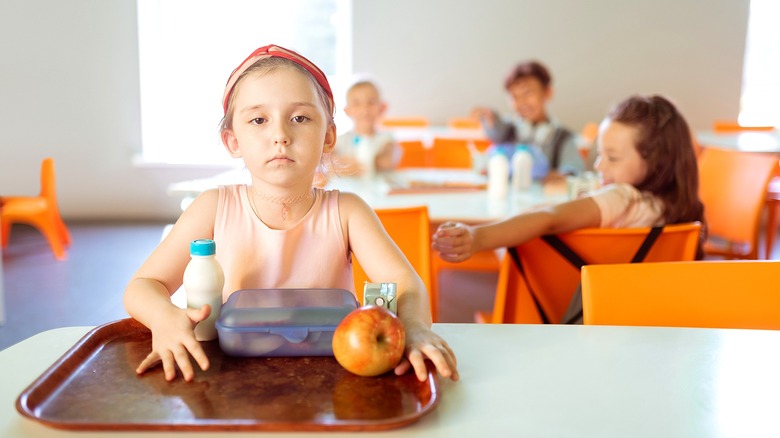
One of the hardest aspects of parenting is hearing that your child feels left out, isolated, or lonely at school. A common situation where this can happen is during lunchtime, when kids often have more freedom over who they choose as their lunch companions. To help you navigate this conundrum, we gathered some expert advice on how to support your child if this ever happens to them.
Dr. Joane Cadet, a pediatrician at Bluebird Kids Health, says the best thing you can do is not jump in too quickly with advice. "Try to listen and ask questions to get an idea of why your child feels lonely," she said. "Maybe they did not have anyone to sit with because they felt too nervous to approach a group of people they didn't know, or maybe they are having conflict with a previous group of friends and are now excluded." Discovering the root problem will help guide next steps, she says.
Amber Larson, director of social emotional learning and mental health at Fusion Academy, advises parents to approach the situation with empathy. "Avoid phrases like 'Toughen up' or 'Everyone goes through that,'" she said. "Those responses are dismissive of what the child is experiencing and shuts down communication by putting the blame on the child." Typically, a single incident of sitting alone at lunch likely won't have a major impact on a child's experience at school or their overall well-being, Cadet says. However, if loneliness during this time of day becomes a recurring pattern, it may be time to step in.
How you can help your child face loneliness at school
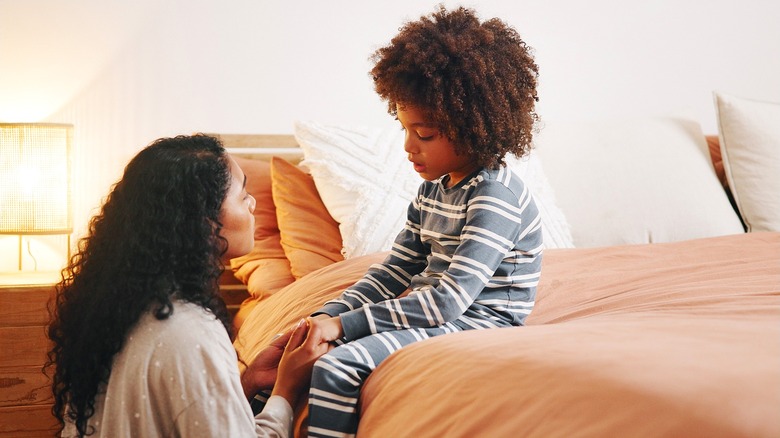
Unfortunately, kids exclude one another at every age, Amber Larson says. "Sometimes the excluder is protecting their own space or identity. Sometimes the child being excluded has a behavior the group doesn't welcome," she said. "Young children need guidance on how to be inclusive. Adolescents are driven by peer acceptance, which can push behavior in either direction."
That feeling of isolation may be noticed when they're away from school as well, Dr. Joane Cadet says. "If a parent starts to notice that the child spends more time alone at home, starts to not do well in school, or starts to have less interest in activities that they previously enjoyed, then these may be signs that the child is struggling and needs more support," she advised. If there are signs of bullying, parents should reach out to their child's school for additional help. "Emotional and physical safety concerns should always be discussed with the school staff," Cadet said.
While seeing your child struggle can make you feel helpless as a parent, there are some ways you can help them navigate these challenges and find more friends. After-school clubs or sports that children feel good about joining can boost confidence and open them up to more opportunities for interaction, Cadet says. Praising kids' efforts and encouraging them to try new things can also build their self-confidence. "Modeling helps, too," Larson says. "Show them how to start a conversation, how to recognize someone with common interests, and what to look for in a friend."