

It Wasn't The '50s: Here's When American Moms Started Having More Kids
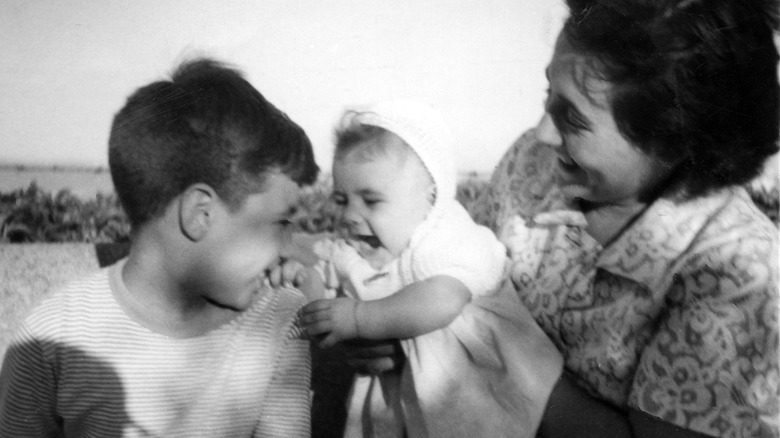
The baby boomers (1946 to 1964) may be the most well-known and well-chastised of all the generations. (Does "Okay, boomer" sound familiar?) While post-World War II parents began having larger families — known as the "baby boom" — data show this famous period in history may have started sooner. In fact, birth trends show a notable population upswing in the 1930s. Between 1915 and 1935, the number of live births in the United States dipped from approximately 2.97 million to around 2.38 million. Yet by 1940, birth numbers were back up to about 2.56 million, kicking off a steady, decades-long rise that eventually reached more than 4 million in the '60s.
What made adults back then suddenly go gaga for raising kids? Three factors potentially greased the baby surge (stroller) wheels. The first was a rise in marriages in the 1930s. The marriage rate had decreased in the earlier part of the 20th century, hitting a low in the 1920s during the Great Depression. Data shows a steady overall decline in marriages from 1920 (12 per 1,000 individuals) to 1932 (7.9 per 1,000 individuals). But betrothals became a thing again in less than two decades: A 1934 The New York Times article celebrated that the "wedding awnings" were up again.
Work likely led to a rise in proposals and families
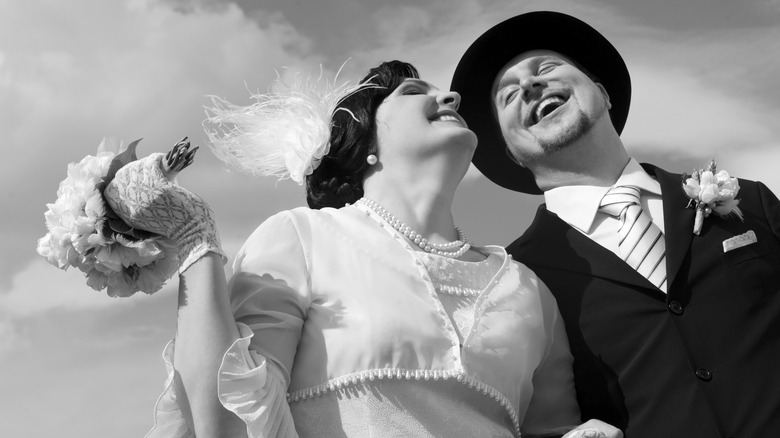
By the middle of the 1930s, the economy had begun to slowly climb out of the Depression, with 1935 bringing a bit of recovery that would take years to realize. By 1940, unemployment was sitting at 14%. Although that might sound high by 2026 standards, in the early 1930s, the rate reached 25%. As young people started making a living, they may have become more comfortable with the idea of marrying. In fact, an academic article published in The Journal of Economic History found a correlation between economic conditions and marriage rates. Accordingly, many couples tied the knot and eventually became moms and dads.
Of these families, many had multiple children beginning in the 1930s. Women often had their first children around age 21 during this time period, and by the 1940s and post-war, many were on their second or later pregnancies. Data shows women born in 1918 went on to have an average of 2.5 births. The 1930 U.S. Census also shows that the average family size in 1930 was 4.1 people. By the 1940s and 1950s, women were more likely to have closer to three children in their lifetimes, suggesting that the families forming in the 1930s were part of a broader shift toward larger families in those "baby boom" years that followed.