

What Is The 2-Hour Rule For Car Seats?
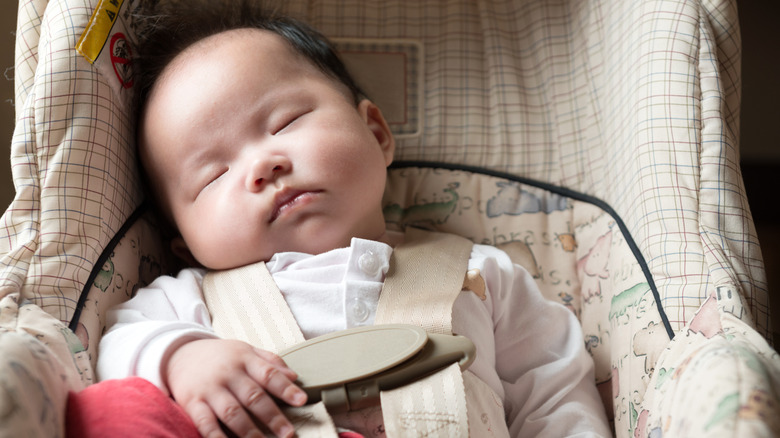
Roadtrips with an infant can be unavoidable — from taking them on their very first vacations to meeting family members who live far away. It's also normal to worry about your baby's safety during long car journeys, but guidelines can be helpful. Take, for instance, the "two-hour rule," which says that for every two hours in a car seat, babies need a break.
As Dr. Angela Cabarcas, a pediatrician with Bluebird Kids Health, points out, this rule is especially important for newborn babies to ensure they are getting enough oxygen. "There are studies that show oxygen saturations drop more for infants spending prolonged time in car seats compared to infants lying flat," she said. "The studies don't establish two hours as a specific cutoff, but rather the general guidance is to take regular breaks and minimize overall car seat travel in those first few months of life."
According to Michelle Pratt, a certified child passenger safety technician and founder of Safe in the Seat, car seats can protect babies during a crash, but they aren't designed to be a long-term resting place. "As they get tired, their head may fall forward into a chin-to-chest position," Pratt said. "If they're not harnessed in the car seat correctly, it can restrict their airway and make it harder for them to breathe."
How to safely handle long car rides with your infant
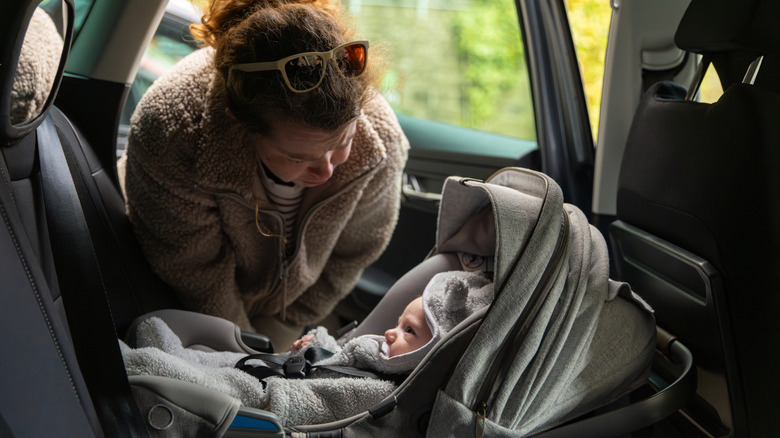
If more than one adult is in the car, Dr. Angela Cabarcas suggests sitting next to your baby during long rides when possible so you can reposition them if they appear to slump to one side or their head falls forward. "If the baby appears to look blue or gray, is grunting, has nasal flaring, has pauses in breathing, or has chest/belly retractions, stop the trip and seek medical attention immediately," she said.
Correct car seat installation is also important for ensuring your infant is comfortable and safe, Michelle Pratt says. "The correct recline and a snug harness help keep a baby in the position the car seat was designed for," she said. "Even when everything is set up correctly, their body still needs regular breaks from that position." Many parents also use car seat stroller systems, which can be convenient, but the same rules apply. "Parents should pay attention to the total time their baby spends in the car seat, as it can add up quickly when the seat goes from the car to the stroller, through a few errands, and then into the house," Pratt said.
Think of a trip as a series of shorter drives, Pratt advises. "Plan for the stops from the beginning," she said. "If you map out a six-hour drive as though it'll take exactly six hours, you're going to feel behind before you've made it through the first diaper change."