

How Much Milk Does Your 6-Month-Old Need?

For many parents, it takes a few months to find their rhythm with their baby. However, just as you start to settle into a routine, the 6-month stage hits, and everything changes. Around that time, babies often begin to explore solids, become more mobile and social, and adjust their sleep habits. It's no wonder their eating habits often shift, too. Six months also bring a new host of feeding questions: How much food should they eat? Should I give my baby water? What about cow's milk? If you're losing sleep wondering about your 6-month-old's eating habits, keep reading. We reached out to Dr. Juan Gonzalez, a pediatrician with Bluebird Kids Health, for guidance on everything you need to know about feeding your 6-month-old.
When it comes to ensuring your baby is getting enough milk, Gonzalez says it comes down to the baby's growth pattern over ounces consumed. "A baby who continues to follow an appropriate weight and length curve at routine checkup visits is generally getting enough nutrition," he says, adding that secondary cues like regularly wet diapers, alertness while awake, and satisfaction after feedings (at least most of the time) are all good signs of adequate breast milk or formula intake.
In fact, Gonzalez advises parents look for these signals at home as indicators that their baby is getting enough milk versus trying to encourage the baby to finish a bottle. "Babies have different appetites, and their intake can vary from one day to another," he explains. With so much change during this stage, Gonzalez reminds parents that their primary feeding methods should stay the same. "At 6 months, breast milk or iron-fortified infant formula should still be the main source of nutrition, even as babies begin exploring solid foods," he says.
How different factors affect feeding guidelines

While a baby's growth and overall health markers matter more than the amount of milk intake, Dr. Juan Gonzalez points to a few general guidelines for 6-month-olds, depending on whether you formula feed or breastfeed. Formula-fed babies will generally take around 6 to 8 ounces per feeding, usually four or five times a day. For breastfed babies, Gonzalez says there isn't a specific metric to target. "Breastfed babies should generally be allowed to nurse according to their hunger and fullness cues," he advises. Comparing the two is like apples to oranges, so Gonzalez advises against it. "Formula-fed babies tend to take larger amounts at each feeding and often follow a more predictable feeding schedule. Breastfed babies may nurse more frequently and take different amounts at different feedings," he explains.
For parents moving from breast milk to formula at 6 months, a slow, gradual transition is usually easiest, and responsive feeding is still the best way to make sure they are eating enough before the next check-up. In fact, Gonzalez says responsive feeding is the overall goal for all babies, meaning learning and following your baby's hunger and fullness cues.
Of course, there are exceptions to every rule, and Gonzalez says these guidelines apply primarily to full-term, healthy babies. "Babies who were born prematurely, have difficulty gaining weight, have chronic medical conditions, or have developmental, oral-motor, or swallowing concerns may need an individualized feeding plan," he explains. Preterm formulas and fortified supplements for breast milk may be part of the conversation in these cases, and your medical provider should work closely with you to ensure your baby is getting adequate nutrition to help them thrive.
Should milk amounts be adjusted as new liquids are introduced?
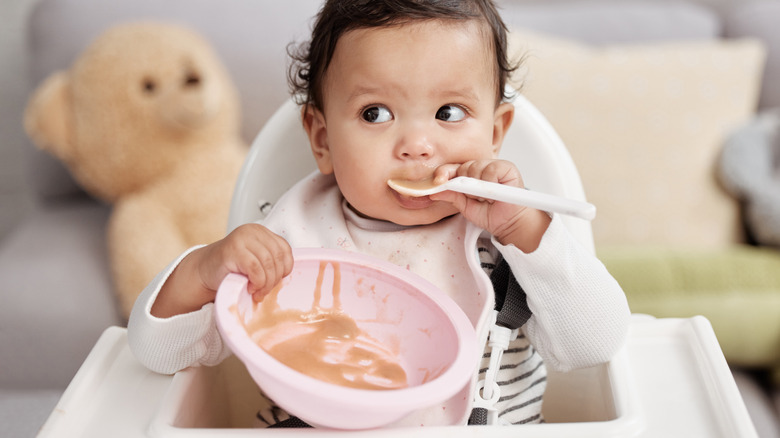
When parents begin introducing solid foods, some may think that solids should replace breast milk or formula. Dr. Juan Gonzalez says that is a huge misconception. "At 6 months, solids are complementary foods; they complement milk rather than replace it," he explains. "Breast milk or formula remains the major nutritional foundation during the first year while babies gradually learn to eat a wider variety of foods." At this stage, solid food is all about introduction and experimentation.
When it comes to drinks other than breast milk or formula, Gonzalez advises to stick with water, and only in small amounts. "The American Academy of Pediatrics suggests approximately 4 to 8 ounces of water per day between 6 and 12 months," he says. "Breast milk or formula should still provide the great majority of a baby's fluid needs." Gonzalez recommends introducing water with a sippy cup or an open cup instead of a bottle, which can also prevent the baby from drinking too much water too fast. He adds that you should never add extra water to formula. "Over-diluting formula can be dangerous and may lead to electrolyte abnormalities and water intoxication," he explains.
Any other drinks — including juices and cow's milk — should be delayed until your baby turns 1. Like solid food and water, cow's milk and other beverages don't provide adequate nutrition at this age. "Once a child reaches 12 months, pasteurized whole cow's milk can generally be introduced as a beverage as part of a balanced diet," Gonzalez says. But he clarifies that the rule doesn't apply to other dairy products. "Developmentally appropriate foods such as plain yogurt and cheese can generally be introduced in the first year with the guidance of a pediatrician," he says.