
Does Washing Machine Type Matter For Baby And Children's Clothes?
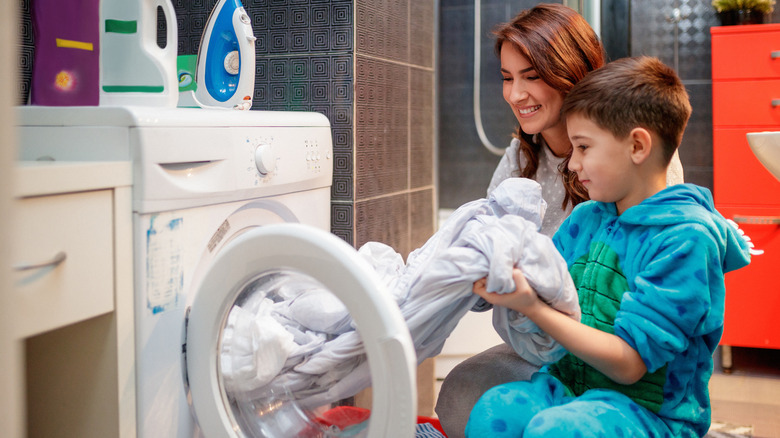
No matter what age or stage they're in, kids can create some pretty messy laundry. Fortunately, a dependable washing machine can make things less stressful. However, it all comes down your family's specific priorities and needs. The first decision to make is front loader versus top loader. Front loaders excel in gentle cleaning and busting tough stains, both of which can be a boon if you're washing baby laundry. These machines can also handle bigger loads, making them a labor saver. They even use about two-thirds less water, which is an environmental and utility bill win.
On the flip side, if you're in a hurry, front loaders can take longer to get the wash done, and they can be prone to stinky smells if the door gasket isn't cleaned. In contrast, top loaders need less maintenance, which can free up your time when you're busy caring for a baby. Top loaders also have a reputation for handling soiled items better, which can be crucial with cloth diapers, a sick kid, or clothes that are dirty from outdoor play.
As an additional consideration, top loaders come in two categories: agitators and impellers. Agitators have a tall middle post, and impellers have a slightly raised portion at the bottom of the tub. Among top loaders, impellers use less water, and the lack of a post can make it easier to accommodate items like quilts or comforters. On the downside, impeller washers can get unbalanced more easily than an agitator model, which could be an issue if you're trying not to wake a sleeping baby, and the washer is banging around from shifting items.
Tweak the settings for laundry success
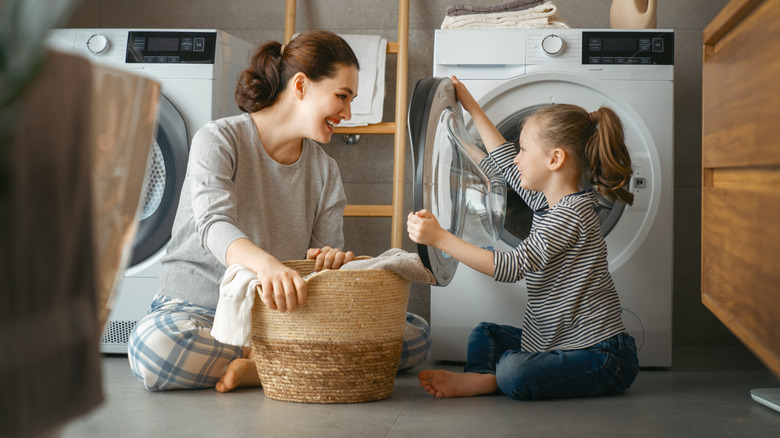
Once you've decided on a specific type of machine, different models offer plenty of features to accommodate the needs of a particular load. For gentle care of babies' everyday clothes, pair a gentle laundry detergent (unscented/dye-free) with a cold wash cycle. These lower temps are superior for saving money, since fabrics last longer and you're not heating up a ton of wash water. To be extra-gentle on your baby's skin, consider using the machine's extra rinse setting to make sure the clothes are completely clear of detergent.
For tougher jobs, some machines have sanitize cycles to help kill bacteria. However, these heavy-duty cycles are only needed in special cases, like when washing a sick kid's laundry. Outside of illness, items like cloth diapers only need warm water to get them clean.
When you're dealing with stained kids' or baby clothing, a proactive approach will save time and energy later. Apply a dye/fragrance-free stain-treating spray to get to work ahead of washing. Even high-end washing machines with lots of features aren't miracle workers. In addition, if you can brush off any visible grime before the clothes enter the washer, it'll be easier to get them cleaner. If you have a utility tub nearby, use it as a convenient spot to rinse items before tossing them in the machine. Once you've done all the prep work possible, some machines have a soak setting or stain pretreat settings to provide a little extra oomph to the wash cycle.