

The Two Settings To Check Before You Wash Your Children's Clothes
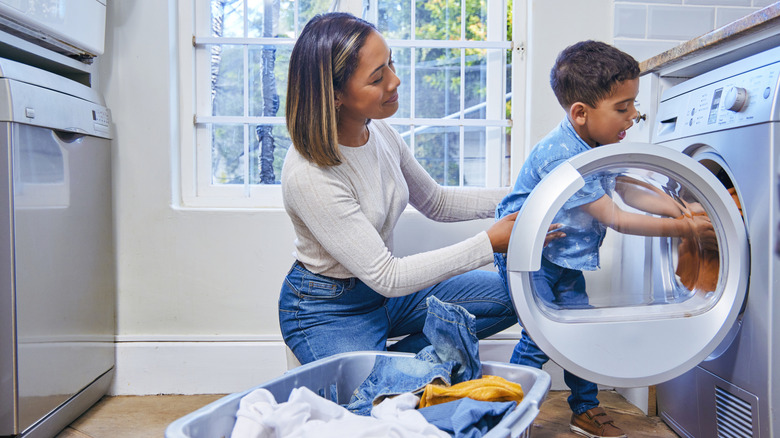
When washing children's clothing, most people focus on finding the right detergent, but it's equally important to consider your machine's settings. The temperature you use and your cycle of choice matter because these factors majorly contribute to the longevity and freshness of your kids' clothes. While most laundry pros will advise you to follow the care label, we also know that checking every tag before each load of laundry isn't likely. Luckily, there are some overarching guidelines you can follow.
In general, cold water, around 60 or 80 degrees Fahrenheit, is sufficient when washing your little one's clothing. Along with being the most environmentally friendly, cold water is also gentle, so your child's clothes are less likely to fade or shrink. However, lower temperatures aren't as good at sanitizing laundry. For this same reason, there are times when it's best to use a warm or hot setting. This is preferred for towels and bed sheets, more durable cotton items like socks and underwear, or anything heavily soiled.
Picking the right setting can be trickier. For anything that involves bodily fluids, don't rely solely on hot water. Instead, look for the sanitize setting, but if your machine doesn't have one, try a liquid sanitizer. For anything precious or delicate, especially lace or knitwear, opt for a gentle or delicate wash. In all cases, you may want to run an extra rinse cycle to help ensure no detergent residue will agitate your little one's skin.
Other considerations for your little one's laundry
Alongside settings and detergent, there are other important considerations when washing your children's clothing. While cold water is great for tackling most stains, removal isn't always guaranteed. Before tossing anything overly soiled into the wash, pre-treat major messes with a baby or child-friendly stain remover. When washing small items, such as little socks, caps, or tiny booties, consider a mesh laundry bag to keep everything protected and easy to retrieve.
You can, however, skip the fabric softener. It can be a major skin irritant and compromise the integrity of your little one's clothes, potentially making them less fire-resistant. This goes for anti-static products and dryer sheets, too, which can have the same effect. Added fragrances in dryer sheets can also be irritating. Instead, try mixing vinegar with water to pretreat stains and use dryer balls for static-free help.
Along with the washer settings you use, it's also important to consider your drying options. When possible, you'll again want to look at the label to see which dryer setting is recommended. For more delicate items, consider hang-drying. Hanging your baby's clothes outside in the sunlight can help battle lingering germs and can even brighten your whites. But if you prefer the efficiency of tumble drying your children's clothes, aim for the lowest, coolest setting to help preserve fibers and prolong the life of your garments.