

Why Do Pacifiers Have A Hole In The Middle?
We may receive a commission on purchases made from links.
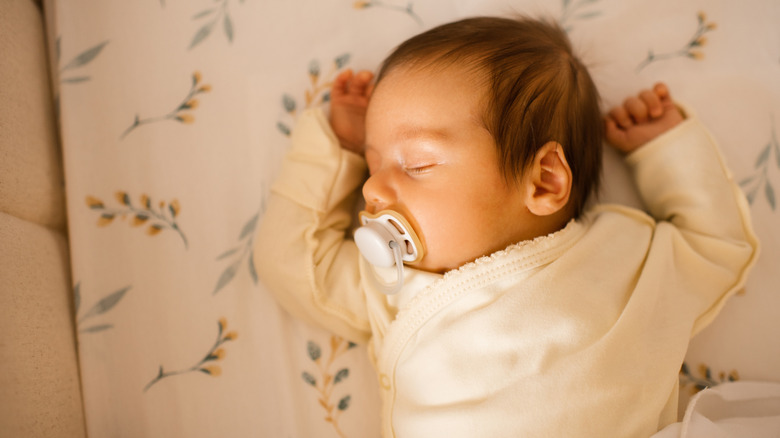
Pacifiers can be an integral product for soothing a fussy baby, but their designs can raise some questions for new parents. If you've ever wondered about the holes in various styles of pacifiers, these design choices are intentional. Some pacifiers, such as the Philips Avent Soothie, have a hole in the back of the nipple in the middle, which allows a parent to place their finger into the center to help hold it in place for a newborn. This design feature may also help promote a stronger parent-child bond, while offering an additional tool for parents to feel whether their babies are able to successfully latch.
The larger hole on the back of the pacifier also helps prevent water from getting trapped in the nipple while cleaning. However, some models have a closed hole, so if you notice water getting trapped within your pacifier's nipple, follow the manufacturer's instructions for removing it.
In addition to this hole in the middle, pacifiers have holes or openings on their shields — the part that rests against the baby's mouth and cheeks. These ventilation holes are important safety features legally required of manufacturers. The holes allow air to flow through in the unlikely scenario that the pacifier gets lodged against the baby's mouth or face.
Can a baby sleep with a pacifier in all night?
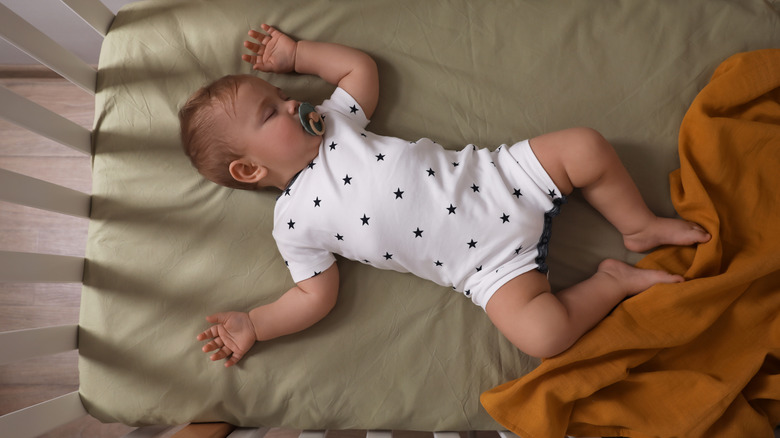
Once you've chosen a pacifier that meets safety standards, does that mean it's safe for your baby to sleep with all night, or do you need to take it away once they have fallen asleep? You do not, and allowing the baby to keep the pacifier through the night may even be helpful. Research published by the American Academy of Pediatrics shows an association between pacifier use during sleep and a reduced risk of sudden infant death syndrome (SIDS).
However, allowing your baby to use a pacifier while sleeping also warrants following safety tips to avoid dangers like strangulation or suffocation. Never tie or clip a pacifier to strings, ribbons, clothing, or the crib during nap or bedtime. Make sure the pacifier you pick is one piece to help ensure it won't come apart and become a choking risk. One-piece pacifiers also have fewer nooks and crevices for bacteria and water. Regularly replace the pacifier if it shows signs of damage or wear. It's also recommended that if you are breastfeeding, you should wait to give a pacifier until milk supply and latching are consistent and your baby is gaining weight. Finally, when picking a pacifier, make sure you choose one that is recommended for your baby's particular age and stage to match their growth.