

Can You Mix Refrigerated Breast Milk With Fresh?
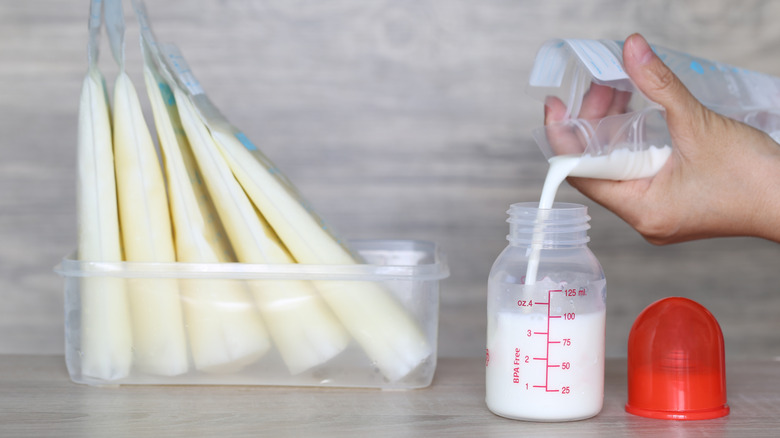
When you're breastfeeding, you might need to express milk if you're exclusively pumping, working, or need to cover occasional separations. Once the milk is expressed, you'll need to store it for either short- or long-term needs. Milk can be stored in the pump bottles or transferred to dedicated breast milk storage bags. However, sometimes, you may not have enough milk from one pumping session to fully feed your infant and may need to combine your stored milk with fresh milk. After all, the amount expressed each time averages from just .5 ounces to 4 ounces, depending on several factors, including how long it's been since your last breastfeeding session.
When combining breastmilk from multiple sessions, it's crucial to do it safely. According to the U.S. Centers for Disease Control and Prevention, fresh milk should be refrigerated separately at first. Since it starts at body temperature, and fridge temps are about 60 degrees cooler, it can take about an hour to sufficiently chill. Once it has reached the same temp as other refrigerated milk, you can combine it. While breast milk has antimicrobial components, it can still encounter bacteria outside the body. Cooling freshly pumped milk before combining it with refrigerated milk follows food-safe practices, helping safeguard the milk's beneficial live components, while reducing the risks from any unwanted bacterial growth.
When consolidating milk, keep in mind that babies over 1 month typically eat 3 to 4 ounces at a time. To avoid waste, date the containers so you use the oldest milk first. Since the earliest date takes precedence when combining, keep new milk separate to lengthen its storage time. When properly stored, breast milk is good for about four days. However, once a baby starts a bottle, the CDC recommends tossing it after two hours.
Can you mix fresh breast milk with frozen?

Since breast milk should only be kept in the fridge for four days, freezing could be a more useful option for longer storage. While medical experts do not recommend mixing frozen milk with freshly expressed milk, you can cool the fresh milk in the fridge first and then mix the two. When freezing breast milk, make sure you clearly mark the storage bags with the date and amount. Ideally, frozen milk should be used within six months, although it can be safely used up to a year after freezing. When it comes to your freezer stash, having bags with different amounts can be super useful since breastmilk can't be refrozen once thawed. A bag with a smaller amount could also be the perfect size if you're planning a shorter outing.
When it's time to feed your baby expressed breast milk, you have a lot of options for preparing it. While babies are accustomed to warm milk when nursing, they might enjoy colder milk when drinking breast milk from a bottle. Breast milk can be moved from freezer to fridge to thaw or taken straight from the fridge to give to the baby.
Older babies who are starting to explore foods might also enjoy a breast milk popsicle. You can either freeze the milk in a dedicated mold or do a DIY version and take a small frozen amount from a storage bag and put it in a feeder. If you do plan to warm up the milk, go for a gentle method and use lukewarm water. This strategy is also useful for thawing frozen milk more quickly.