

Is It Safe To Paint Walls When Pregnant?
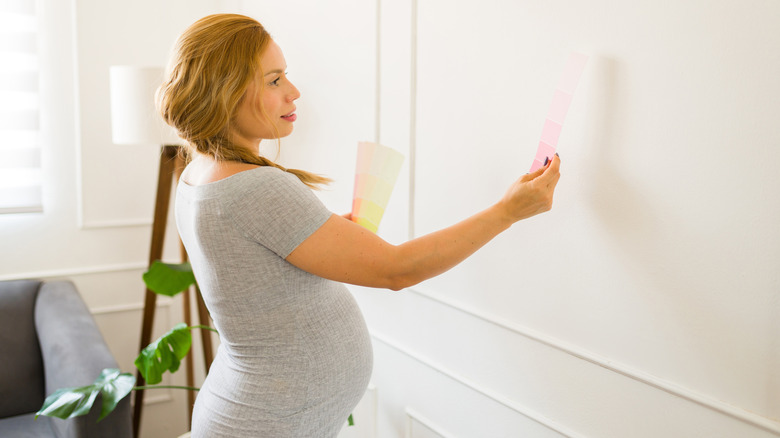
Nesting can be an intense experience. During both of my own pregnancies, the urge was almost primal — these babies would live in the coziest home that had ever existed, and I would do it all myself! But I also didn't want to expose my growing bump to unnecessary hazards. Painting your new nursery's walls, for example, is practically a given, but if you're pregnant, it's not as simple as grabbing a roller and getting started. Some experts suggest playing it as safe as possible by having someone else handle the job, while others say you and your bump should be fine as long as you take some added precautions.
As with many safety questions surrounding pregnancy, there aren't many studies that show the side effects of household paint on a developing fetus. Some studies have linked high levels of exposure to solvents — such as the petroleum-based chemicals found in some paints — to an increased risk of miscarriage, birth defects, and the development of learning disabilities in children. But those links were for high levels of recreational use or frequent exposure (such as if you're a painter by trade) — not lower solvent exposure levels from occasional use of household paint.
Still, if you're in the room that's being painted, pregnancy experts recommend wearing protective gear, particularly a respirator mask, and keeping the space well-ventilated. You should also avoid oil-based paints, since these can release higher levels of fumes, as well as any older paints that may contain lead or mercury. If any decades-old paint needs to be removed first, skip that job yourself because these hazardous paints were once fairly common.
Tips for safely painting in pregnancy
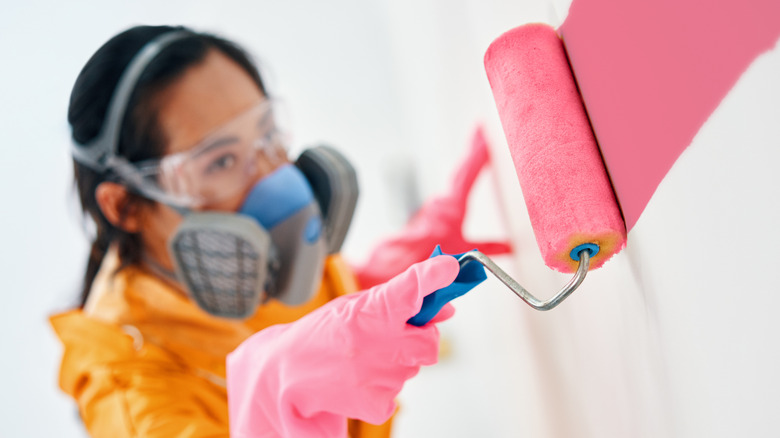
Erring on the side of caution and asking someone else to do the painting for you may not always be an option, so it's worth taking precautions to make the task as low-risk as possible. This includes using water-based paint labeled as "low-VOC" or "zero-VOC." Oil-based and solvent-based paints tend to contain higher levels of volatile organic compounds, which have been linked to health issues, even in non-pregnant people, including cancer, respiratory problems, and headaches.
Apply paint in a well-ventilated area, and avoid using spray paint to keep the air clear of any potentially hazardous particles. For similar reasons, don't eat or drink in the same space while painting, so you don't accidentally ingest these particles, either.
It's also worth noting that your baby's organs develop during the first trimester, so if possible, wait to paint until well into your second or third trimester. Of course, the further along you are means there might be some physical limitations to consider, and it's probably best to avoid climbing a ladder. If you feel nauseous, dizzy, or get a headache during the process, don't shrug it off as pregnancy hormones. Play it safe, leave the room immediately, and contact your healthcare provider.