

Why Do Jogging Strollers Have 3 Wheels?
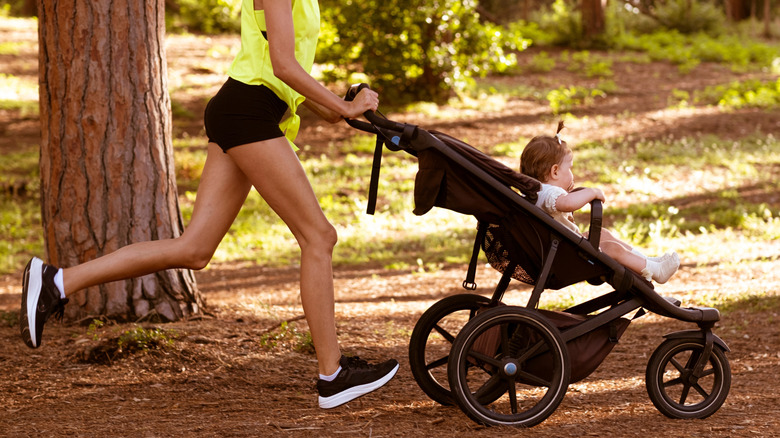
For many, getting clearance from your doctor to start exercising again is an exciting postpartum milestone, but fitting it back into your busy, new-parent schedule can be a daunting and somewhat overwhelming endeavor. For those who love to run, you can eventually bring your baby along with you, thanks to specialized strollers that make it possible to safely jog while keeping your little one comfortable. Instead of the usual four wheels on a standard stroller, these three-wheeled alternatives have one front wheel that helps with stability and maneuverability while power walking, jogging, or running.
While traditional four-wheel strollers are great for easy errands or casual walking, jogging strollers are designed with the critical goal of keeping both you and your baby from tipping while you run. That's why the tires on a jogging stroller are larger and filled with air, which are better for handling uneven terrain — unlike the wheels you'll find on regular models, which are usually filled with foam or made of plastic. Another key difference of a three-wheeled stroller is that the front wheel has a single pivoting point, which increases steering ability and allows you to navigate tough corners with just one hand. However, that wheel can — and should — be locked in position when moving at a fast pace to ensure everyone stays balanced and steady.
Can I use a jogging stroller as a regular stroller?
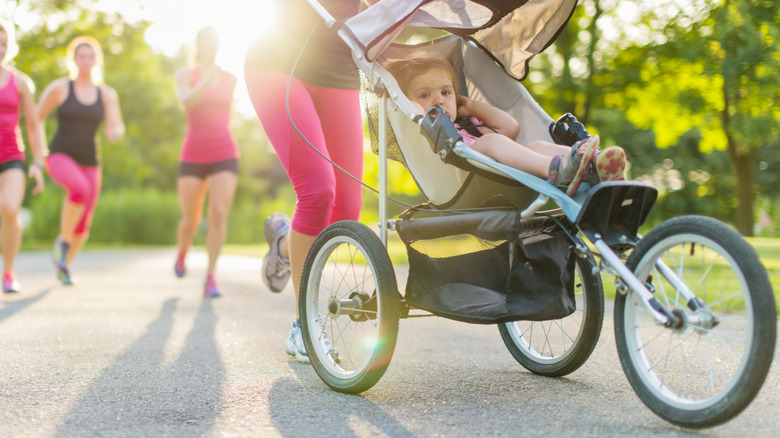
Beyond wheel design, look for jogging strollers with a five-point safety harness to keep your baby stable and securely in place. Wrist straps are another necessary safety function, because they help keep the stroller tethered to the jogger — reducing the risk of the stroller accidentally rolling away. Sun protection and reclining options are additional considerations, especially if your little one might enjoy a nap during your jog. Great storage for bottles, extra diapers, and snacks underneath can be a major asset, too.
Despite the name, jogging strollers are generally versatile enough for daily use, but this depends on your lifestyle and location. For air travel or navigating narrow city streets, they can be bulky and cumbersome, which is why plenty of active parents opt for one jogging stroller and a regular alternative. More and more three-wheeled hybrid options are entering the market, though, and these offer the same safety features but are lighter and more compact for easy storage.
Even if you have the perfect jogging stroller, you'll need to make sure everyone is cleared for running. For mom, this can be as early as six weeks postpartum, but for babies, it's advised to wait until they have stronger head and neck control, around 6 to 8 months old. One milestone to watch for is when they can sit up on their own, but confirm with your healthcare provider first. In the first six months postpartum, you can still use your jogging stroller to take a walk with your infant, but you'll need a car seat or other special attachment for your low-speed outing so your baby can enjoy the journey securely.