

This Common Annoyance Could Be Just What Your Kids Need On A Long-Haul Flight

As an American mom of two living abroad, I'm no stranger to traveling with kids of all ages. We've been consistently flying a few times a year since our kids were each under two months old, and we've always prioritized direct flights. But we're considering a bigger trip to the West Coast soon, and we've been wondering if breaking up the 11-hour flight makes more sense. As it turns out, it's not an uncommon question when traveling with kids. In fact, although many people avoid the annoyance of a layover, building in some wiggle room can be a tried-and-true method for getting your kids through long flights.
Connecting flights tend to be cheaper, but they can also give you time to stretch your legs, have a snack, and expel any energy your little one built up during the first part of the journey. The key, it seems, is careful planning. Along with packing in-flight activities, it's important to prepare a few ideas for how to entertain yourselves during the stopover. While some airports have dedicated play areas, others require some creativity. Plan to find a deserted gate close to your own, or suss out the best restaurant options if you're facing a longer layover. Pack coloring books and activity packs for the plane, but surprise them with playing cards or a travel game for the airport. The goal is to make the stop feel like a moment of relief before you carry on to your next destination rather than a hassle.
The pros and cons of direct and connecting flights
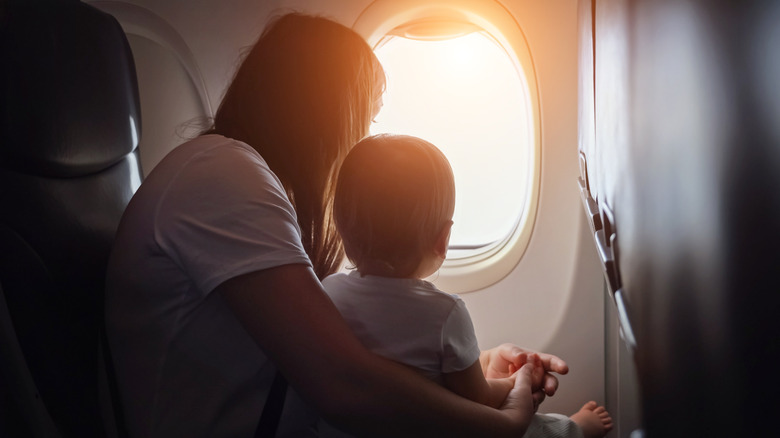
There are clear upsides to a direct flight. Flying with babies or young children usually calls for extra carry-on gear, so boarding, getting settled, and deplaning once is enough. Plus, a direct flight keeps the entire travel experience as short as possible, which is definitely appealing.
But if you have high-energy kids who struggle to sit still, a connecting flight can offer peace of mind that at some point in the journey, you'll be able to take a quick breather, relax, and reset — as long as you plan it well. For many domestic flights, general guidance is to aim for around two hours between flights. For an international flight, try for around three hours, accounting for immigration and bag collection if necessary. However, the timing depends on the size of the airport and the locations of your gates. For an especially large airport, such as George Bush Intercontinental Airport in Houston, plan for more time. This is why careful research to map out your airport route is the best way to maximize your connection.
If you do opt for a connecting flight, pack as minimally as possible and double-check before you fly to confirm if you'll need to collect your bags or if the airline will handle the transfers. And aim to put everything on one booking if you can — you're more likely to get support from the airline if things go wrong between flights.