

If You're Pregnant, Avoid Swimming In This Type Of Water
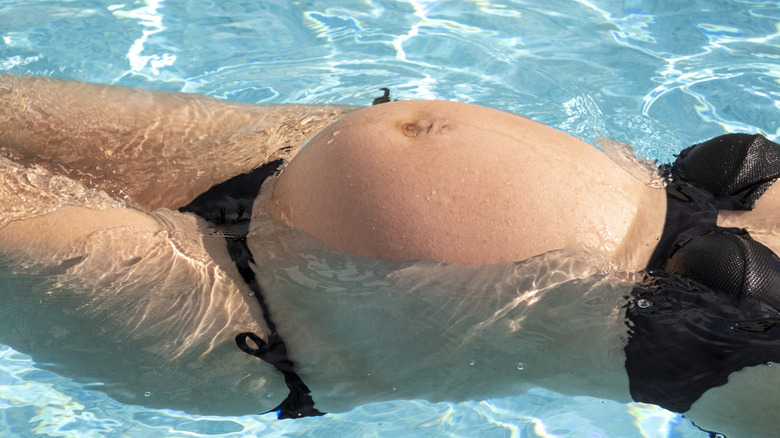
Whether you're booking an official babymoon or just looking to get away before the baby arrives, there are a few things to consider when planning a trip while pregnant. Depending on your destination, swimming can be an unnecessary risk — especially if you're heading to freshwater lakes, rivers, or streams in certain areas. While the act of swimming itself is considered to be an excellent activity when pregnant, these bodies of water may be home to parasitic worms called schistosomes, which can cause a dangerous disease called schistosomiasis.
Also known as bilharzia and snail fever, schistosomiasis is transmitted through the skin by parasitic worm larvae. Although it's only found in contaminated freshwater, it's a global risk, with potential problem areas found throughout sub-Saharan Africa, South America, Southeast Asia, the Caribbean, and China. What's more, because it's transmitted through the skin, it's also advised that pregnant travelers in risk zones avoid walking barefoot through waters that may be contaminated.
If you believe you've been exposed to schistosomiasis, consult a doctor immediately, as pregnancy-safe treatments may be available. Potential signs of an early infection include a rash and itchy skin, but these can progress to a fever, chills, and muscle aches, as well as a cough. These symptoms can appear hours to months after possible exposure, so it's important to share with your doctor if schistosomiasis may be the cause. When left untreated, potential complications include severe anemia for mom and low birth weight for baby.
How to swim safely during pregnancy
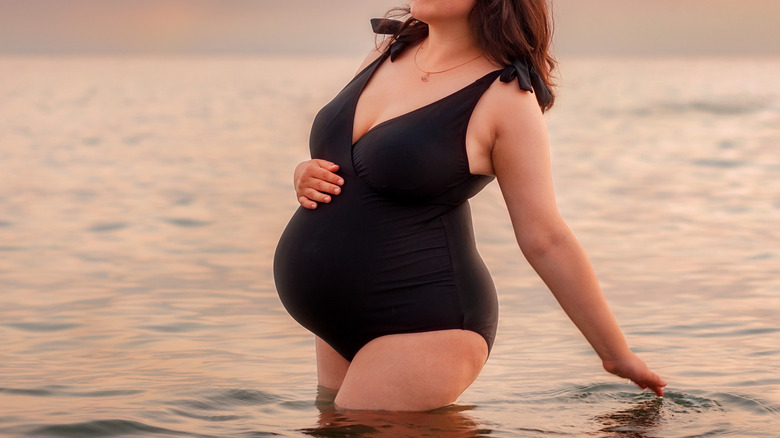
Fortunately, swimming in general does not need to be avoided, and in fact, is one of the safest forms of exercise during pregnancy. It's gentle on your joints and ligaments, great for your heart, and lowers the risk of losing your balance, which can be an issue with other forms of exercise during pregnancy. However, to best avoid water-borne illnesses, where you swim matters.
As a general rule, a well-maintained pool is considered safe, and there are no known risks from exposure to the chemicals used in chlorinated pools, assuming they are being monitored and balanced. Similarly, designated swimming areas in open waters, like at the beach, are generally screened for potential contaminants and should be safe (at least in the US). In all cases, take care not to swallow water or allow it to enter your mouth, no matter where you're swimming.
One final consideration is water temperature. Cold water wild swimming should be avoided in most cases, and hot tubs are also not advised during pregnancy. A temperature of 78 to 82 degrees Fahrenheit is considered most ideal, which again points to a well-maintained pool as your best option. And while swimming is considered safe, water sports, such as scuba diving and water skiing, should generally be avoided.