

What Does A Faint Line Mean On A Pregnancy Test?
We may receive a commission on purchases made from links.
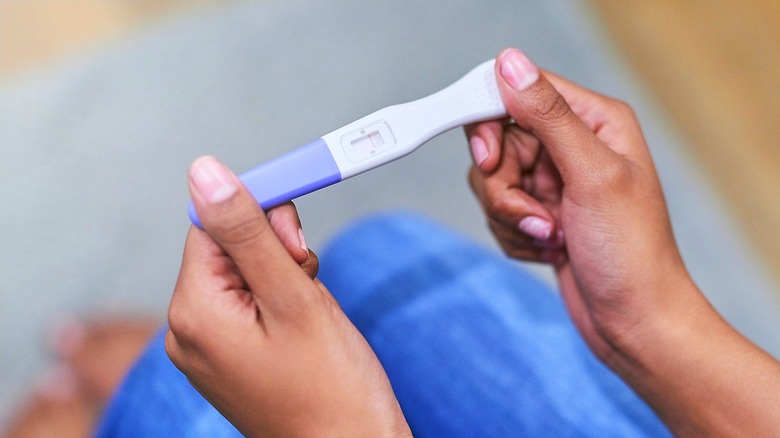
There is nothing more nerve-wracking than waiting the two to three minutes for an at-home pregnancy test to develop, only to see a vague, "positive" result. Since you pay a pretty penny (in money and nerves) to find out how the next nine months of your life and beyond will look, you want clear, trustworthy results. However, certain factors can sometimes cause faint "positive" lines to appear.
When you become pregnant, your body starts producing the hCG hormone. Early in pregnancy, the levels of this hormone are extremely low. Therefore, if you take an at-home pregnancy test before your first missed period, a faint positive line is more probable than a line that looks darker and more distinct. If you drink a lot of water before you take a pregnancy test, this can dilute the hCG hormone in your urine as well, causing a faint pink or blue line.
It's also important to know the difference between a faint positive result and a misread evaporation line. A positive, colored line (faint or not) appears within the recommended test time frame of three to five minutes. On the other hand, an evaporation line is colorless or light gray and often develops several minutes later once the test has dried. The faint evaporation line on a pregnancy test is simply the dried urine residue and does not indicate whether you are pregnant or not. However, the appearance of an additional colored line means "pregnant" – false-positive results in at-home pregnancy tests are a rare occurrence. Most of the time, the indistinctness of the line itself is directly related to the timing and your hormone levels when you take the test.
How to get clearer results from an at-home pregnancy test
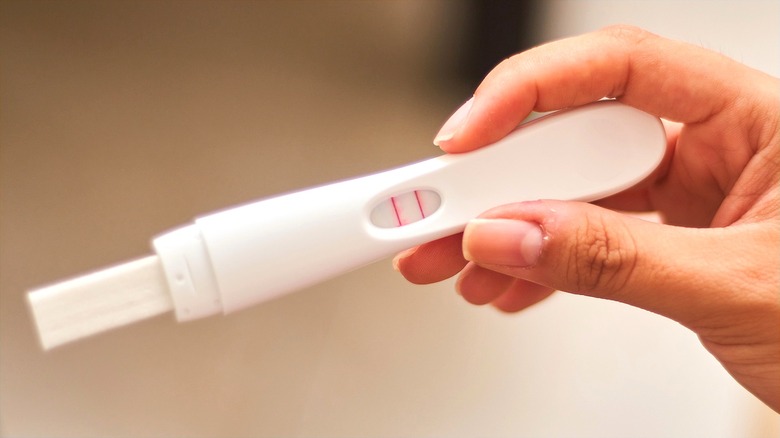
Since a faint secondary line often points to early pregnancy, there are a few ways you can ensure better clarity. While the pregnancy hormone hCG is quite low after conception, some pregnancy tests, such as Clearblue Early Detection and First Response, offer accurate results up to six days before your missed period. If you see a second line, faint or not, it's safe to assume you're around 3 to 4 weeks pregnant. Fortunately, since hCG or human chorionic gonadotropin doubles every few days in the early stages of pregnancy, you may see a more distinct result if you wait a solid two to three days before taking a follow-up test. Better yet, for the most accurate results, wait to re-test two weeks after ovulation or a few days after menstruation is expected to begin.
For more precise results, take your pregnancy test first thing in the morning when you wake up. At this time of day, your urine is highly concentrated because you've been asleep, which makes the presence of hCG more distinguishable. Make sure you follow the package's directions as well, and ensure the test has not expired. If you see a secondary line appear, make an appointment with your doctor for an in-person exam.
If you see a faint line with your first test, but don't see this secondary line appear on another test closer to your period, it's recommended to see your healthcare practitioner for a blood hCG test. In some cases, the presence of a faint "positive" line that comes and goes could point to a potential early miscarriage.