

Are Dollar Tree Pregnancy Tests Accurate?
We may receive a commission on purchases made from links.
Listen, having a baby is expensive enough. Finding out if you're pregnant shouldn't be. I've always been frugal (perhaps to a fault) and am constantly on the prowl for the most cost-effective way to get the job done. I've also always been skeptical of bells and whistles when a simpler (and cheaper) option will do just fine. It's no surprise, then, that once I learned Dollar Tree sold pregnancy tests for $1.25, I bid farewell to the fancier drugstore alternatives that can cost upwards of $5 to $10 a pop. Of course, with something as important as finding out if you're pregnant, you don't want to cut corners. Thankfully, because they are regulated by the FDA, Dollar Tree pregnancy tests work just as well as the brand-name tests, delivering over 99% accuracy when used correctly.
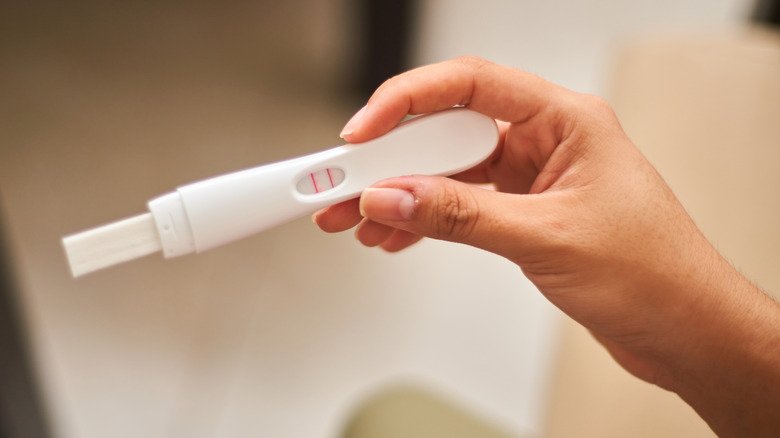
You can trust Dollar Tree pregnancy tests because they work the same way as other at-home tests. In case you're rusty, here's a quick refresher on how the tests work: Home pregnancy tests detect human chorionic gonadotropin (hCG), also known as the "pregnancy hormone," in urine. This hormone is produced after a fertilized egg attaches to the uterus lining. These hormone levels continue to rise after implantation, and pregnancy tests can detect them about two weeks after conception occurs. So all legal home pregnancy tests sold in the United States work the same way, and all are regulated by the U.S. Food and Drug Administration. In fact, even healthcare facilities report using inexpensive test strips for their patients. Still, while all home pregnancy tests work the same way, there are a few things to consider when shopping for a pregnancy test that's right for you.
Dollar Tree pregnancy tests vs. other home tests
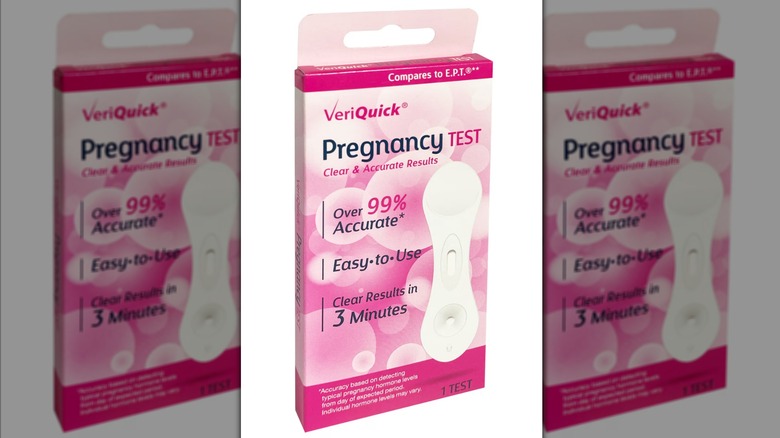
While Dollar Tree pregnancy tests work the same as other at-home tests, there are a few reasons you might want to choose a different (or more expensive) test. First, consider the test method. Some at-home tests require the strip to be held in your urine stream, while others have you collect urine in a cup. You may find one method easier or more convenient than the other. Every Dollar Tree test I've used required the cup method, though I've noticed the chain has switched brands and test types over the years, so you might find another type in your store.
Interpreting the test results is another consideration. Dollar Tree tests use the line method to convey test results, so if you would rather have a crystal-clear "Pregnant/Not Pregnant" result, a test like Clearblue's Early Digital Pregnancy Test is a better option. One cause for inaccurate test results is user error — testing too soon before your body starts producing hCG or misinterpreting the test results – so it's worth going with a test you can feel confident taking and understanding.
And speaking of early detection, perhaps the primary reason to choose a more expensive test is if you want an accurate result earlier. While all home tests detect hCG, some tests have more sensitive test strips than others, allowing them to claim earlier detection — the most common being up to six days before your missed period. Still, hCG levels increase with time, so waiting until after a missed period will ensure a more accurate result, regardless of what test you use. Dollar Tree pregnancy tests have served me well in detecting my pregnancies, and I was perfectly happy to get the good news without breaking the bank.