

Are Glass Bottles Safe For Babies?

Glass baby bottles are a traditional tool for feeding infants. In fact, glass bottles have been used to feed babies for hundreds of years and were particularly trendy at the beginning of the 20th century until silicone- and plastic-based bottles carved out a niche in the baby products market. However, a 2026 Babylist survey of more than 10,000 moms and dads found that more than half are still using glass baby bottles today. Consequently, it's no surprise that numerous baby bottle brands carry both non-glass and glass bottle versions.
Why are glass bottles resonating with so many modern parents? One reason is that they're free from bisphenol A (BPA), phthalates, or even microplastics. (To be fair, all baby bottle manufacturers in the United States were banned from using BPA in 2012.) However, Consumer Reports, which found no BPA or phthalates in several brands of tested plastic and silicone baby bottles, acknowledged that chemicals and microplastics could still conceivably be found in non-glass bottles. And speaking with Today's Parent, pediatrician Dr. Mona Amin specifically warned against the possibility of bottles leaching microplastics: "Plastic can be prone to scratching or breaking down, and if heated to high temperatures, it may emit microplastics."
Another upside to glass baby bottles is that they can withstand regular dips in boiling water to keep them sanitized. Although they generally cost more than non-glass baby bottles, glass ones can endure. Of course, although they're safe, glass baby bottles aren't the perfect solution for all families.
Precautions to consider with glass bottles
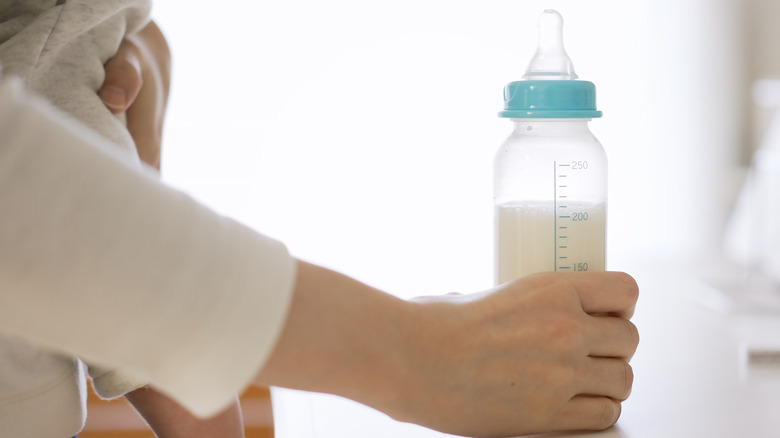
Despite its benefits, there is one key flaw of the glass bottle version — its potential to break. Like any glass, bottles can shatter or sustain damage if dropped, so it's important to monitor your glass bottles to ensure they don't have cracks or chips. You can also get a silicone sleeve to help protect your bottles.
Glass baby bottles are heavier than plastic or silicone varieties as well. Consequently, you'll have to hold the bottle until your child is strong enough to support it without dropping it. As a side note, if your child will be in daycare, check to see if the facility accepts glass baby bottles; some will not allow them, though they may be okay if you have silicone sleeves.
Still not sure if you want to go full throttle with the glass bottle? You might want to offer your baby a few different safe bottle types. After all, every baby has a preference in how they feed, so giving them a few options can help you discover what they like and don't like. Regardless of which bottle your baby accepts, silicone (not latex) nipples are generally considered the better choice since they are hypoallergenic and more durable. No matter which type of bottle and nipple you choose, it's important to keep one thing in mind. As pediatrician Dr. W. Kyle Mudd told Cleveland Clinic, "The nutrition your child gets throughout childhood is likely much more important than what kind of bottle you use."