

What Age Can Kids Eat Popcorn? Here's When It's Safe
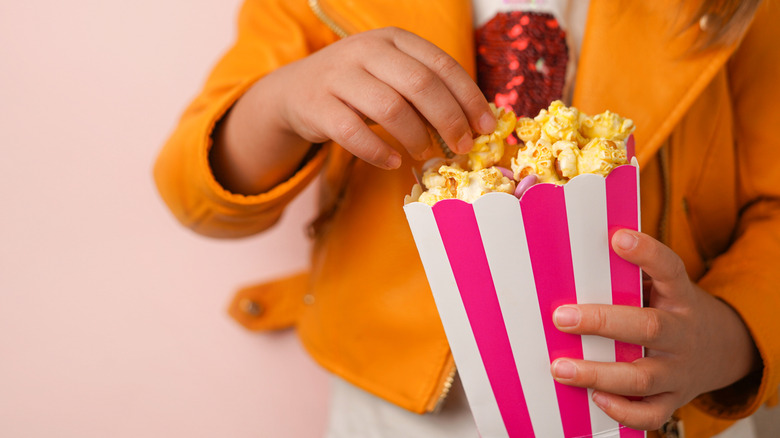
Popcorn and a movie are a classic combination for a reason — it's a fun food that's full of whole grains and typically low in calories, perfect for snacking on for 90 minutes. (Not to mention it tastes so good with candy mixed in!) But while you may be tempted to bring your toddler to the movie theater or turn on a kid-friendly film at home with a bowl of freshly popped popcorn, there's something you should know: The American Academy of Pediatrics considers popcorn a high-risk food until children turn 4 years old.
Choking is a serious issue and a leading cause of death for kids. It may not seem like popcorn is that dangerous — after all, how many times have you shoveled popcorn in your mouth over the years and everything was fine? But it's a choking hazard for young children because the sharp kernels can lodge in their throats. Your toddler may also accidentally aspirate the pieces into their lungs, causing respiratory issues and inflammation. The child's larynx (or the voice box) is located higher in the neck than an adult's. It also sits at a slanted angle, making it easier for children to accidentally inhale objects — especially light foods like popcorn — into their airway. Scary, right? That's why it's so important to take the warning seriously.
It can be difficult to keep popcorn away from young children, especially if you have older kids who love the snack, too. I've always offered alternative snacks to my toddler when his older brothers were eating popcorn, such as Cheez-Its, peanut butter crackers, or Teddy Grahams. That way, he can still snack and enjoy the movie without the added risk of choking.
What other foods are not safe for toddlers?
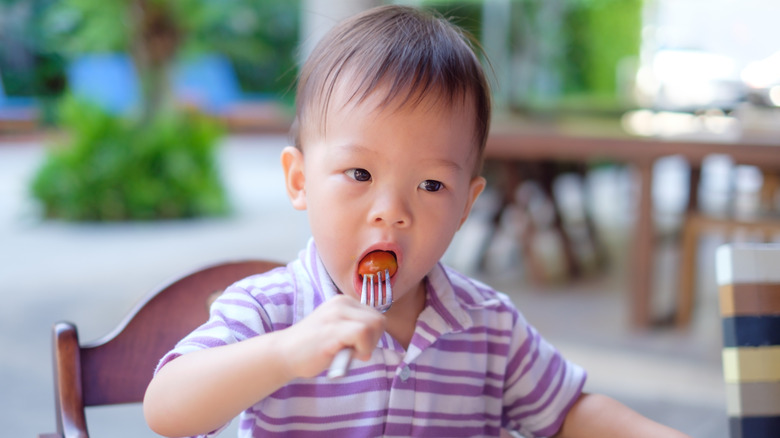
Popcorn is just one of several choking hazards for toddlers, with the American Academy of Pediatrics warning parents to avoid or modify foods like hot dogs, hard or sticky candy, chewing gum, nuts and seeds, whole grapes, raw vegetables and fruit chunks, thick spoonfuls of peanut butter, marshmallows, sausages, large pieces of meat and cheese, or string cheese.
However, with some modifications, some of these foods can safely be given to kids under 4. For example, quarter hot dogs and grapes before giving them to your little one. You can also spread peanut butter thinly on a piece of bread, and cook raw vegetables or fruit to make them softer and easier to swallow. With popcorn, experts recommend waiting until kids are old enough to eat the snack, but that doesn't mean you shouldn't take any similar precautions. It's important to watch kids closely at first as they explore the new food. Monitor how well they chew up and swallow the snack, making sure to give them only one or two pieces at a time at first so they don't shove handfuls into their mouths. Be sure to remove any unpopped or partially popped popcorn as well.
Even kids older than 4 may struggle with popcorn, especially if their molars — which help break down the popcorn pieces — haven't come in. Signs of choking include your child not breathing, talking, or crying; gasping or wheezing; turning blue; grabbing at their throat; and becoming limp or unconscious. If you notice any of these signs, get medical attention right away. However, with the right precautions and by waiting until the recommended age, popcorn can be a safe and healthy snack for kids.