

More Protein-Rich Than Eggs: 6 Foods Worth Eating During Pregnancy
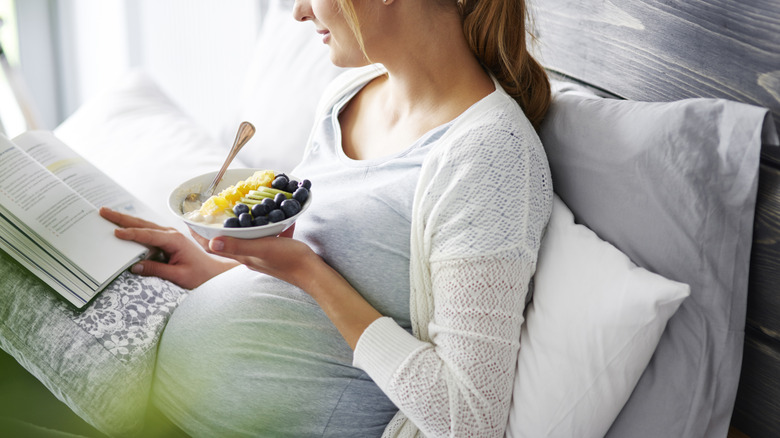
During pregnancy, protein is incredibly important for you and your growing baby, and the best way to get what you need is through your diet. While eggs are one great way to add a daily protein boost, they're certainly not the only option, and it's good idea to keep a wide variety of choices available to help keep your diet both healthy and diverse.
As your body shifts and changes, protein is important for maintaining healthy blood pressure levels. It can also prevent swelling, promote tissue growth, and increase the blood supply to your uterus. Plus, if you've been battling morning sickness and nausea, eating something high in protein has been shown to settle your stomach, especially in the first trimester. But protein is just as important for your growing baby. As you digest, protein converts into simple amino acids that support the growth and development of your baby's cells and vital organs.
Because of its importance throughout all stages of pregnancy, general guidance is to increase your protein with each trimester. For women who aren't pregnant, it's recommended to eat around 46 grams of protein a day, but during the first trimester of pregnancy, this number jumps to 60 grams per day. In the second trimester, you should aim for 70 grams per day, and in the third, you should try to eat around 75 grams of protein per day. If you need some help meeting these goals, here are some protein-rich foods to try.
Beef jerky is a high-protein snack
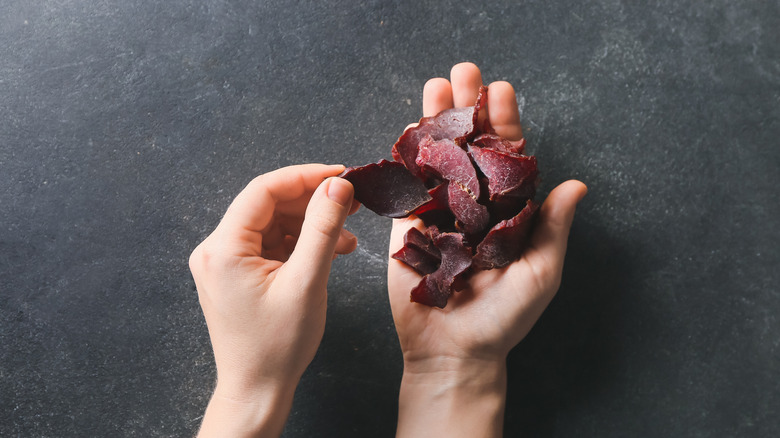
If you're looking for an easy, on-the-go snack that's high in protein, beef jerky is a surprisingly great option. One stick of beef jerky has around 9 grams of protein, and it's considered both safe and healthy during pregnancy — with a few key caveats. Avoid homemade jerky, and only opt for commercial, shelf-stable jerky from trusted brands. When not monitored, homemade jerky carries a higher risk of food-borne pathogens like listeria and toxoplasma, which can be dangerous for you and your baby. It's also important to enjoy in moderation, thanks to high sodium levels.
Greek yogurt is a yummy breakfast option with a lot of protein
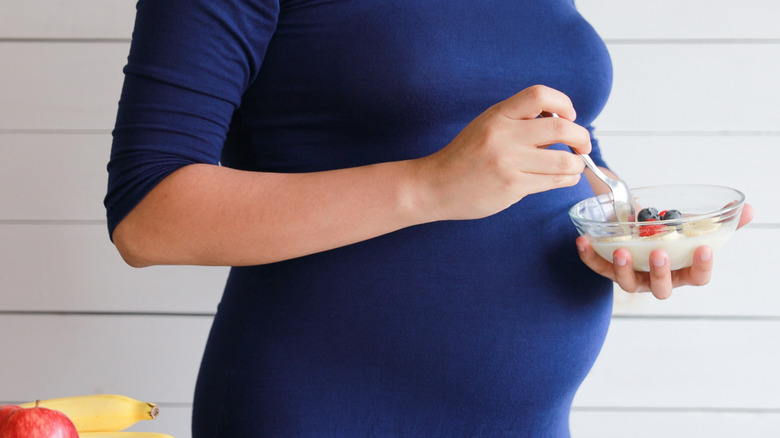
Much like eggs, low-fat Greek yogurt is an excellent high-protein breakfast option that you can dress up or keep mild. Low-fat non-Greek yogurt is an option, too, of course, but if you're looking to pack a protein punch, Greek yogurt has it beat by a fair amount. For a 200-gram serving, regular yogurt offers nearly 10 grams of protein, while Greek yogurt has almost 20 grams in the same amount. Both also offer a healthy dose of probiotics as well as magnesium, B12, and iodine, but Greek yogurt is lighter on carbs and sugar.
Low-mercury cooked fish pack a protein punch
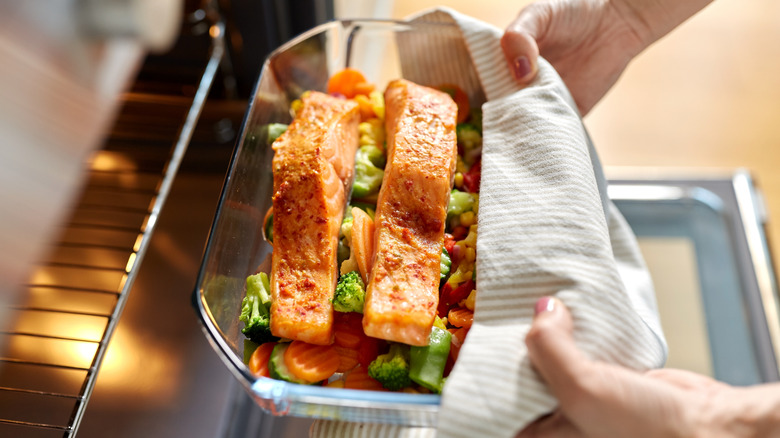
Many pregnant women avoid fish in general during pregnancy, but it's not necessary. Salmon, shrimp, and cod are all excellent sources of both protein and omega-3 fatty acids, which are critical for fetal development. In salmon, protein levels vary by type, ranging from 18.8 grams for 3 ounces of cooked farmed Atlantic salmon to 22.5 grams for the same amount of wild sockeye salmon. Shrimp falls within this range at 19 grams of protein, while cod is slightly lower, offering 16 grams for the same amount.
Lentils are easy to digest and offer a lot of protein
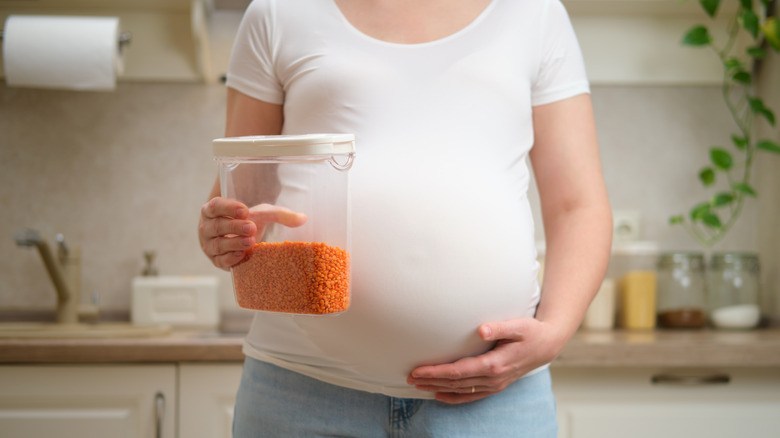
Lentils and black beans are both well-known for their nutritional benefits, but in comparing a cooked cup of each, lentils come in slightly higher for protein. While black beans can offer 15 grams, lentils have 18 grams of protein and are lower in fiber, making them easier to digest. This is something to consider if you're suffering from any pregnancy-related nausea, experiencing any first-trimester heartburn, or if you're later into the third trimester when your growing baby can have an impact on your digestion.
Chickpeas add taste and protein to your salad
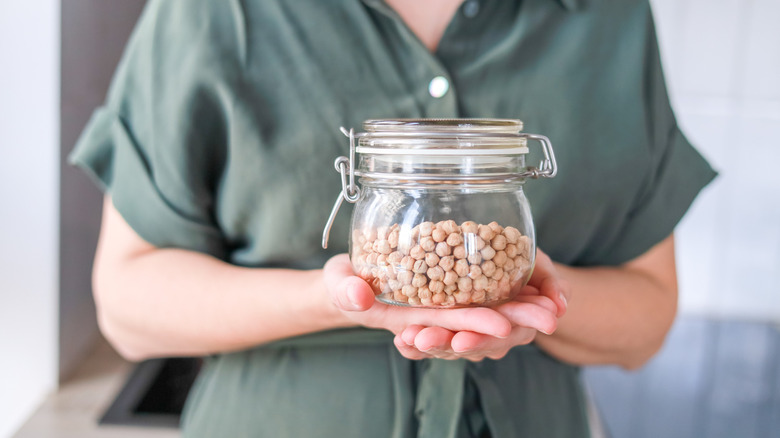
If you're looking to add a boost of protein to your salad, cooked chickpeas are a worthwhile consideration. Also called garbanzo beans, a cup of cooked dried chickpeas offers somewhere between 14.5 and 15 grams of protein, but the number drops slightly if you use canned chickpeas, which contain closer to 12 or 13 grams. Both versions are also great sources of folate, iron, and fiber, and while dried chickpeas might have slightly higher nutritional benefits, the convenience of canned chickpeas can't be ignored, especially if you want a quick and easy protein enhancement for your meal.
Protein bars are an on-the-go option

When you're constantly on the go, protein bars are a convenient and reliable way to always have a boost on hand, but it's a good idea to check the label. While most bars are fine for pregnancy, they can sometimes be high in dyes and sweeteners that you may otherwise be trying to avoid. But any bars prepared with whole foods like nuts, seeds, and dates (as well as natural sweeteners such as honey) are likely safe, and usually offer around 10 to 20 grams of protein in a quick, easy package that requires no preparation.